Do Blue Light Glasses Actually Work? The Truth
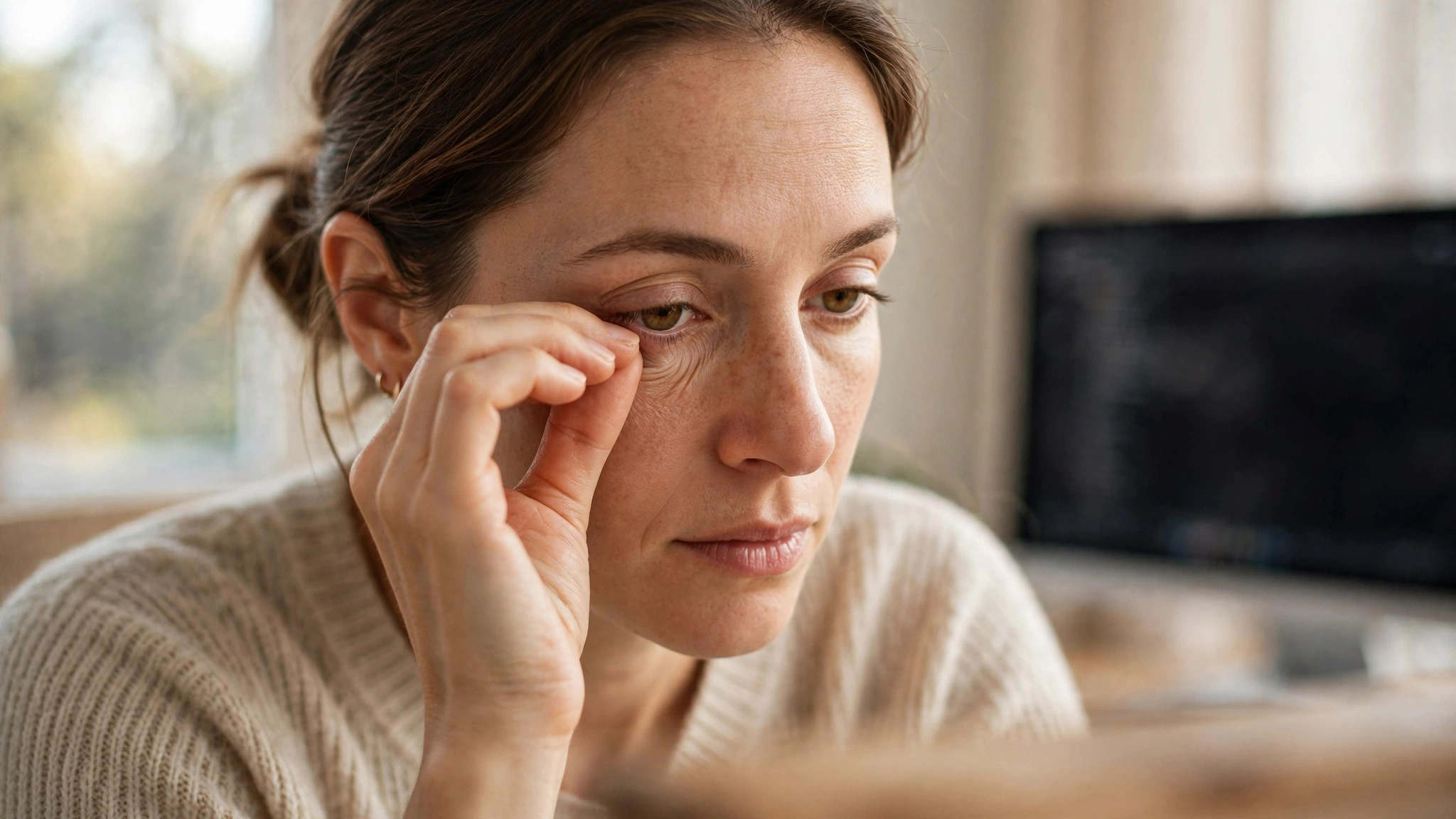
By 4 p.m., your eyes burn and your head aches. You blink hard, rub your eyes, and wonder if the screen is doing real damage. Then an ad pops up with a simple fix: stylish glasses that filter blue light.
Americans have bought that promise by the millions. Blue light glasses are sold at drugstores and online shops, often for $20 to $100 a pair, marketed as protection for your eyes and your sleep. But when researchers put the glasses to a proper test, the story was much less impressive than the marketing. That does not mean your tired eyes are imaginary. It means the cause is probably not what the glasses claim to fix.
What blue light glasses claim to do
Blue light is the short-wavelength end of visible light. It comes from the sun, LED bulbs, and phones, tablets, laptops, and televisions. The pitch for blue light glasses rests on two claims.
First, that blue light from screens causes digital eye strain: burning, dryness, blurred vision, and headaches after a long day at a computer. Second, that blue light in the evening suppresses melatonin, the hormone that helps you fall asleep, so filtering it should improve sleep.
The second claim has a kernel of truth: bright evening light can delay melatonin and push your body clock later. The question is whether lightly tinted lenses change that enough to matter. For eye strain, the case is weaker still.
What the best research actually found
The strongest evidence comes from a 2023 Cochrane review, the gold standard for combining clinical trials. Researchers at the University of Melbourne pooled 17 randomized trials with 619 adults across six countries, comparing blue light filtering lenses with ordinary clear lenses.
The verdict was blunt. The review found that blue light filtering lenses probably make little or no difference to short-term eye strain from computer use, and probably little or no difference to visual performance. For sleep, the results were too mixed and uncertain to draw a conclusion: some small trials reported improvement, others found none. No trial measured long-term retinal health, so the glasses cannot claim to protect your retina either.
Eye doctors agree. The American Academy of Ophthalmology does not recommend blue light blocking glasses for computer use, and states that there is no scientific evidence that blue light from digital devices damages the eye. A short walk outside on a sunny day exposes your eyes to far more blue light than a full day in front of a laptop. The trials did not find the glasses harmful; they simply have not earned their two main selling points.
Why your eyes really hurt at a screen
If blue light is not the main culprit, what is? Eye doctors point to how we use screens, not what color the light is.
Normally, you blink about 15 times a minute. At a screen, that drops to about 5 to 7 times a minute. Less blinking means your tear film evaporates faster, leaving eyes dry, gritty, and irritated. Add hours of close-up focusing, a screen that is too close or too low, glare from a window, and an uncorrected prescription that only shows up under sustained near work, and you have a recipe for strain.
That explains why the problem is so common. The American Optometric Association has reported that 58 percent of adults have experienced digital eye strain or vision problems as a direct result of screen use, and the average American worker spends about seven hours a day on a computer. A more recent survey of 1,200 U.S. workers found that 71 percent of desk workers reported symptoms tied to digital screens, including dry eyes, blurred vision, and fatigue.
Your eyes are not being harmed by a special color. They are being overworked, under-blinked, and poorly positioned for hours at a time.
What actually helps tired eyes
Follow the 20-20-20 rule
Every 20 minutes, look at something at least 20 feet away for at least 20 seconds. It relaxes the focusing muscles inside your eyes and gives you a reason to blink. Set a phone timer or computer reminder until it becomes a habit.
Fix your distance and height
The American Optometric Association recommends sitting 20 to 28 inches from a computer screen, with the center of the screen about 4 to 5 inches below eye level. That slight downward gaze lets your eyelids cover more of your eye, which slows tear evaporation. If you are leaning in to read, move the screen, not your body.
Blink on purpose and use artificial tears
When your eyes feel dry, consciously blink fully a few times rather than half-blinking. For persistent dryness, preservative-free artificial tears can help. If you need drops more than four times a day, or your eyes stay red and painful, get checked rather than masking the problem.
Cut glare and get your eyes checked
Position your screen so windows are to the side, not directly in front of or behind it, and match screen brightness to the room around you. A glowing screen in a dark room makes strain worse. Also, many people with screen strain have a mild refractive error, farsightedness, astigmatism, or a focusing problem that only becomes obvious after hours of near work. An updated prescription, or computer glasses with the right focal distance for your desk, can do what a blue light filter cannot.
What about sleep? Try this instead
If evening screens are keeping you awake, the most effective step is not a lens tint. It is reducing bright light and stimulation before bed. Stop scrolling an hour before you plan to sleep, or at least switch your phone and laptop to their built-in night mode and dim the screen. Keep the bedroom dark and cool, and charge your phone outside the bedroom if you can. That removes both the light and the temptation to keep scrolling.
Do not buy daytime blue light glasses expecting a sleep cure.
Should you buy them anyway?
If you already own a pair, like how they look, and feel better wearing them, there is no evidence they will harm your eyes. But if you are buying them specifically to cure eye strain or fix your sleep, the best available evidence says you will probably be disappointed. Spend the money instead on an eye exam, a better monitor position, and regular breaks.
If your symptoms do not improve, or you notice sudden vision loss, severe eye pain, flashes, new floaters, or a curtain over part of your vision, see an eye doctor promptly. Those are not screen-strain symptoms.
The bottom line
Blue light glasses are a clever answer to the wrong question. Screens do tire your eyes and can disturb your sleep, but the culprit is hours of close, unblinking, poorly positioned work, not a dangerous color leaking from your monitor. Fix the work habits, and your eyes will usually thank you far more than any filter will.
This article is for general information only and is not medical advice. If you have persistent eye pain, vision changes, or sleep problems, talk to an eye doctor or your primary care clinician.
Rao Sajid is the founder and editor of VitalDaily. He covers everyday health topics — nutrition, sleep, fitness and wellness — turning guidance from public-health sources like the CDC, NIH and FDA into plain, practical advice. More about Rao →
📚 Keep reading:

Does Sugar Really Make Kids Hyperactive?
Decades of blinded studies say sugar does not make kids hyperactive. Here is why the sugar rush looks so real, and what actually drives the chaos.

Why Winter Gives You Static Shocks Every Day
Every winter doorknob seems out to get you. Dry air and synthetic fabrics let thousands of volts build up on your body. Here is the science behind the zap and how to stop it.
Chewing Gum: Good for Teeth or Bad for Your Jaw?
Sugar-free gum can protect your teeth and curb cravings, but hours of chewing can strain your jaw and upset your stomach. Here is how to chew smarter.