Epsom Salt Baths: Do They Really Work?
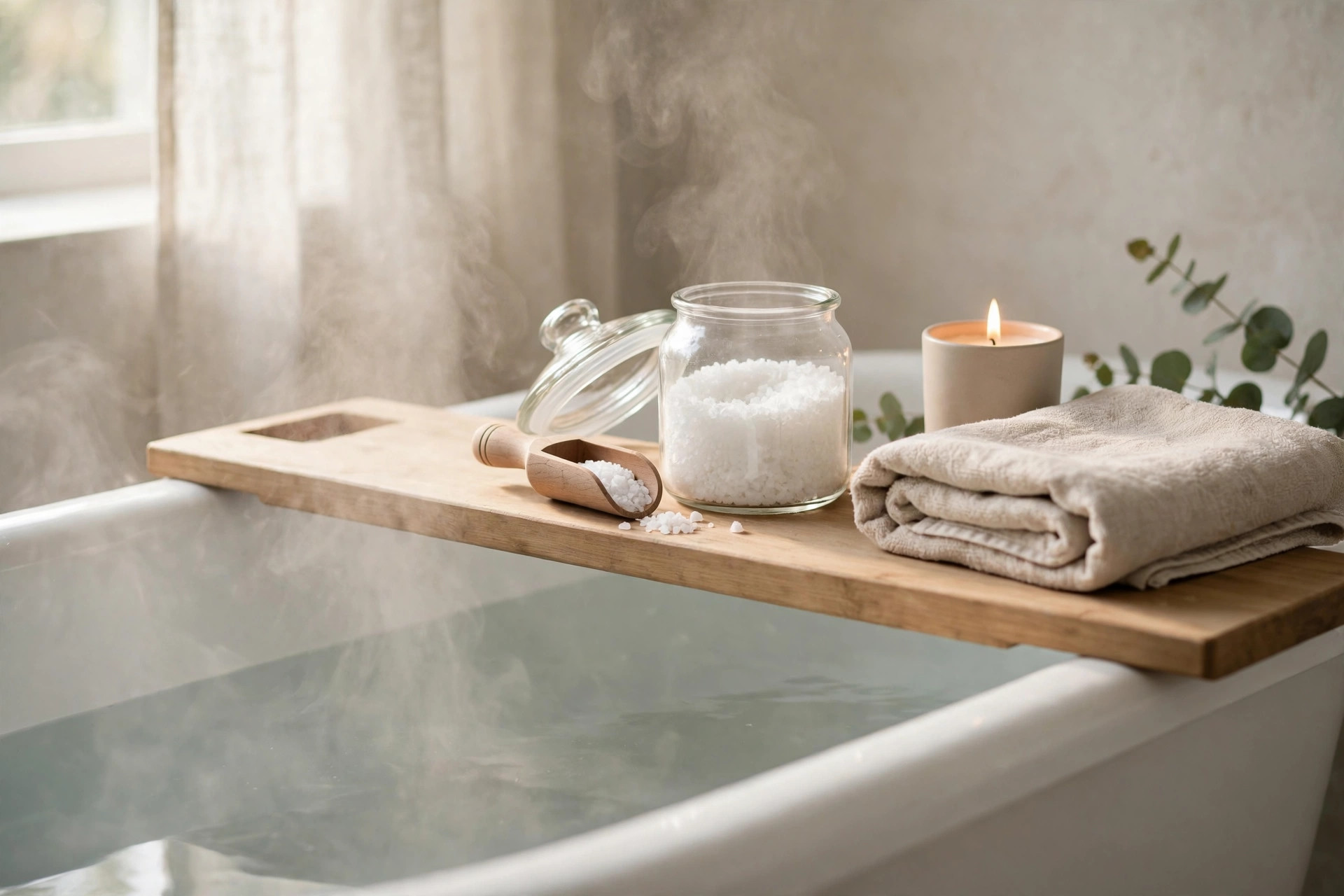
Walk down the bath aisle of any American drugstore and you will find it: a big, plain bag of Epsom salt, promising relief for sore muscles, stress, and sleepless nights. Athletes soak in it after hard workouts, and wellness influencers pour generous scoops into the tub and call it a magnesium miracle.
But does an Epsom salt bath actually do anything a plain warm bath does not? The honest answer is more interesting than a simple yes or no. Some of the claims are overblown, but the bath itself is far from useless.
What Epsom salt actually is
Despite the name, Epsom salt is not salt at all, at least not the kind you put on food. It is magnesium sulfate, a mineral compound named after the town of Epsom in England, where it was first discovered in a natural spring. It looks like coarse table salt and dissolves easily in warm water.
That distinction matters, because the whole pitch rests on magnesium, a mineral involved in muscle function, nerve signaling, and sleep regulation. Many Americans do not get enough of it from food: according to the National Institutes of Health, roughly half of U.S. adults consume less than the estimated average requirement for magnesium. The leap that Epsom salt marketing makes is that soaking in it tops up your levels through your skin.
Can your skin absorb magnesium from bathwater?
This is where the evidence gets thin. The study most often cited is a small 2005 pilot from the University of Birmingham in England, in which volunteers who bathed in magnesium sulfate showed higher blood magnesium levels. It had few participants, no placebo control, and its results have never been convincingly replicated in larger trials.
Skin is designed to be a barrier, not a sponge. It keeps most substances out, and there is no strong evidence that a meaningful amount of magnesium crosses it during a 20-minute soak. If you are genuinely low in magnesium, the proven fixes are food first — leafy greens, beans, nuts, and whole grains — or an oral supplement your doctor recommends. A bath is not a reliable way to correct a deficiency.
That does not mean the bath is a scam. It means the benefit probably comes from somewhere else.
What the warm water itself does for you
A warm bath is one of the oldest forms of comfort care, and its effects are real. Warm water relaxes tense muscles, increases blood flow, and eases stiffness after a hard workout or a long day on your feet. For delayed-onset muscle soreness, the ache that shows up a day or two after exercise, gentle heat is a reasonable, low-risk way to feel better, though it will not speed up muscle repair much.
Warm baths also help many people sleep, and the mechanism is well understood. Your body temperature naturally drops as you prepare for sleep, and a warm bath accelerates that process: you heat up in the tub, then cool down quickly afterward, and that cooling signals sleepiness. A 2019 review in Sleep Medicine Reviews found that a warm bath about 90 minutes before bed helped people fall asleep faster and sleep more deeply. The studies used water around 104 to 109 degrees Fahrenheit, though most people will find 100 to 102 degrees more comfortable and safer.
Then there is the ritual itself: twenty minutes with no phone and nowhere to be is genuinely relaxing, and stress relief is a real health benefit, not a placebo to dismiss.
What an Epsom salt bath can actually help with
Set the magnesium claims aside, and here is what a soak can reasonably offer:
Sore, tired muscles. Warm water plus rest is a solid combination after exercise, yard work, or a long day standing.
Stress and wind-down. A regular evening bath cues your brain that the day is over, and pairs well with dimming the lights and putting the phone away.
Tired, achy feet. A foot soak is the budget version of the full bath and a genuinely pleasant one after a long shift. Use about half a cup of Epsom salt in a basin of warm water and soak for 15 to 20 minutes.
Minor skin irritation. Some people find a plain warm soak soothing for dry, itchy skin, though very hot baths can dry skin further, so moisturize afterward.
What it cannot do
An Epsom salt bath will not detox your body. Your liver and kidneys handle detoxification, and no bath pulls toxins through your skin, whatever the packaging suggests. It will not cure insomnia, arthritis, or chronic pain on its own, and it will not fix a magnesium deficiency. If a product promises to flush toxins, balance your hormones, or cure disease, treat that as marketing, not medicine.
Epsom salt taken by mouth is a different story: the FDA recognizes magnesium sulfate as an over-the-counter laxative when used exactly as labeled. That is no reason to drink your bathwater, and oral use carries its own risks, including diarrhea and dehydration.
How to take an Epsom salt bath properly
If you want to try it, keep it simple. Add about two cups of Epsom salt to a standard-size bathtub of warm, not hot, water, and stir until it dissolves. Soak for 15 to 20 minutes, rinse off, and apply moisturizer if your skin feels tight. Drink a glass of water before or after, since warm baths make you sweat more than you realize.
Do not make the water so hot that your skin turns red, and do not fall asleep in the tub. Skip heavily scented salts if you have sensitive skin, since added fragrances are the most common cause of irritation, not the salt itself. Two or three soaks a week is plenty; daily long, hot baths can dry out your skin and leave you lightheaded.
Who should be careful
Most healthy adults can enjoy an Epsom salt bath without worry, but some people should check first. If you have diabetes, especially with reduced feeling in your feet, test the water temperature carefully and inspect your feet afterward. Skip the soak with open wounds, burns, or skin infections until they heal. Pregnant women, people with heart disease or low blood pressure, and anyone with kidney disease should ask their doctor before making hot baths a habit. Children can soak in a shallow, lukewarm bath, but keep it short and always supervised.
See a doctor instead of relying on baths if muscle pain is severe, lasts more than a week, comes with swelling, weakness, or numbness, or follows an injury. A bath is comfort care, not a diagnosis.
The bottom line
Epsom salt baths are not the magnesium miracle their marketing suggests, but they are not a waste of time either. The salt itself probably adds little beyond the warm water, yet the warm water, the rest, and the wind-down ritual deliver real benefits: looser muscles, a calmer evening, and often a better night's sleep.
Soak for the relaxation, not the detox. Eat your magnesium, and let the bath do what baths have always done best: give your body twenty quiet minutes to recover.
Rao Sajid is the founder and editor of VitalDaily. He covers everyday health topics — nutrition, sleep, fitness and wellness — turning guidance from public-health sources like the CDC, NIH and FDA into plain, practical advice. More about Rao →
📚 Keep reading:

Why You Wake Up With a Sore Throat in Winter
Waking up with a scratchy throat each winter morning is usually dry indoor air or mouth breathing, not a cold. Here is how to tell and fix it.

Why You Keep Getting Styes (and How to Stop Them)
A stye is a painful red bump on your eyelid caused by a blocked, infected oil gland. Here is why they keep coming back and what actually clears them up.
Stomach Ulcers: Causes, Symptoms, and Treatment
A stomach ulcer is a sore in your stomach lining, usually caused by H. pylori bacteria or painkillers. Here is how to spot it, get tested, and heal it.