Fall Allergies: Why Ragweed Season Is Worse Than Ever
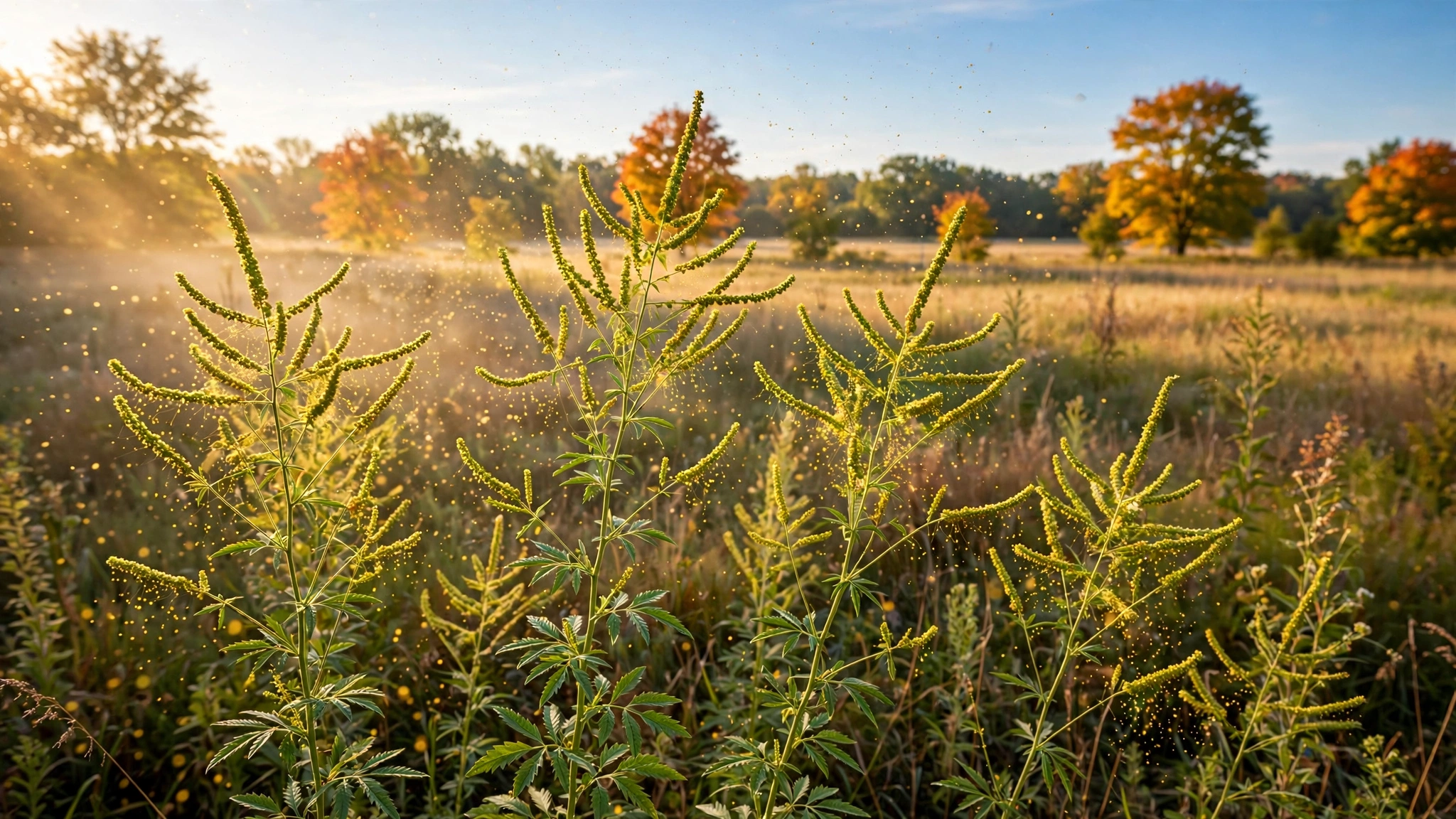
If your sneezing arrived right on schedule this year — the itchy eyes, the runny nose that won't quit, the foggy head that feels like a cold — you're not imagining it. This isn't just a bad allergy year for you. Fall allergy seasons in the U.S. really are getting longer, more intense, and harder to escape.
The main culprit is ragweed, the nondescript green weed that grows along roadsides, vacant lots, and farm fields across most of America. About 1 in 7 Americans is allergic to ragweed pollen, per the Asthma and Allergy Foundation of America (AAFA) — an estimated 23 to 50 million people, accounting for roughly half of all pollen-related hay fever in North America.
One Plant, One Billion Pollen Grains
Ragweed's numbers are almost comically unfair. A single ragweed plant can release up to one billion pollen grains in a single season, and each grain is so light that wind can carry it hundreds of miles from the plant that made it. You don't need a ragweed field in your backyard to suffer — you just need to live downwind of one, which in most of the country is everyone.
Ragweed starts releasing pollen in mid-August, typically peaks from late August through mid-September, and keeps going until the first hard frost stops it. That frost-dependent finish line is where climate change has quietly rewritten the rules.
Why Each Year Feels Worse
It used to be that the first autumn frost delivered reliable relief by October. Not anymore. Warmer falls have pushed the first frost later, giving ragweed more weeks to grow and pump out pollen.
The numbers are striking: a 2026 Climate Central analysis found the freeze-free ragweed growing season has lengthened in 88% of 202 U.S. cities since 1970 — by an average of 11 days. And peer-reviewed research has found North American pollen seasons have stretched by about 20 days since 1990, with rising CO₂ levels also boosting how much pollen each plant produces.
"It's not a myth that every year sees a more powerful and symptom-filled allergy season," said allergist Cherie Zachary, MD, president of the American College of Allergy, Asthma and Immunology (ACAAI), in the group's September 2026 fall allergy briefing. "Climate change has caused allergy season to start earlier and land harder than in previous years."
AAFA president and CEO Kenneth Mendez puts it plainly: warmer temperatures extend the weed pollen season, "meaning a longer, more intense period of symptoms for people allergic to ragweed and other weed pollen."
Is It Fall Allergies or a Cold?
By October, plenty of people with fall allergies mistake their symptoms for an autumn cold — or vice versa. The distinction matters, because the treatments are completely different.
Signs it's probably allergies:
- No fever
- Nasal discharge that's thin, clear, and watery
- Itchiness — itchy nose, eyes, ears, or throat is the allergy hallmark
- Symptoms flare after time outdoors or on dry, windy days
- It drags on for weeks, as long as exposure continues
- It returns at the same time every year
Signs it's probably a cold:
- Fever or body aches
- Thick, yellowish, or opaque mucus
- Sore throat and fatigue
- It clears up within 7 to 10 days
One quirk worth knowing: pollen counts often spike during and right after thunderstorms, when rain shatters pollen grains into tiny fragments that are easier to inhale — a phenomenon allergists associate with sudden symptom flares, especially in people with asthma. Levels also run highest on warm, dry, windy days and in the morning hours, and lowest just after a steady, gentle rain.
Don't Forget the Other Fall Triggers
Ragweed isn't the only fall trigger. Mold is the season's stealth offender: damp fallen leaves, garden beds, and leaf piles all breed mold spores, and raking or mulching can set off the same symptoms as ragweed.
Then comes the indoor switch. Once the heat kicks on and windows close, dust mites thrive in drier indoor air — so symptoms can morph from outdoor-driven to indoor-driven just as pollen fades. If sneezing eases after the first frost but never fully quits, indoor allergens may be the second act.
The Doctor-Backed Treatment Ladder
Here's the good news: fall allergies are highly treatable, and you don't need to know exactly which pollen is your problem to start feeling better. Allergists recommend climbing this ladder until symptoms are controlled:
Step 1 — Daily antihistamines. Modern second-generation pills like cetirizine, loratadine, or fexofenadine relieve sneezing, itching, and runny nose with little to no drowsiness. Start them a couple of weeks before you expect symptoms — for fall, that's mid-August — and keep going about two weeks past the first frost, since pollen lingers.
Step 2 — A daily nasal steroid spray. This is the heavy hitter. Sprays like fluticasone or mometasone are, in allergists' own words, the single most effective option for congestion, sneezing, itching, and runny nose. They work best used daily, not just on bad days — give any new plan 2 to 4 weeks before judging it.
Step 3 — Add a nasal antihistamine. If the steroid spray alone isn't enough, adding azelastine nasal spray on top of it works better than adding an oral allergy pill, per the treatment ladder outlined in recent doctor guidance.
Step 4 — Short-term decongestants, used carefully. A nasal decongestant spray opens things up fast, but never use it more than 3 to 5 consecutive days — longer use causes rebound congestion worse than what you started with.
Habits that help the medications work better: rinse your nose with saline to wash out trapped pollen, shower and change clothes after time outside, keep windows closed on high-pollen days, and mask up when you mow or rake — or hand the job to a non-allergic family member.
When It's Time to Think Bigger: Immunotherapy
If you spend every fall drugged up and still miserable, ask your doctor about allergen immunotherapy — allergy shots or daily sublingual tablets that retrain your immune system to stop overreacting. It's the only treatment that changes the underlying allergy instead of masking symptoms; clinical trials of ragweed tablets showed roughly 27% improvement in combined symptom and medication scores versus placebo during peak season.
The catch is timing: immunotherapy typically starts about three months before pollen season — so if you want next fall to be different, the allergist conversation starts this winter.
One Warning for People With Asthma
September brings a well-documented spike in asthma flare-ups — emergency department visits cluster around the third week of the month, a pattern allergists call the September asthma peak. Back-to-school viruses, weather swings, and peak ragweed all converge at once. If you have asthma, make sure your action plan is current, your rescue inhaler isn't expired, and you talk to your doctor before the season hits — not after.
The Bottom Line
Ragweed isn't going anywhere, and the seasons aren't getting shorter. But fall allergies are among the most solvable health annoyances in America: the medications are cheap, over the counter, and genuinely effective when used consistently. Start early, layer your treatments, clean up your exposure habits — and if the standard playbook fails, see an allergist. Testing and targeted treatment can make next fall barely register.
📚 Keep reading:

Forever Chemicals in Tap Water: What the EPA Found
PFAS 'forever chemicals' are in the tap water of millions of Americans. Here is what the science says about health risks — and the practical steps to protect your family.

Enlarged Prostate: Signs Every Man Over 50 Should Know
Waking up twice a night to pee? A weak stream that takes forever to start? An enlarged prostate affects half of American men by 60 — here's what's normal, what's not, and what helps.

Low Testosterone in Men: Signs, Causes, and What Helps
Feeling tired, weaker, and less driven than you used to? Low testosterone affects millions of American men after 40. Here's what the science says about symptoms, testing, and what actually helps.