Your Cozy Fireplace May Be Harming Your Lungs
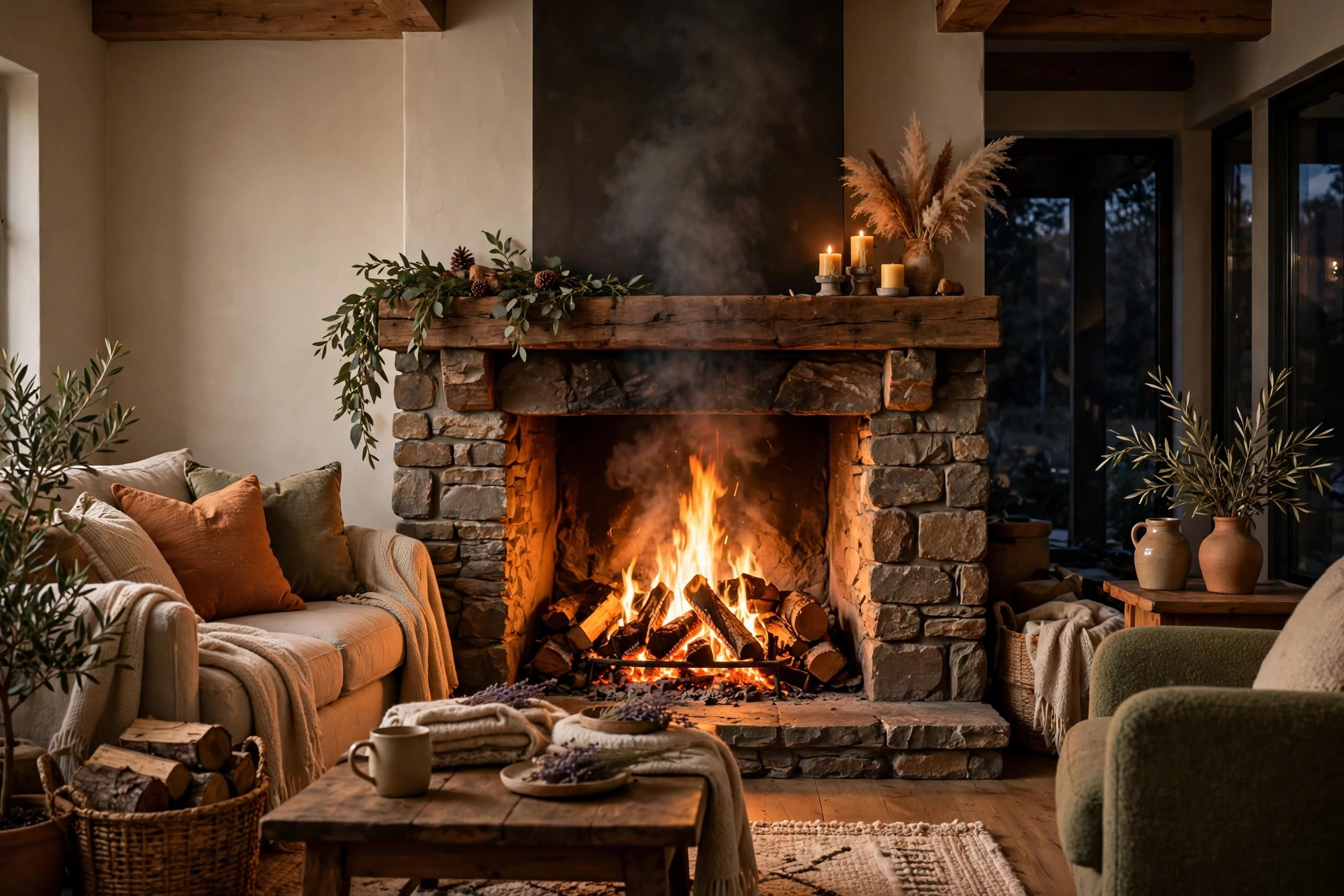
There is nothing quite like it on a cold October night: the lights low, a blanket across your knees, and a fire crackling in the hearth. It feels wholesome, old-fashioned, almost medicinal.
But the smoke curling out of that fire is not as innocent as it looks. According to the U.S. Environmental Protection Agency (EPA), wood smoke is a complex mixture of gases and fine particles, and the tiniest particles can travel deep into your lungs and even enter your bloodstream. For most healthy adults, an occasional fire is unlikely to cause lasting harm. For children, older adults, and anyone with asthma, chronic obstructive pulmonary disease (COPD), or heart disease, the same cozy evening can trigger real symptoms — and "natural" smoke is not the same as safe smoke.
What is actually in wood smoke?
When wood burns, it does not just produce heat and light. It releases a cocktail of pollutants, including:
- Fine particulate matter (PM2.5): particles smaller than 2.5 microns across — roughly 30 times smaller than a human hair — small enough to bypass your nose and throat's defenses and lodge deep in the lungs.
- Carbon monoxide: the same odorless gas produced by furnaces and car exhaust, which reduces how much oxygen your blood can carry.
- Volatile organic compounds (VOCs): chemicals including benzene and formaldehyde, both classified by the EPA as known or probable carcinogens at sustained exposures.
- Polycyclic aromatic hydrocarbons (PAHs): compounds formed during incomplete combustion, also linked to cancer risk with long-term exposure.
The EPA's Burn Wise program puts it plainly: smoke from wood burning can harm your health, and its particles are small enough to get into your eyes, lungs, and bloodstream. Outdoor wood smoke is a major source of wintertime particle pollution in many American towns, and indoor levels can spike well above normal when a fire is burning, especially if the flue is not drawing well or the fire is left to smolder.
Who is most at risk?
Some people pay a higher price for smoke:
- Children. Kids breathe faster than adults and take in more air relative to their body weight, and their lungs are still developing. Wood smoke exposure has been linked to more coughing, wheezing, and respiratory infections in children.
- People with asthma or COPD. Smoke is a well-documented trigger for flare-ups. If you notice coughing, wheezing, chest tightness, or needing your rescue inhaler more often on fire nights, the fire is a likely suspect.
- Older adults and people with heart disease. Fine particles do not only irritate the lungs. Research on particle pollution has tied it to increased risk of heart attacks and strokes, and the EPA warns that people with heart disease are among the most vulnerable to smoke exposure.
- Pregnant women. Because particles can enter the bloodstream, health agencies advise extra caution during pregnancy, when the developing baby is sensitive to pollutants.
Even for healthy adults, the short-term symptoms are familiar: stinging eyes, a scratchy throat, or a cough that lingers after the fire dies down.
Does an open fireplace differ from a wood stove?
Yes, and the difference matters. An open fireplace is the least efficient way to burn wood: much of the heat goes straight up the chimney, and the fire often burns cooler and smokier than a stove. Older, uncertified wood stoves are better than an open hearth but still release far more particles than modern models.
EPA-certified wood stoves, built to tighter emissions standards, burn hotter and more completely, producing less smoke for the same amount of heat. If you heat with wood regularly, upgrading from an old stove to an EPA-certified model is one of the most effective steps you can take.
How to burn safer if you love a real fire
You do not have to give up the fireplace entirely. A few habits make a genuine difference in how much smoke you and your family breathe:
Burn only dry, seasoned hardwood
Wet or green wood is the biggest cause of smoky fires: it burns cooler, smolders longer, and produces far more particles. Burn only wood split, stacked, and dried for at least six months — oak, maple, ash, or birch are good choices. Seasoned wood sounds hollow when two pieces are knocked together and reads under 20 percent moisture on an inexpensive meter.
Never burn trash, treated, or painted wood
Burning household trash, glossy cardboard, plywood, pressure-treated lumber, or painted wood releases toxic chemicals, including dioxins and heavy metals, that plain wood smoke does not contain. If it is not clean, dry, untreated wood, it does not belong in the fire.
Keep the fire hot and the flue open
A small, hot fire with the damper fully open burns cleaner than a large, smoldering one. Do not choke the air supply to make a fire "last longer" overnight — smoldering is exactly when particle emissions climb. Let the fire burn down before bed, and never close the damper while embers are still glowing.
Get your chimney swept every year
Creosote — the tarry buildup left by wood smoke — narrows the flue, worsens draft problems, and can catch fire. The Chimney Safety Institute of America recommends an annual inspection and cleaning, which also checks for blockages and cracked liners that can push smoke back into the room.
Ventilate and filter the air
Crack a nearby window slightly while the fire burns to help the chimney draw, and run a portable air purifier with a true HEPA filter in the room. Keep bedroom doors closed if the fire is in the living room, so smoke does not drift where you sleep.
Install carbon monoxide detectors
Because wood smoke contains carbon monoxide, a working CO detector on every level of your home is essential. Test detectors monthly.
Watch the air quality and local burn rules
Many cities and counties issue no-burn days when winter air stagnates and particle levels climb. Check your local air quality index (AQI) on AirNow.gov before lighting up, and respect burn bans — they exist precisely for the nights when smoke hangs in the air instead of dispersing.
When to talk to your doctor
Most smoke irritation clears within a day once you are back in clean air. See a doctor promptly for wheezing or shortness of breath that does not settle, chest pain, a cough lasting more than a few days after exposure, or needing your rescue inhaler more than usual. If anyone shows signs of carbon monoxide poisoning — headache, dizziness, nausea, confusion — get everyone outside into fresh air immediately and call 911.
The bottom line
A fireplace is one of winter's pleasures, and an occasional fire in a well-maintained hearth is a very different risk from heating with wood all winter in a leaky old stove. Burn dry wood, burn it hot, keep the chimney clean, and be honest about who in your household is breathing it in.
This article is for informational purposes only and is not medical advice. If you have asthma, COPD, heart disease, or concerns about smoke exposure, talk to your doctor about what is safe for you.
Rao Sajid is the founder and editor of VitalDaily. He covers everyday health topics — nutrition, sleep, fitness and wellness — turning guidance from public-health sources like the CDC, NIH and FDA into plain, practical advice. More about Rao →
📚 Keep reading:

Why the Room Spins: BPPV, the Vertigo You Can Fix
Rolling over in bed makes the room spin for 30 seconds, then it stops. That is often BPPV, loose crystals in the inner ear, and a simple head maneuver can fix it.

Why Muscles Hurt 2 Days After a Workout
Soreness that peaks two days after a workout is called DOMS. Here is why it happens, what actually helps, and when to get it checked.

Why You Wake Up With Puffy Eyes and How to Fix Them
Puffy eyes in the morning are usually harmless fluid buildup overnight. Here is what causes them, what actually helps, and when to see a doctor.