Are You Measuring Your Blood Pressure Wrong?
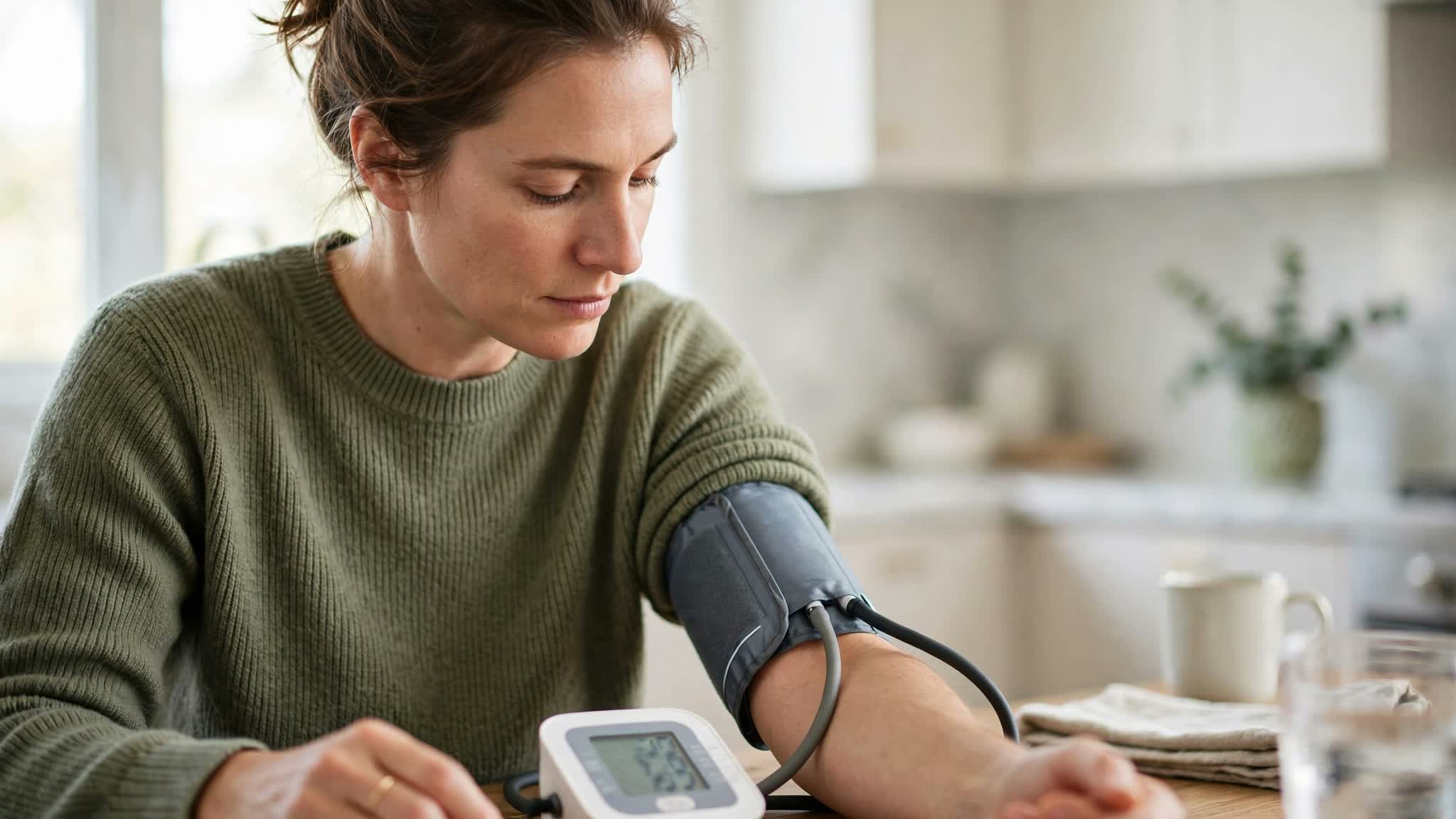
If you have ever taken your blood pressure at home, stared at the number, and wondered whether to believe it, you are not alone. Home monitors are everywhere now, from drugstore shelves to the bathroom counter, and doctors increasingly rely on them to diagnose and manage high blood pressure. But a home reading is only as good as the technique behind it, and most people get that technique wrong.
The stakes are real. According to the Centers for Disease Control and Prevention, nearly half of American adults, about 119 million people, have hypertension, and only about 1 in 4 have it under control. It usually causes no symptoms, yet it quietly raises the risk of heart attack, stroke, and kidney failure. A falsely high reading can lead to unnecessary worry or medication changes, while a falsely low one can leave a real problem untreated.
Why home readings matter more than ever
For years, the office reading was the gold standard, but it has flaws: some people's pressure spikes in a clinic (white-coat hypertension), while others have normal office readings but high pressure at home (masked hypertension). Home readings predict heart attack and stroke risk at least as well as office readings, and often better.
That is why the American Heart Association recommends home monitoring for most people with high blood pressure and for anyone whose office readings are borderline. But the readings must be done correctly: a cuff that is too small, an unsupported arm, or talking during the measurement can shift a reading by 5 to 10 points, enough to move someone across the line between normal and high.
Get the right cuff first
The single most common error is cuff size, and it is also the easiest to fix. A cuff that is too small squeezes the arm too tightly and reads artificially high, sometimes by 10 points or more. A cuff that is too large can read too low.
Measure around the middle of your upper arm. Most adults need a standard cuff, which fits arms 9 to 13 inches around; above 13 inches, you need a large cuff. The American Heart Association recommends a validated upper-arm monitor; check the American Medical Association Validated Device Listing or ask your pharmacist to verify yours.
Bring your monitor to your next appointment for a quick side-by-side check against the clinic device.
The 5-minute routine that changes everything
Blood pressure is sensitive to almost everything you did in the previous half hour, so preparation matters.
Start by emptying your bladder, then sit and rest quietly for five minutes. Do not check your phone, do not watch the news, and do not talk. In the 30 minutes before measuring, avoid caffeine, alcohol, and tobacco, and skip the measurement right after exercise or a large meal. Each of those can temporarily raise your pressure and give you a number that does not reflect your usual state.
Then set up your position, which matters more than most people realize:
- Sit in a chair with back support, feet flat on the floor, legs uncrossed. Dangling feet or crossed legs can raise the reading by several points.
- Rest your arm on a table so the cuff sits at heart level. An arm hanging at your side reads higher; an arm held up in the air reads lower.
- Place the cuff on bare skin, not over a sleeve. Even a thin shirt under the cuff can distort the reading.
- Keep the bottom of the cuff just above the bend of your elbow, with the tubing centered over the inner arm.
- Stay still and silent while the monitor runs. Talking, laughing, or even clenching your hand can raise the number.
Take two readings, one minute apart, and record both. If they differ by more than 5 points, take a third. Your true pressure for that session is the average of the last two.
When and how often to measure
A single reading tells you almost nothing. Blood pressure naturally rises and falls through the day, peaking in the morning and dipping at night, so doctors look at patterns, not snapshots.
The American Heart Association suggests measuring twice a day, morning before eating or taking medication and evening, for seven days before a doctor's visit, two readings each time. That week of data gives your doctor a far clearer picture than any single office visit.
Outside that week, people with controlled pressure often measure a few times a week, while those adjusting medication may measure daily. Do not measure obsessively: checking every hour only produces anxiety, and anxiety raises blood pressure.
Keep a simple log: date, time, both readings, and anything unusual, such as pain or a missed dose. Many monitors store readings automatically, but a notebook works just as well.
How to read the numbers
Blood pressure is reported as two numbers, such as 120/80 mmHg. The top number, systolic pressure, is the force when your heart beats. The bottom number, diastolic pressure, is the force when your heart rests between beats.
Under current American guidelines, normal is below 120/80. Elevated is 120 to 129 systolic with diastolic below 80. Stage 1 hypertension starts at 130/80, and stage 2 at 140/90 or higher. A reading of 180/120 or higher is a hypertensive crisis: if you have chest pain, shortness of breath, or other symptoms, call 911. If you have no symptoms, recheck after five minutes of rest and call your doctor promptly.
One high reading is not a diagnosis. What matters is the pattern over days and weeks, which is why correct technique and consistent timing matter so much.
Mistakes worth checking tonight
Most people will find at least one error on this checklist:
- Measuring over clothing. Roll the sleeve up or remove it.
- Arm unsupported or below heart level. Rest it on a table.
- Feet dangling or legs crossed. Plant both feet flat.
- Talking or moving during the reading. Sit still and silent.
- Measuring right after coffee, a cigarette, or a workout. Wait at least 30 minutes.
- Using the wrong cuff size. Measure your arm and check the cuff range.
- Trusting a wrist monitor without verification. Wrist devices are far more sensitive to position, and they need the wrist held exactly at heart level.
- Taking only one reading. Always take two, a minute apart.
Fixing even two or three can change your numbers enough to change your treatment.
The bottom line
A home blood pressure monitor is one of the most useful health tools you can own, but only if you use it like a doctor would: the right cuff, on bare skin, with your arm supported at heart level, after five quiet minutes, twice a day, averaged over a week. That routine takes about three minutes, and it produces numbers your doctor can actually act on.
If your home readings are consistently at or above 130/80, do not wait for your next annual checkup. Bring your log and the monitor itself to your doctor and ask whether your technique checks out. Getting the measurement right is the first step to getting the treatment right.
Rao Sajid is the founder and editor of VitalDaily. He covers everyday health topics — nutrition, sleep, fitness and wellness — turning guidance from public-health sources like the CDC, NIH and FDA into plain, practical advice. More about Rao →
📚 Keep reading:

Ibuprofen vs. Tylenol: Which Pain Reliever Is Safer?
Both ease pain, but they work differently and carry different risks. Here is how ibuprofen and acetaminophen compare, and which one fits your situation.

Wisdom Teeth: Do You Really Need Them Removed?
Millions of Americans have wisdom teeth removed every year, but not everyone needs surgery. Here is when extraction helps and when waiting is safe.

Metallic Taste in Your Mouth: Causes and Fixes
A metallic taste that will not go away has a name: dysgeusia. Here is what causes it, from medicines and gum disease to pregnancy, and when to get checked.