Jet Lag: How to Beat It Before Your Holiday Flight
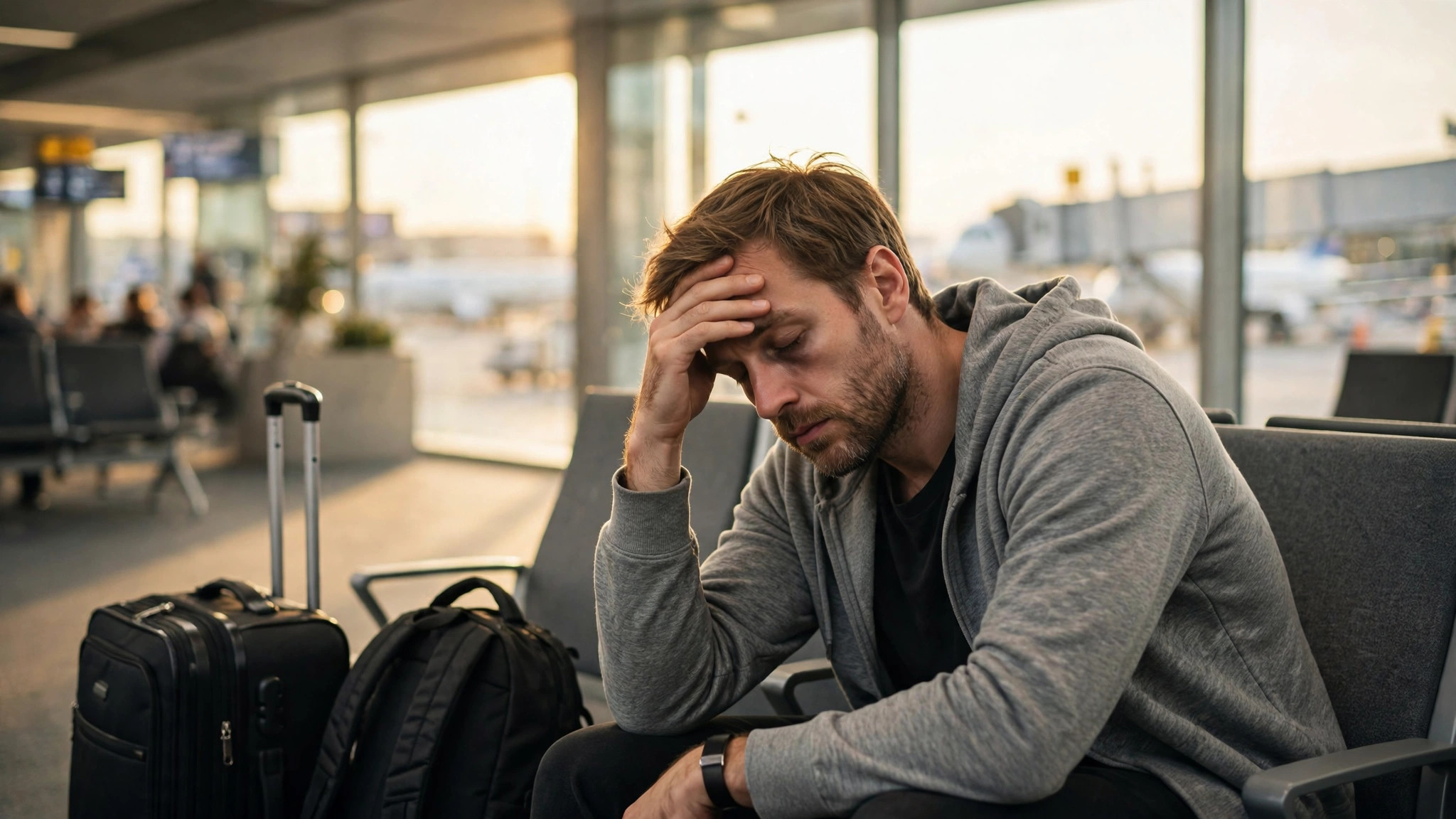
Thanksgiving week is the busiest travel stretch of the American year. Tens of millions of people board planes to see family, many crossing two, three, or more time zones in a single flight. Then they spend the first two days of the visit feeling like zombies: wide awake at 3 AM, foggy by noon, asleep on the couch before the pie is served.
That is jet lag: a mismatch between your body's internal clock and the clock on the wall where you landed. The good news is that it is one of the most preventable travel problems there is. With a few days of preparation, you can land feeling close to normal instead of losing half your trip to a fog.
Why jet lag hits so hard
Your body runs on a roughly 24-hour internal clock, called your circadian rhythm. It controls when you feel sleepy, alert, and hungry, and it is set mainly by light: bright light in the morning signals daytime, and darkness in the evening signals wind-down.
A cross-country flight scrambles that system in hours. Fly from New York to Los Angeles and your body still thinks it is 9 PM when locals sit down to dinner at 6 PM. Fly the other way and you are expected to be bright-eyed at 7 AM when your body insists it is 4 AM.
As a rough rule, your body adjusts by about one hour per day. Cross three time zones and you may need three days to feel normal. Cross six and it can take close to a week, longer than many holiday trips last. That is why the fix has to start before you fly, not after you land.
One quirk worth knowing: flying east is usually harder than flying west, because shortening your day fights your body's natural tendency to run slightly longer than 24 hours.
Start shifting your clock three days early
The single most effective jet lag trick is also the simplest: start living on your destination's time before you leave.
Three days before an eastbound flight, go to bed an hour earlier each night and get up an hour earlier each morning. For a westbound flight, do the opposite: push bedtime and wake time an hour later each day. By departure day you will already be one to three hours closer to your destination's schedule, which can cut your recovery time in half.
Pair the shift with light, the strongest signal for resetting your clock. On eastbound prep days, get bright light as soon as you wake up. On westbound prep days, seek bright light in the late afternoon and evening instead, and keep mornings dim.
On the plane: act like you are already there
As soon as you sit down, set your watch to your destination's time and behave accordingly. If it is daytime there, stay awake. If it is nighttime there, try to sleep, even if your body says it is mid-afternoon.
A few in-flight habits make a real difference:
- Drink water steadily. Cabin air is extremely dry, and dehydration makes fatigue and headaches worse. Aim for about 8 ounces of water per hour in the air.
- Skip alcohol, time your caffeine. Alcohol may make you drowsy, but it fragments your sleep and dehydrates you, so you land feeling worse. Caffeine is fine if it is daytime at your destination, but avoid it within about six hours of when you plan to sleep on the plane.
- Move every hour or so. Walk the aisle and flex your ankles. It fights stiffness and is also the best protection against the blood-clot risk of long flights.
- Eat on destination time. If lunch is served but it is midnight where you are headed, a light snack and then sleep beats a full meal. Your gut has a clock too.
Light after landing is your reset button
What you do with light in your first 24 hours at your destination matters more than anything else after landing.
If you flew east, get outside into bright morning light as early as you can, and wear sunglasses or stay indoors in the late afternoon. Morning light pulls your clock earlier. If you flew west, do the reverse: seek bright light in the late afternoon and early evening, and avoid bright light first thing in the morning.
Even on a cloudy day, outdoor light is far brighter than indoor lighting, often ten times as strong. A 30-minute walk outside beats sitting under bright office lights.
Whatever you do, resist the urge to nap for hours when you arrive. A short nap of 20 to 30 minutes in the early afternoon is fine. A three-hour nap at 4 PM will steal your nighttime sleep and leave you staring at the ceiling at 2 AM.
Melatonin: helpful, but only if timed right
Melatonin is the hormone your brain releases when darkness falls, and the supplement version is the most studied jet lag aid available over the counter in the United States. It can help, but timing matters more than dose, and most people take it wrong.
The research-backed approach is a low dose, typically 0.5 to 3 milligrams, taken at the new bedtime at your destination for the first few nights, not at your old bedtime and not in the middle of the night when you wake up.
A few cautions: melatonin is sold as a dietary supplement in the United States, so it is not approved by the Food and Drug Administration for treating jet lag, and the actual dose in a bottle can vary from what the label says. Start low, choose a reputable brand, and talk to your doctor first if you take blood thinners, diabetes medication, or immune-suppressing drugs, or if you are pregnant.
Your first 48 hours after landing
Put it together and the first two days look like this. On day one, get outside into correctly timed light, eat meals on local time even if you are not hungry, stay active with a walk, and keep any nap under 30 minutes. Go to bed at a normal local bedtime, even if you feel sleepy at 7 PM. On day two, repeat. Most people feel noticeably better, though full adjustment takes a few days. A morning walk with family is one of the best jet lag remedies there is.
True jet lag fades within a few days as your clock catches up. See a doctor if sleep problems last more than two weeks after you return home, or if you notice loud snoring with pauses in breathing, or daytime sleepiness that never lifts.
The bottom line
Jet lag feels inevitable, but it is mostly a scheduling problem, and scheduling problems have solutions. Shift your sleep an hour a day for a few days before you fly, use light like the tool it is, eat and sleep on destination time from the moment you board, and keep your arrival naps short.
Thanksgiving is short. Nobody wants to spend it foggy, napping through the visit, and awake half the night. A little planning before the flight buys you the whole holiday back.
Rao Sajid is the founder and editor of VitalDaily. He covers everyday health topics — nutrition, sleep, fitness and wellness — turning guidance from public-health sources like the CDC, NIH and FDA into plain, practical advice. More about Rao →
📚 Keep reading:

Why Your Body Jerks as You Fall Asleep
That sudden jolt just as you drift off is a hypnic jerk. It is common, usually harmless, and often linked to stress, caffeine, and late workouts.

Ankle Sprains: Heal Faster and Avoid a Second Sprain
A rolled ankle is one of America's most common injuries, and rushing back is why it happens again. Here is how to heal it right the first time.

Whooping Cough Is Surging: Signs Adults Keep Missing
Whooping cough is surging in the U.S., and in adults it often looks like a common cold until the coughing fits start. Here is how to spot it early.