Rucking: Turn Your Walk Into a Full-Body Workout
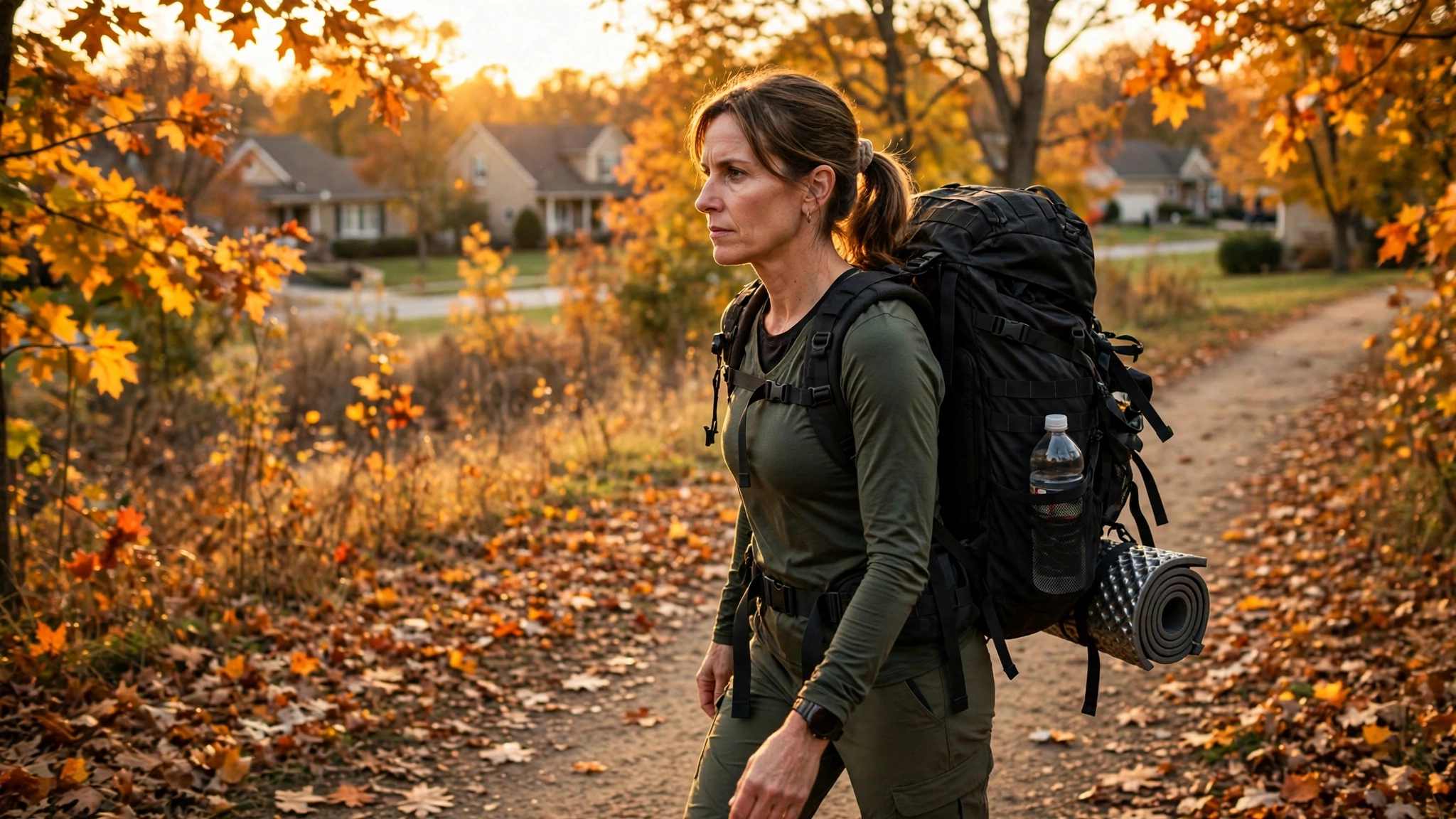
The American College of Sports Medicine will tell you that a brisk 30-minute walk is one of the best things you can do for your body. Now imagine that same walk — except your muscles, your heart, and your bones are all working noticeably harder, while your knees still enjoy the gentle motion of walking. That's rucking: walking with a weighted backpack. No gym, no membership, no learning curve. Just a pack, some weight, and the sidewalk.
Rucking comes from military training — the word is short for "rucksack march," and U.S. soldiers have done it for generations to build the endurance needed to carry gear over long distances. Over the past few years, civilians have adopted it in a big way. Ruck clubs have sprung up in cities across the country, from Austin to Brooklyn, turning an ordinary walk into a social workout. But is it actually better than plain walking? The research says yes — with a few important caveats.
More than just a walk with stuff in it
When you add weight to your back, every step costs your body more energy. Researchers have modeled this for decades: the classic Pandolf equation from 1977, published in the Journal of Applied Physiology, predicts how much extra energy load carriage demands. More recently, Army researchers (Looney et al., 2022, in Medicine & Science in Sports & Exercise) built an updated model specifically for heavy backpacking loads.
Here's what the numbers look like for a 180-pound person walking at 3.5 mph on flat pavement: about 365 calories an hour unloaded. Add a 25-pound pack, and that rises to roughly 400 calories an hour. Take that same pack up a 5 percent grade, and you're looking at around 620 calories an hour. The takeaway: a moderate pack adds a meaningful bump on flat ground, but hills are where rucking really earns its reputation.
One University of South Carolina review of the trend went further, suggesting rucking can burn two to three times the calories of an easy stroll while delivering cardiovascular benefits comparable to jogging — but with the lower joint impact of walking.
Strength, bones, and your back
Rucking sits in an unusual sweet spot: it's cardio and resistance training in a single session. A 2011 study tracking lower-limb muscle activity found that carrying loads of 20–40 percent of body weight significantly increased activation in the quads, hamstrings, and calves compared with unloaded walking. You are, in effect, doing a low-grade leg workout for the entire duration of your walk.
The weight-bearing nature matters for your skeleton too. Research on walking with weighted vests — the close cousin of rucking — shows it can help preserve and even increase bone mineral density, particularly in the knees, ankles, and hips. For the 54 million Americans over 50 at risk of osteoporosis, according to the CDC, that's a serious selling point. Bone responds to loading: it builds where it's stressed.
Your back may thank you as well. Stuart McGill, the renowned spine biomechanics researcher, has recommended properly programmed rucking for people with chronic back pain, noting that it strengthens the erector spinae and core stabilizers that keep you upright. The key word is "properly" — posture is everything, which we'll get to.
And don't underestimate the mental side. Like any outdoor exercise, rucking gets you into green space, and a large body of research links time outdoors with lower stress, anxiety, and fatigue. Endorphins do the rest.
How to start rucking safely
The single most common beginner mistake is loading the pack too heavy. Experts converge on one guideline: start with 5–10 percent of your body weight. For a 160-pound person, that's 8–16 pounds to begin with — roughly the weight of a gallon or two of water. WebMD's guide to rucking advises starting with 5–10 pounds if you're new to exercise, or about 10 percent of body weight if you're already active.
You need no special gear to start. A regular backpack filled with books, canned goods, or water bottles works fine — just weigh the load first and pack items snugly so nothing shifts or pokes you. Keep the weight high and close to your upper back, not sagging near your lower back, and use the waist belt if your pack has one to distribute the load.
Here's a safe ramp-up plan:
Week 1–2: Confirm you can walk 30 minutes unweighted without getting winded. Then add 5–10 pounds and ruck for 20–30 minutes on flat terrain, once or twice a week.
Week 3–4: Build to 10 percent of your body weight. Add distance or time before adding weight — progression goes distance and elevation first, weight second.
Beyond: Aim for the classic benchmark of a 20-minute mile (3 mph) with your pack. Work up to 2–3 sessions a week, and introduce hills for a much bigger calorie and strength payoff.
Form matters: stand tall, shoulders back, core engaged. If you're hunching forward or your stride is drastically shortened, the pack is too heavy or poorly fitted. And skip the trail-running shoes when carrying heavier loads — supportive footwear or boots handle the extra impact better.
The honest risks
Rucking is low-impact, but it isn't risk-free. Researchers from Nottingham Trent University, writing in The Conversation, note that soldiers who ruck have experienced back pain, shin splints, lower-body stress fractures, blisters, and knee pain — likely because posture changes when weight is added. The same can happen to civilians who go too heavy, too fast, or on punishing terrain.
People with a history of knee or lower-back problems — especially mechanical back pain — should get professional advice before starting. Descending hills with a pack is notably harder on joints than climbing, so respect the downhills. And if sharp pain shows up, stop: rucking should feel like a hard walk, never like damage.
The bottom line
Walking already meets the CDC's threshold for moderate aerobic activity. Rucking simply turns up the dial on what you're already doing — more calories, more muscle engagement, more bone-loading stimulus, all without the pounding of running. If your knees have retired your running shoes, or your evening walk feels too easy, throw ten pounds in a backpack and find out why millions of Americans are suddenly walking with purpose.
📚 Keep reading:

Climbing 5 Flights of Stairs Daily Cuts Heart Disease Risk
A Tulane study of 458,000 adults found climbing 5+ flights of stairs a day was linked to ~20% lower heart disease risk. No gym needed — here's the science.

The 26-Minute Power Nap: What Science Really Says
NASA found a 26-minute nap boosted pilot alertness 54% and performance 34%. With 1 in 6 Americans exhausted, here's the science of the perfect power nap.

Alcohol and Your Health: What Science Really Says
Alcohol is now named the third leading preventable cause of cancer in the U.S. What the latest science says about drinking, real limits, and how much is too much.