Tonsil Stones: The Hidden Cause of Stubborn Bad Breath
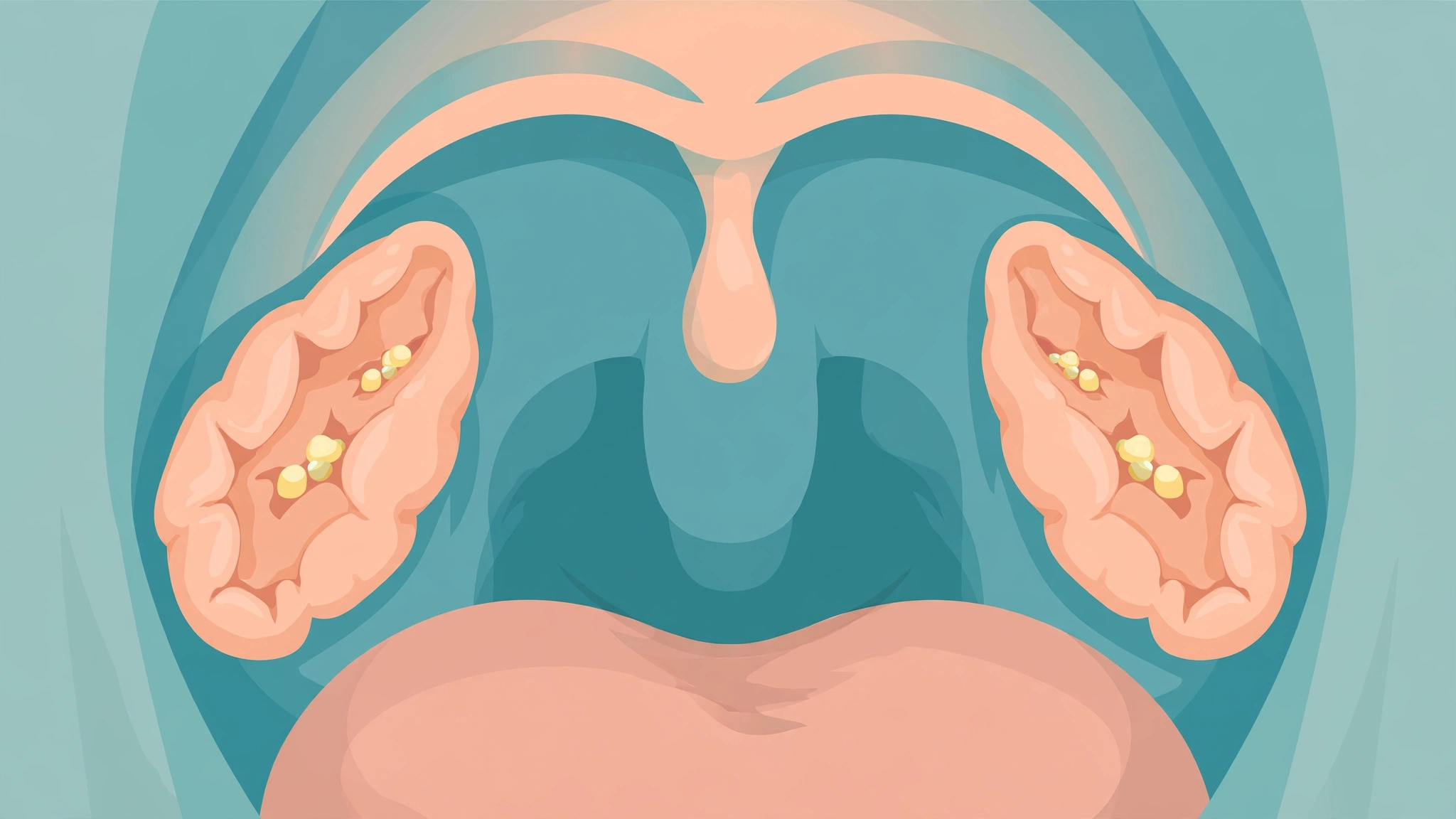
You brush twice a day. You floss. You swish mouthwash until your eyes water. And still — your breath smells. If that sounds familiar, the culprit may be hiding somewhere your toothbrush can't reach: small, chalky white lumps tucked into the crevices of your tonsils.
They're called tonsil stones, or tonsilloliths, and they're far more common than most people realize. Some people first discover them when they cough up a tiny pebble that smells like rotten eggs. Others spot them as white specks in the mirror while saying "ahh." Either way, they can be a surprisingly big source of embarrassment — and they're usually harmless and fixable.
What tonsil stones actually are
Your tonsils aren't smooth. They're pitted with tiny pockets and folds called crypts — think of them like little caves in the tonsil tissue. Those crypts are designed to trap germs so your immune system can deal with them. But they also trap dead cells, mucus, food particles, and bacteria.
Over time, that trapped debris hardens and calcifies into small pebbles, typically white or yellowish, ranging from the size of a grain of rice to — in rare cases — larger than a pea. Researchers estimate that roughly 1 in 10 adults develop them at some point, and they're most common in people whose tonsils have deep crypts or who get frequent throat infections.
The American Academy of Otolaryngology notes that most tonsil stones are tiny and cause no symptoms at all — many people have them and never know. It's the bigger or more numerous ones that start causing trouble.
Why they smell so awful
That infamous stench — often described as sulfur or rotten eggs — comes from anaerobic bacteria living on and inside the stones. These bacteria break down proteins and release volatile sulfur compounds: hydrogen sulfide and methyl mercaptan. Those are the very same chemicals behind classic bad breath, which is why tonsil stones can make your breath smell bad even when your teeth and gums are in perfect shape.
It's a distinctive smell, too. Many dentists and ENT doctors say they can recognize "tonsil stone breath" — a sharp, sour odor that mouthwash only masks for an hour or two before it creeps back.
The 5 telltale signs
How do you know you have them? Watch for these:
- Bad breath that won't quit. You've ruled out cavities, gum disease, and diet — but the odor persists, especially in the morning.
- A feeling that something's stuck in your throat. Not painful, exactly — more like a pebble or a popcorn hull lodged at the back of your throat that swallowing won't clear.
- Ear pain on one side. The nerves of the throat and ear share pathways, so throat irritation can "refer" pain to the ear. It's a classic, under-recognized sign.
- Visible white or yellow spots. Open wide in a bright mirror, say "ahh," and look at your tonsils. Stones often appear as small white specks sitting in the folds.
- A persistent bad taste or mild sore throat. Some people notice a metallic or sour taste that lingers, or a low-grade scratchiness on one side.
What causes them in the first place
Some people are simply built for them. Large, deeply pitted tonsils trap more debris — that's the single biggest risk factor. Beyond that, several things raise the odds:
- Chronic tonsillitis or frequent sore throats, which scar and deepen the crypts
- Post-nasal drip from allergies or sinus infections, which drips mucus down onto the tonsils
- Chronic dry mouth, which lets bacteria thrive (certain medications, mouth breathing at night, and too little water all contribute)
- Poor oral hygiene, especially skipping tongue cleaning — the tongue harbors the same sulfur-producing bacteria
What actually works to get rid of them
For most people, this is a do-it-yourself problem with simple, safe fixes:
- Gargle with warm salt water. A vigorous gargle — head tilted back, salt water bubbling at the back of the throat — can dislodge small stones. Do it a few times a day during a flare-up.
- Stay hydrated. Water keeps mucus thin and saliva flowing, which naturally flushes the crypts. Aim for the classic 8 cups (64 ounces) a day, more if you're active or in dry indoor heat.
- Clean your tongue. A tongue scraper or the back of your toothbrush removes the bacterial film that feeds stone formation. Many people with tonsil stones see their breath improve dramatically from this one habit.
- Treat the drip. If allergies or sinus issues leave you with post-nasal drip, treating that (saline nasal rinse, allergy medication as directed) cuts off a major stone-building material.
- A gentle water irrigator on low. Some people carefully aim a low-pressure oral irrigator at the crypts. Key word: gentle. Digging at your tonsils with cotton swabs, toothpicks, or fingernails can tear the delicate tissue, cause bleeding, and invite infection — ENT doctors strongly advise against aggressive poking.
In most cases, small stones work themselves loose on their own — coughing, swallowing, or eating crunchy food dislodges them, and you'll simply swallow or spit them out without noticing.
When to see a doctor
Tonsil stones are almost always benign, but see your primary care doctor or an ENT specialist if:
- The stones are large, keep coming back, and home care isn't helping
- You have persistent sore throat, trouble swallowing, or swelling on one side
- You get repeated tonsil infections (several a year)
In the office, a doctor can remove stubborn stones safely. For severe, recurring cases, options include laser cryptolysis (smoothing the crypts so debris can't collect) and, in extreme cases, tonsillectomy. Surgery is reserved for people with truly disruptive, recurrent problems — not a first-line fix.
One red flag to know: a severe sore throat with high fever, difficulty swallowing, and a "hot potato" muffled voice can signal a peritonsillar abscess — a pocket of infection next to the tonsil. That's an emergency, not a tonsil stone, and needs prompt medical care.
The bottom line
Tonsil stones are one of those small, annoying body quirks that can cause outsized embarrassment. The good news: they're common, they're harmless in the vast majority of cases, and simple habits — saltwater gargles, hydration, tongue cleaning, and managing post-nasal drip — keep most of them from ever forming.
So if your breath has been mysteriously stubborn despite a flawless brushing routine, take a look at your tonsils. The answer might be sitting right there in the folds — small, white, and very fixable.
VitalDaily's content is for informational purposes only and is not medical advice. If you have persistent throat symptoms, talk to your doctor or an ENT specialist.
Rao Sajid is the founder and editor of VitalDaily. He covers everyday health topics — nutrition, sleep, fitness and wellness — turning guidance from public-health sources like the CDC, NIH and FDA into plain, practical advice. More about Rao →
📚 Keep reading:

Social Jet Lag: Why Sleeping In on Weekends Hurts
You can't erase a week's sleep debt with one lie-in. Each hour of 'social jet lag' between weekday and weekend sleep is tied to higher heart and metabolic risk — here's the fix.

Honey for Coughs: Does It Actually Work?
Grandmothers have sworn by it for centuries, but does honey really calm a cough? Here's what clinical trials say about honey for coughs and how to use it right.

Melatonin for Sleep: Does It Work and Is It Safe?
Americans now spend hundreds of millions on melatonin gummies each year. Here's what the science says it can do, what it can't, and the right way to use it.