Walking Backward: The Workout Your Knees Will Love
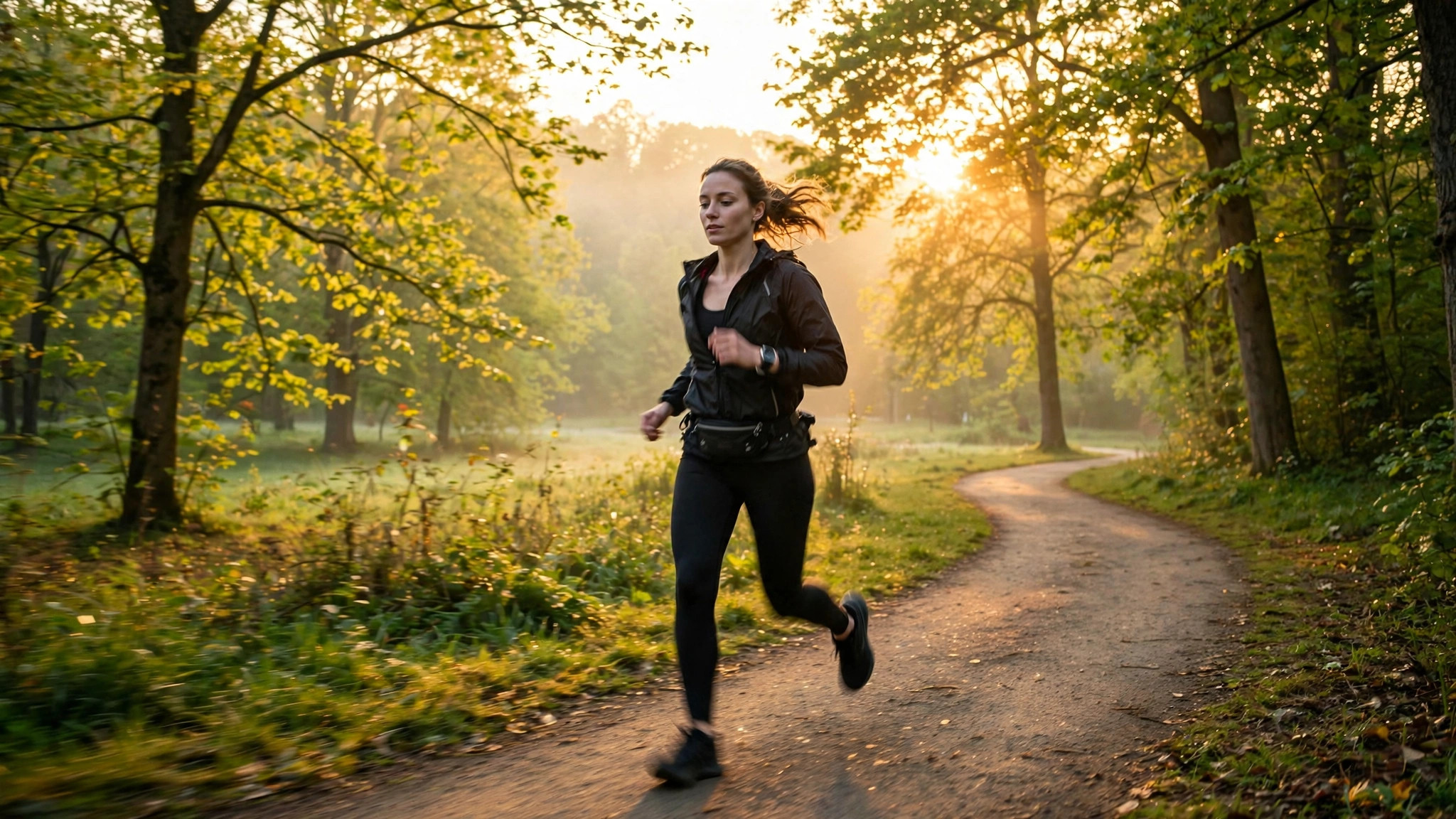
If you saw someone walking backward around your local track, you might assume they lost a bet. In fact, they may be onto something. Retro walking, as physical therapists call it, is a simple twist on America's most popular exercise, and small studies suggest it does things ordinary walking does not.
It will not replace your regular walk, and it is not a miracle cure for bad knees. But done slowly, in a safe spot, it can strengthen the muscles that support your knees and sharpen your balance.
Why walking backward works differently
Forward walking is automatic: your brain has done it millions of times, and the same muscles do the same job in the same order every step.
Walking backward breaks that pattern. You cannot see where you are going, so your brain has to pay attention, your stride shortens, and the quadriceps, the muscles on the front of your thighs, work harder to control each step and keep your knee stable.
That matters because weak quadriceps are a common problem for people with knee pain. The quads act like shock absorbers for the knee joint, and when they are stronger, every step and stair climb puts a little less strain on it. Physical therapists have used backward walking for years in knee rehabilitation, and it tends to reduce impact force at the knee compared with forward walking. That is welcome news given that osteoarthritis affects about 32.5 million American adults, according to the Centers for Disease Control and Prevention.
What the research actually shows
Retro walking research is promising but still young. Most studies are small and short, done in people who already have knee problems or balance trouble, so the results should not be oversold. With that caveat, here is what researchers have consistently found:
Stronger knees and less pain. Several small trials in people with knee osteoarthritis found that adding backward walking to a regular exercise program improved quadriceps strength and reduced knee pain more than forward walking alone. The improvements were modest, not dramatic, but for people who hurt every time they climb stairs, modest matters.
Better balance. Because you cannot rely on vision to plan your next step, backward walking trains proprioception, your body's sense of where it is in space. Studies in older adults have linked it to better balance scores and steadier gait, a meaningful benefit when falls are the leading cause of injury-related death among Americans aged 65 and older.
A harder workout in less time. Backward walking takes more energy than forward walking at the same speed: your muscles work less efficiently in reverse, your heart rate climbs faster, and you burn more calories per minute. Swapping a few minutes of a regular walk for backward walking can raise the intensity without raising the impact.
What retro walking is not: a substitute for medical treatment. If you have severe knee arthritis, a torn meniscus, or a neurological condition that affects your balance, discuss it with your doctor or physical therapist first.
Who benefits most
Retro walking is most useful for:
- People with achy knees who want stronger quadriceps without high-impact exercise like running or jumping.
- Older adults working on balance, especially those who feel unsteady on uneven ground or when turning quickly.
- Athletes rehabbing a knee injury under a therapist's guidance, or looking for a low-impact way to add variety.
- Anyone bored with their walking routine who wants a challenging twist that needs no equipment or gym membership.
If you are generally healthy and steady on your feet, you can try it on your own with the safety rules below. If you use a cane or walker, have vision problems, or have fallen in the past year, do it only with someone beside you.
How to start safely
The biggest risk is obvious: you cannot see what is behind you. So the place matters more than the pace.
1. Pick a safe, flat spot. A quiet indoor track, an empty hallway, or a treadmill with handrails is ideal. Avoid trails, busy sidewalks, parking lots, and anywhere with curbs, pets, or children running around.
2. Bring a spotter the first few times. Walk with a friend who walks forward beside you and warns you about anything in your path. If you are alone, glance over your shoulder every few steps.
3. Start tiny. Try just 1 to 2 minutes of backward walking inside a normal 20 to 30 minute walk. Over two to three weeks, build up to 5 to 10 minutes total, broken into short intervals.
4. Go slow and take short steps. Short, controlled steps keep you stable and let your quadriceps do the work. Stand tall and look straight ahead, not down at your feet.
5. Use support if you need it. On a treadmill, hold the rails lightly at first and set the speed very low, around 1 to 2 miles per hour. Outdoors, a walking partner's arm works the same way.
6. Stop if something hurts. Muscle effort in the front of your thighs is normal. Sharp knee pain, dizziness, or a feeling that you might fall is not. Stop and walk forward. If knee pain persists for more than a day or two, check in with your doctor or physical therapist.
A simple 10-minute starter routine
You can slot this into any regular walk:
- Minutes 0 to 3: Walk forward at your normal pace to warm up.
- Minutes 3 to 5: Walk backward slowly for 2 minutes on a safe, flat stretch.
- Minutes 5 to 8: Walk forward again at a brisk pace.
- Minutes 8 to 9: Walk backward for 1 more minute.
- Minute 9 to 10: Walk forward slowly to cool down.
Repeat that pattern two or three times a week. The Centers for Disease Control and Prevention recommends at least 150 minutes of moderate-intensity activity per week for adults, and retro walking counts toward that total. As it gets easier, lengthen the backward intervals by a minute at a time, up to about 10 to 15 minutes per session.
Common mistakes to avoid
- Going too fast, too soon. Slow and controlled beats fast and wobbly every time.
- Trying it on uneven ground. Grass, gravel, and cracked sidewalks hide exactly the hazards you cannot see coming.
- Staring at your feet. Looking down throws off your balance. Keep your head up and glance over your shoulder instead.
- Skipping the warm-up. Walk forward first, every time.
- Treating it as a knee cure. It can support knee health, but it does not repair damaged cartilage or replace treatment for an injury.
The bottom line
Walking backward looks silly, and that may be the only real downside. It costs nothing, needs no equipment, and turns an everyday activity into a targeted workout for your knees and balance. The evidence is still early, but the risk is low when you choose a safe spot and start slow.
So the next time you are on a quiet track, try turning around for two minutes. Your knees may thank you for the change of direction.
Rao Sajid is the founder and editor of VitalDaily. He covers everyday health topics — nutrition, sleep, fitness and wellness — turning guidance from public-health sources like the CDC, NIH and FDA into plain, practical advice. More about Rao →
📚 Keep reading:
Why You Wake Up Stiff Every Morning (and How to Fix It)
Waking up stiff is common after 40, but it is not always just age. Here is what it means, the 30-minute rule doctors use, and simple fixes.

Earwax: Why You Have It and Why Q-Tips Make It Worse
Earwax is not dirt, it is your ear's built-in protection. Here is what it does, why cotton swabs push it deeper, and how to clean your ears safely.
Why You Get a Side Stitch When You Run
A sharp pain under your ribs can stop a run cold. Here is what a side stitch really is and the simple tricks that make it go away fast.