Blood Pressure Numbers: What Your Reading Really Means
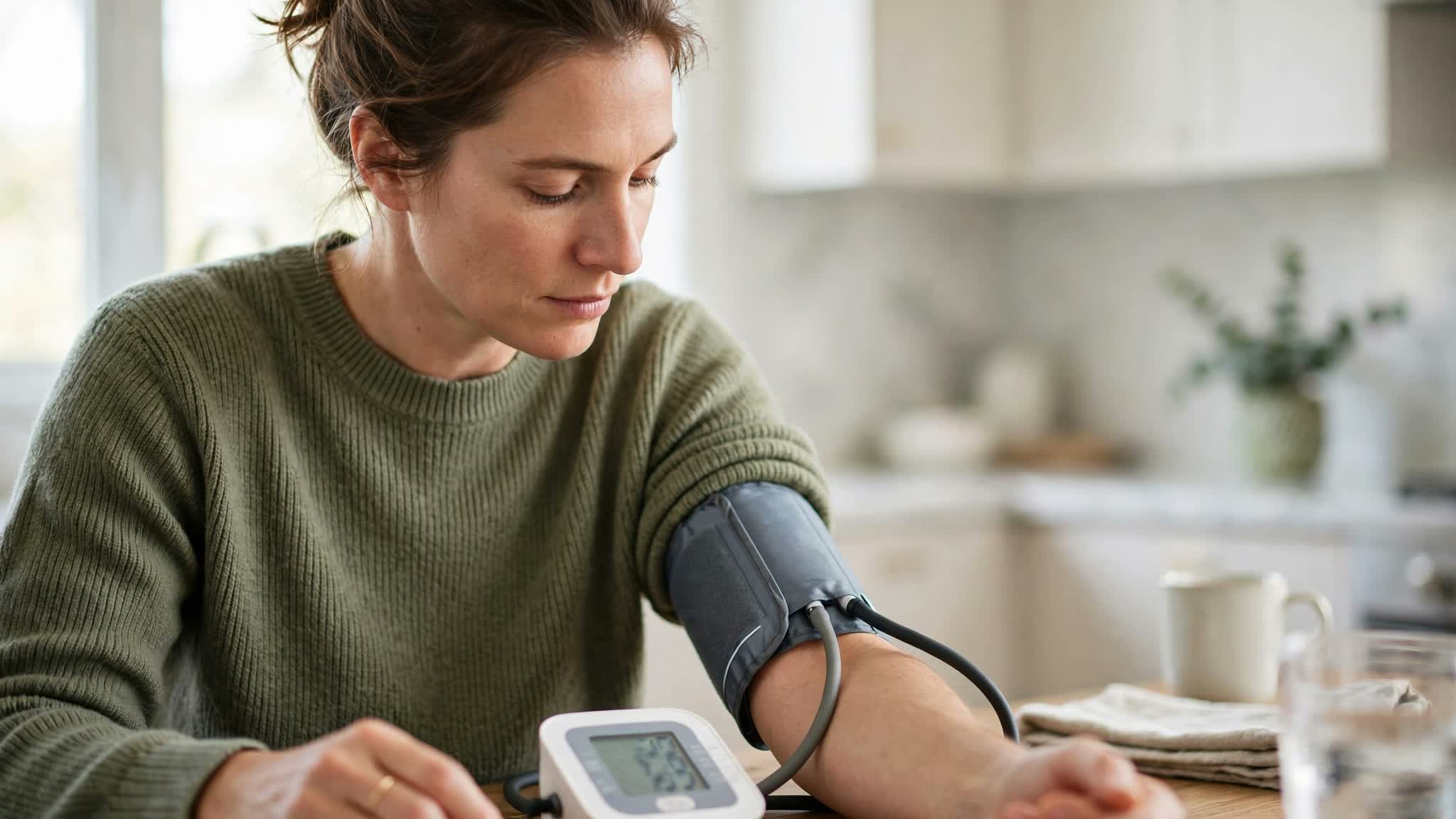
The nurse wraps the cuff around your arm, squeezes, listens, and rattles off two numbers — "128 over 82" — before moving on like she's reading a grocery list. You nod. You have no idea whether those numbers are fine, borderline, or quietly dangerous.
You're not alone. Nearly half of American adults — about 120 million people — have high blood pressure, according to the American Heart Association, and only about 1 in 4 of them has it under control. Part of the problem is that most of us were never taught what the numbers actually mean. Let's fix that.
What the two numbers measure
Your blood pressure reading captures the force of blood pushing against your artery walls, and it's written as two numbers, like 120/80 mm Hg (millimeters of mercury).
Systolic (the top number) is the pressure in your arteries when your heart beats and pushes blood out. Diastolic (the bottom number) is the pressure when your heart rests between beats and refills.
Both matter, but they tell different stories. Systolic pressure rises as arteries stiffen with age, which is why it gets more attention after age 50. Diastolic pressure that stays elevated — especially in younger adults — often signals that blood vessels are under constant strain even at rest. A problem in either number counts: your category is set by whichever one is higher.
The five categories, decoded
The American Heart Association and the American College of Cardiology define these ranges:
- Normal: below 120 systolic AND below 80 diastolic. This is the goal zone. Keep doing what you're doing.
- Elevated: 120–129 systolic and below 80 diastolic. Not hypertension yet, but a clear warning shot — people in this range commonly progress without lifestyle changes.
- Stage 1 hypertension: 130–139 systolic OR 80–89 diastolic. This is officially high blood pressure. Depending on your overall cardiovascular risk, your doctor may recommend lifestyle changes first or lifestyle changes plus medication.
- Stage 2 hypertension: 140 or higher systolic OR 90 or higher diastolic. At this level, guidelines generally call for medication plus lifestyle change.
- Hypertensive crisis: higher than 180 systolic and/or higher than 120 diastolic. If you also have chest pain, shortness of breath, back pain, numbness, vision changes, or trouble speaking, call 911 — this is an emergency. Without symptoms, contact your doctor the same day.
Notice how tight the margins are. The difference between "elevated" and "Stage 1" can be two points — which is exactly why how the reading is taken matters so much.
Why your reading might be wrong
Blood pressure is astonishingly easy to measure badly, and rushed readings mislead millions of people every year. A single high number in a doctor's office does not diagnose hypertension — and a single good one doesn't clear you.
Common distortions add up fast: a cuff that's too small can inflate a reading by 10 points or more. Talking during the measurement, a full bladder, crossed legs, an arm dangling below heart level, or coffee within the last hour can each nudge the number upward.
For an accurate reading, the AHA recommends you:
- Sit quietly for 5 minutes first, back supported, feet flat on the floor
- Rest your bare arm on a table so the cuff sits at heart level
- Avoid caffeine, exercise, and smoking for at least 30 minutes beforehand
- Stay silent and still while the cuff inflates
- Take two readings a minute apart and average them
White-coat hypertension — high at the doctor's office, normal at home — affects a sizable share of patients. Its mirror image, masked hypertension, is normal in the office but high in daily life, and it's arguably more dangerous because it goes untreated. This is why doctors increasingly trust validated home monitors: readings logged morning and evening for a week paint a far truer picture than one squeeze in an exam room.
What actually moves the numbers
If your reading creeps into the elevated or Stage 1 range, the levers are well studied:
- Cut sodium. The average American eats about 3,400 mg a day. The AHA's ideal target is 1,500 mg, and simply getting under 2,300 mg can drop systolic pressure noticeably — most sodium hides in restaurant food, bread, deli meat, and sauces, not the salt shaker.
- Follow the DASH pattern. This eating style — vegetables, fruit, whole grains, low-fat dairy, lean protein — was designed specifically to lower blood pressure and performs like a mild drug in trials.
- Move. Regular aerobic exercise, about 150 minutes a week of brisk walking or similar, can lower systolic pressure by roughly 5–8 points in people with hypertension.
- Lose a little weight. Expect roughly 1 point of systolic reduction per 2 pounds lost.
- Watch alcohol and sleep. Heavy drinking raises pressure; so does untreated sleep apnea, a commonly missed cause of readings that won't budge.
One caution: never stop or adjust blood pressure medication on your own because a few home readings look good. Bring your log to your doctor and make the call together.
The bottom line
Your blood pressure reading isn't a grade you pass or fail — it's two numbers describing how hard your heart and arteries are working, and they respond to real, measurable changes. Learn your category, measure correctly, and track the trend rather than obsessing over any single squeeze of the cuff. High blood pressure is called the "silent killer" because it rarely announces itself. Knowing what your numbers mean is how you make sure it never gets the chance.
Rao Sajid is the founder and editor of VitalDaily. He covers everyday health topics — nutrition, sleep, fitness and wellness — turning guidance from public-health sources like the CDC, NIH and FDA into plain, practical advice. More about Rao →
📚 Keep reading:

Melatonin for Sleep: Does It Work and Is It Safe?
Americans now spend hundreds of millions on melatonin gummies each year. Here's what the science says it can do, what it can't, and the right way to use it.

Mediterranean Diet: A Beginner's Guide That Works
Ranked the best diet in America eight years running, the Mediterranean way of eating protects your heart without counting calories. Here's how to start.

Why Your Mouth Is Always Dry: Causes and Fixes That Work
More than 500 medications cause dry mouth, and 25 million Americans don't make enough saliva. Here's what causes it, why it matters, and how to fix it.