Bone Density After 50: How to Keep Bones Strong
Your bones are living tissue. Every day, your body breaks down old bone and builds new bone to replace it. In your 20s and 30s, building wins. After 50, especially for women after menopause, breakdown starts winning — and bones quietly get thinner, weaker, and more likely to fracture.
The scary part is that bone loss is silent. There is no ache, no warning sign, until a minor fall causes a fracture. The good news is that bone loss is not inevitable, and it is never too late to fight back.
How Big Is the Problem?
According to the Bone Health & Osteoporosis Foundation, about 10 million Americans age 50 and older have osteoporosis, and another 44 million have low bone mass (osteopenia) — the stage before osteoporosis. Roughly 1 in 2 women and up to 1 in 4 men over 50 will break a bone because of osteoporosis.
Hip fractures are the most serious consequence. The CDC reports roughly 300,000 hip fracture hospitalizations among Americans age 65 and older every year. About 1 in 5 older adults who fracture a hip die within a year, and many survivors never fully regain their independence.
Why Bones Thin After 50
Several forces converge in midlife. Hormones lead the list: estrogen protects bone, and levels drop sharply at menopause. Women can lose up to 20% of their bone density in the five to seven years after menopause. Men lose testosterone more gradually, so their bone loss is slower — but it still happens.
Less mechanical loading matters too. Bones respond to the forces placed on them, and a desk job, a car commute, and evenings on the couch give your skeleton far less of the "stay strong" signal. Muscle loss compounds it: after 40, adults lose roughly 1% of muscle mass per year if they do nothing about it.
Other risk factors include smoking, heavy alcohol use, long-term corticosteroid medications, very low body weight, and a family history of hip fracture.
Know Your Number: The DEXA Scan
You cannot manage what you do not measure. The gold-standard test is a DEXA scan — a quick, painless, low-radiation scan of the hip and spine that takes about 10 to 15 minutes.
The result is a T-score, which compares your bone density to that of a healthy young adult: −1.0 or above is normal, between −1.0 and −2.5 is low bone mass (osteopenia), and −2.5 or below is osteoporosis. Screening is recommended for women 65 and older.
1. Lift Weights — The Single Best Bone Builder
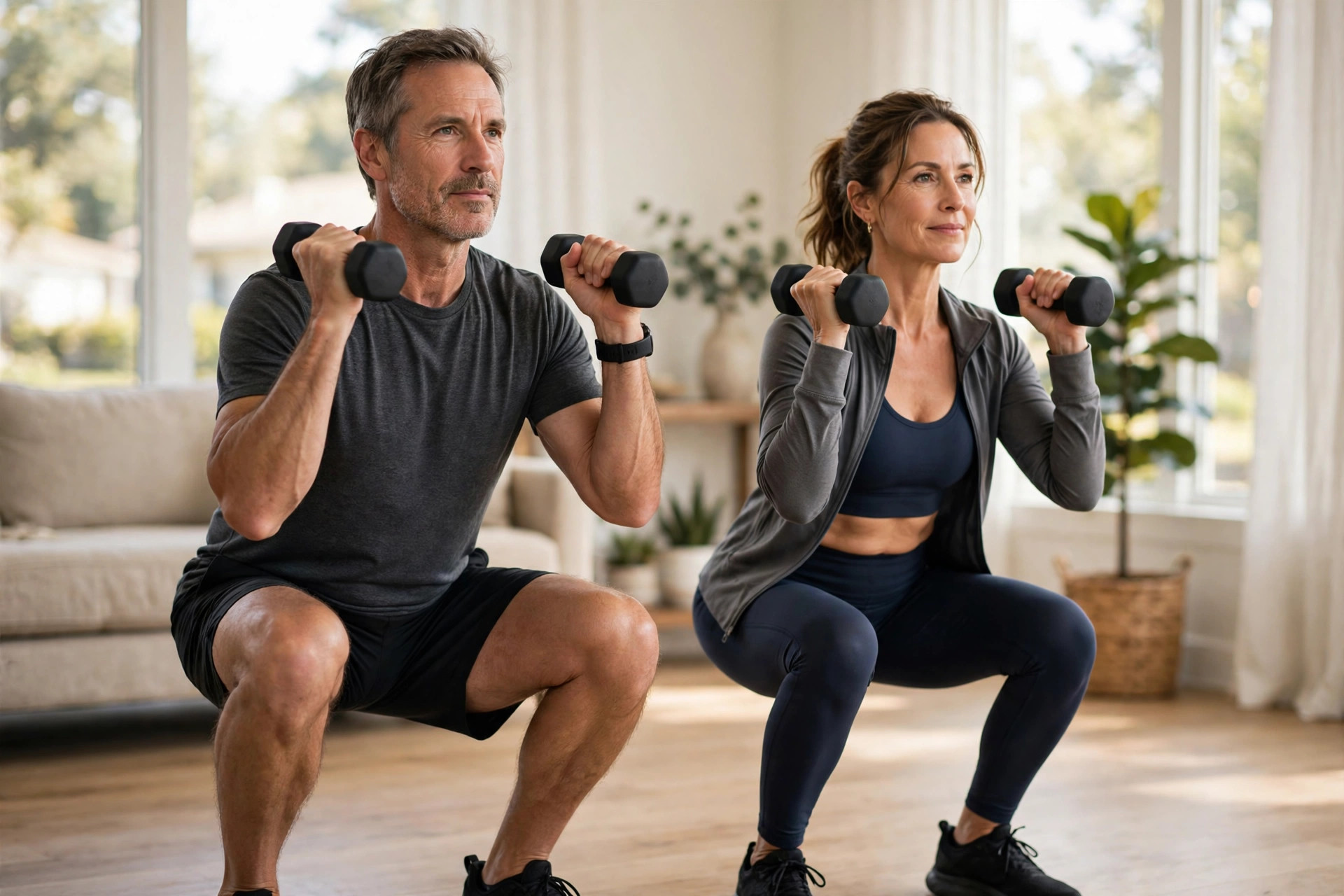
If you do only one thing for your bones, make it resistance training. Walking is excellent for your heart, but it is not enough for bone — bones need impact and resistance to get the "stay strong" signal. Studies show progressive resistance training improves hip and spine bone density, even in postmenopausal women. Focus on squats, deadlifts, presses, rows, and lunges, two to three sessions per week.
You do not need a gym to start — bodyweight squats, wall push-ups, and resistance bands count. If you already have osteoporosis, work with a physical therapist first to learn spine-safe form, and avoid loaded twisting and sit-ups that round the spine under load.
2. Add Impact and Balance Work
Impact exercises like brisk walking, stair climbing, dancing, hiking, and light jogging send bone-building signals through the legs and hips. Small hops and jumping jacks are among the most potent bone builders, but they are not for everyone — build up slowly and get your doctor's clearance if you already have osteoporosis or joint problems.
Balance training matters just as much, because most fractures happen because of a fall. Single-leg stands, heel-to-toe walking, and tai chi all improve balance, and tai chi has been shown in studies to reduce fall risk in older adults.
3. Eat for Bone: Calcium, Vitamin D, and Protein
Calcium. Adults over 50 need about 1,200 mg of calcium per day (1,000 mg for men 51–70). Food first: a cup of milk or fortified plant milk has about 300 mg, a cup of yogurt about 300–400 mg, and a 3-ounce serving of sardines with bones about 325 mg. Supplements can fill gaps, but very high doses have been linked to kidney stones — do not megadose without talking to your doctor.
Vitamin D. Vitamin D is required for calcium absorption, and deficiency is common, especially in northern states and in winter. Adults over 50 generally need 800 to 1,000 IU per day, though your doctor may recommend more if blood tests show deficiency. Fatty fish, fortified milk, and egg yolks provide some, but many older adults need a supplement.
Protein. Bone is about one-third protein by volume, and protein also builds the muscle that protects bone. Most adults over 50 should aim for roughly 1.0 to 1.2 grams of protein per kilogram of body weight per day — for a 160-pound person, that is about 73 to 87 grams. Spread it across meals: eggs or Greek yogurt at breakfast, beans or chicken at lunch, fish or lean meat at dinner.
4. Remove the Bone Thieves
Quit smoking. Smoking accelerates bone loss and impairs fracture healing. Quitting is one of the fastest bone wins available.
Limit alcohol. Heavy drinking interferes with bone remodeling and raises fall risk. The U.S. Dietary Guidelines advise no more than 2 drinks per day for men and 1 for women — and less is better for bone.
Do not crash diet. Very low-calorie diets strip muscle and bone along with fat. If you are losing weight, do it gradually, keep protein high, and keep strength training.
Review your medications. Long-term corticosteroids (like prednisone) and some acid reflux drugs can thin bone. Never stop a prescribed drug on your own — but ask your doctor whether a bone-sparing alternative exists.
5. Fall-Proof Your Home
Preventing falls is bone protection. Remove throw rugs and clutter, add grab bars in the bathroom, improve lighting, and keep cords out of walkways. Get your eyes checked yearly, wear supportive, low-heeled shoes with nonslip soles, and ask your pharmacist for a fall-risk review of your medications — some sleep aids and blood pressure drugs cause dizziness.
6. When Medication Makes Sense
For some people, lifestyle alone is not enough — and that is not failure. If you have osteoporosis or a fragility fracture, your doctor may recommend medication such as bisphosphonates (e.g., alendronate) or denosumab. These medications can cut fracture risk by 40 to 70%.
The Bottom Line
Bone loss after 50 is common, but it is not a foregone conclusion — and it is never too late to intervene. Lift weights, move daily, eat enough calcium, vitamin D, and protein, quit smoking, and fall-proof your home. Get a DEXA scan so you know where you stand, and bring the results to your doctor.
This article is for general information only and is not medical advice. Talk to your doctor before starting a new exercise program or supplement, especially if you have osteoporosis, a prior fracture, or a chronic health condition.
📚 Keep reading:
Lower Back Pain: What Actually Fixes It
About 4 in 5 Americans get lower back pain. Most of it is not dangerous — and bed rest makes it worse. Here is what the evidence says actually helps.

Kidney Stones: Why 1 in 10 Americans Get Them
About 1 in 10 Americans will develop a kidney stone — and half get another within 5 years. Here is what causes them and how to prevent them.

Tech Neck: How Your Phone Is Wrecking Your Posture
Your head weighs 60 pounds when you tilt it to check your phone. Here is what tech neck does to your spine — and the simple fixes that undo it.