Cold Showers vs Ice Baths: What Science Says
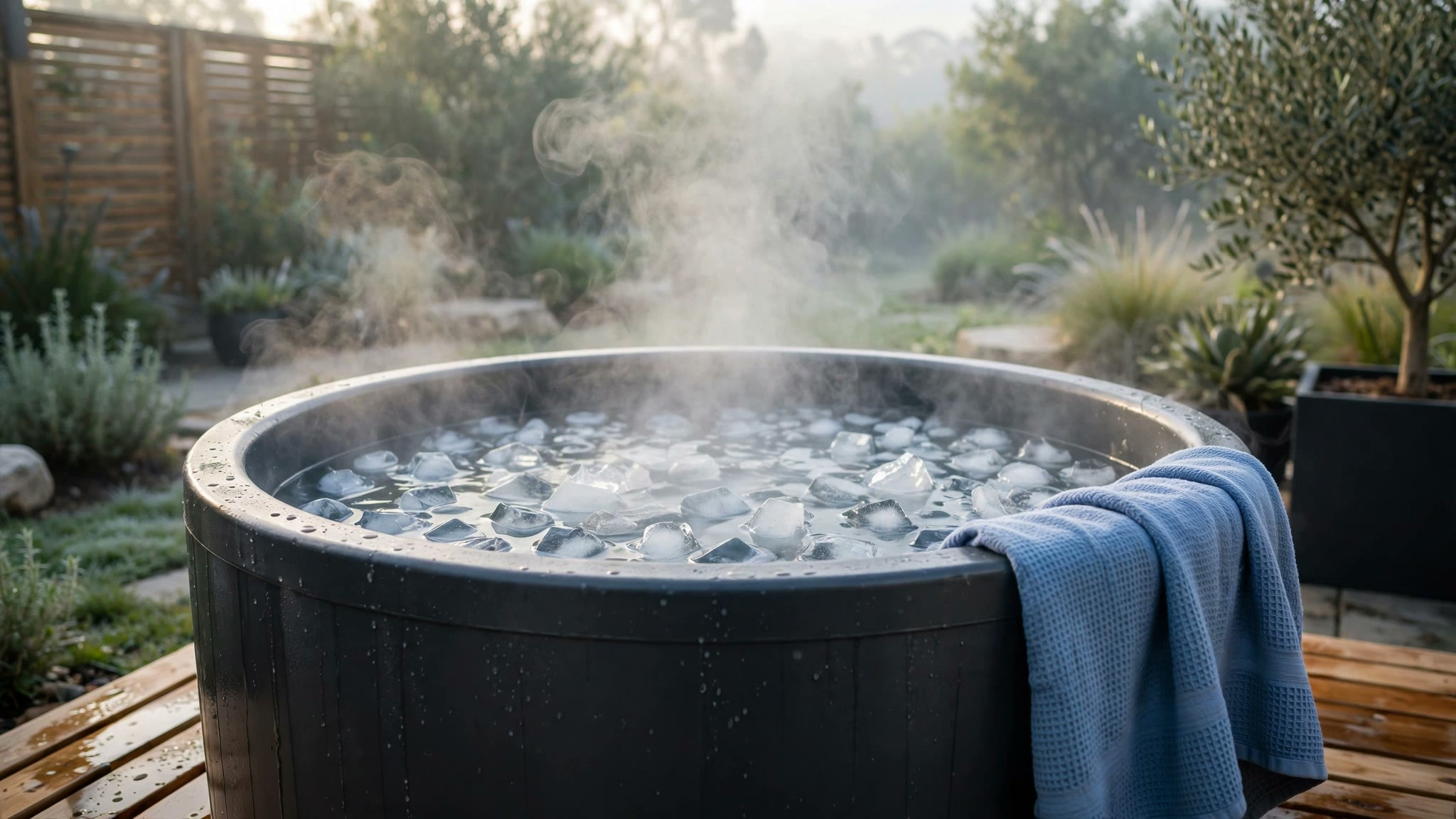
Cold water is having a moment. Scroll through social media and you'll find athletes sitting in barrels of ice, biohackers taking freezing morning showers, and podcasters swearing that a two-minute plunge changed their life. The global cold plunge tub market — barely a blip five years ago — is now a multi-hundred-million-dollar industry.
The pitch is seductive: better mood, faster recovery, stronger immunity, lower inflammation, even more willpower. Some of those claims hold water. Others are the marketing team getting ahead of the science. Let's look at what researchers have actually measured.
What happens to your body in cold water
The moment cold water hits your skin, your sympathetic nervous system sounds the alarm. Adrenaline surges, your heart rate spikes, and your blood vessels constrict to keep warm blood near your core. Norepinephrine — the alertness chemical — rises sharply.
One of the most striking findings comes from a 2014 study published in the Proceedings of the National Academy of Sciences. Dutch researchers put volunteers through a combination of cold exposure and controlled breathing and found that participants could voluntarily activate their immune response — producing more anti-inflammatory IL-10 and showing fewer flu-like symptoms after being injected with bacterial endotoxin. It was small (24 people) but remarkable: a hint that cold exposure can dial up the body's anti-inflammatory machinery.
There's also the much-discussed dopamine effect. Researchers measuring neurochemistry during cold water immersion have reported dopamine levels rising to roughly two to three times baseline and staying elevated for an hour or more after exposure. That sustained rise is plausibly why so many people report a genuine mood lift and a calm focus after a cold plunge — though the "dopamine" framing you hear online oversimplifies what's happening in the brain.
And there's brown fat. Cold exposure activates brown adipose tissue, the kind of fat that burns calories to generate heat. Studies show regular cold exposure can increase brown fat volume and activity — but the calorie burn is modest, on the order of tens of calories per session. An ice bath is not a weight-loss strategy.
Where the evidence is strongest: sore muscles
The single best-supported benefit of cold water immersion is recovery from intense exercise. A Cochrane review — the gold standard of evidence summaries — of 17 randomized trials concluded that cold water immersion after strenuous exercise reduces delayed-onset muscle soreness compared with rest, and that the effect is stronger than some alternatives.
What the protocol looks like in the studies: water around 50 to 59°F (10 to 15°C), immersed for roughly 10 to 15 minutes, after endurance or team-sport exercise. This is why marathoners and NFL teams have used ice baths for decades — not because of the internet, but because athletes genuinely feel less wrecked the next day.
There's a notable asterisk, though: if your goal is building muscle, regular cold immersion right after strength training may work against you. A well-known 2015 Australian study found that cold water immersion after resistance training blunted muscle growth and strength gains over 12 weeks, likely by suppressing the inflammatory signaling that drives muscle adaptation. Translation: plunge after cardio or a long run; skip it after lifting if growth is the goal.
Cold showers: milder claims, real data
You don't need a barrel of ice to see effects. The best cold-shower evidence comes from the Netherlands: in a 2016 trial of more than 3,000 adults published in PLOS ONE, people who finished their showers with 30 to 90 seconds of cold water reported 29 percent fewer sick days from work than the control group. They weren't less likely to get sick — they just reported less time off. Interesting, imperfect, but real.
Cold showers also have some support as a mood intervention. A 2008 paper in Medical Hypotheses reviewed the evidence and suggested cold hydrotherapy may relieve depressive symptoms, possibly through the flood of electrical impulses from cold receptors to the brain. It was never a clinical trial of depression treatment — don't take it as proof — but it matches the consistent anecdotal pattern: a cold shower wakes you up and often leaves you feeling better than before.
The claims that outrun the evidence
Cold exposure gets sold as an immune booster, but no robust trial shows that regular plungers get sick less often. The Dutch breathing study showed an immune response modulation, not fewer colds.
It gets sold as a metabolism hack for weight loss, but the brown-fat calorie burn is far too small to matter for body composition.
And it gets sold as virtually risk-free — which is the claim that deserves the most scrutiny. Cold water triggers a sharp rise in blood pressure and heart rate. For healthy people this is tolerable, but the CDC notes that heart disease affects tens of millions of Americans, and sudden cold immersion has caused cardiac events in people with undiagnosed cardiovascular disease. There's also "afterdrop" — your core temperature keeps falling for a while after you get out, which is why experienced plungers warm up gradually and never plunge alone.
A safe way to try it
If you're curious, start conservatively and build up:
- Begin with contrast showers. End your normal shower with 30 seconds of cold water for a week. Then extend to 60, then 90. Most of the practical benefit seems to come well before you feel miserable.
- Keep it brief. For full immersion, studies suggest 5 to 10 minutes in water around 50 to 59°F is plenty. Longer or colder isn't better — it's just colder.
- Never do it alone until you're experienced, and get out if you feel dizzy, numb, or short of breath. Warm up gradually afterward, not with a scalding shower.
- Skip it if you're pregnant, have hypertension or heart disease, Raynaud's, or circulation problems — and talk to your doctor first if you take medications that affect blood pressure or heart rate.
The honest version of the story: cold exposure is a legitimate recovery tool and a genuinely effective alertness reset, with intriguing hints of broader benefits. It is not a cure for anything, and the people selling $5,000 plunge tubs have stronger evidence for the tub than for the miracles.
But the cheapest version — the last 30 seconds of your shower turned to cold — costs nothing, has decent evidence behind it, and might just change how your morning feels.
📚 Keep reading:
Seed Oils: The Truth Behind the Panic
Seed oils are the most vilified fats in America right now. Critics blame them for obesity, heart disease, and inflammation — but what does the actual evidence say?

Intermittent Fasting: What Science Says About Weight Loss
Nearly 1 in 3 Americans has tried skipping meals to lose weight. But does intermittent fasting actually work — or is it just calorie cutting with better branding?
How Much Coffee Is Too Much? Science Has an Answer
Americans drink 400 million cups of coffee daily. New research pinpoints the sweet spot for your heart, brain, and sleep — and where benefits turn into harm.