Why You Feel Dizzy After Eating (and How to Stop It)
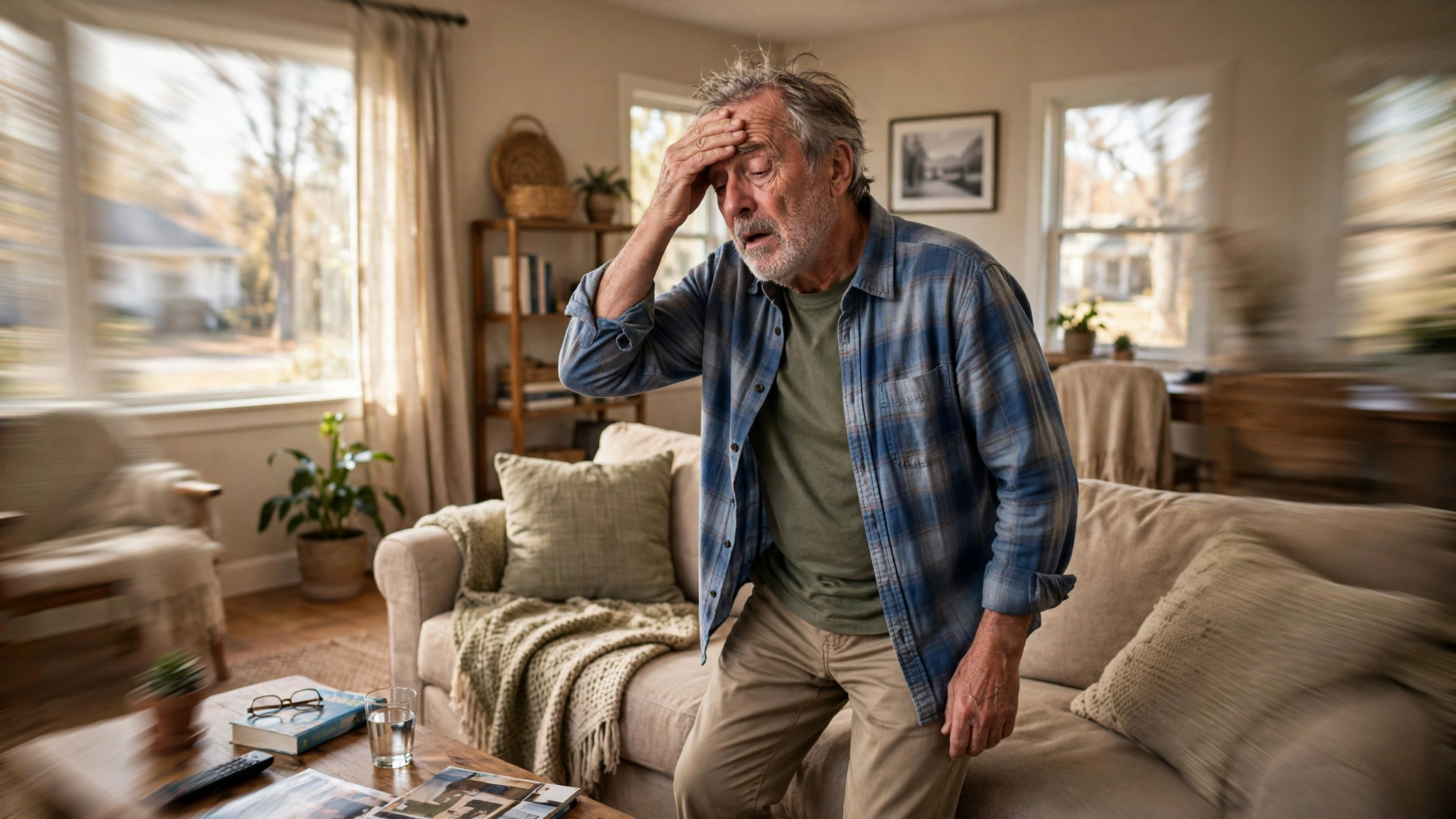
You finish a big lunch, push back from the table, and the room tilts. Your head feels light, your legs unsteady. An hour later you feel fine again — until the next big meal.
Most people blame a "food coma" or too many carbs. Sometimes that is all it is. But when dizziness after eating happens regularly, it often has a medical name: postprandial hypotension — a drop in blood pressure that occurs after a meal.
It is common, underdiagnosed, and for older adults genuinely dangerous, because it raises the risk of falls and fainting. The good news: once you know what is happening, simple steps help most people a lot.
What happens to your blood pressure after you eat
Digestion needs blood. After you eat, your body diverts a large share of it to your stomach and intestines. Normally your heart compensates, beating a little faster while blood vessels elsewhere tighten up.
In postprandial hypotension, that compensation fails. Blood pools in the gut, blood pressure falls, and the brain briefly gets less blood than it needs. Doctors define it as a drop in systolic blood pressure (the top number) of 20 points or more within two hours of eating. Symptoms usually peak 30 to 60 minutes after a meal and fade within about two hours.
That timing is the key clue. Fine all morning, dizzy after lunch, fine again by mid-afternoon? Your meals are the prime suspect.
Who is most at risk
Anyone can feel a mild version after an enormous meal, especially one heavy in carbohydrates. But postprandial hypotension is most common in:
- Older adults. Blood vessels stiffen with age and the nervous system's fine-tuning of blood pressure weakens. Studies have found postprandial blood pressure drops in a substantial minority of people over 65, and at even higher rates among nursing home residents.
- People with diabetes. Long-standing diabetes can damage the nerves controlling blood vessel constriction, a complication called autonomic neuropathy.
- People with Parkinson's disease or other autonomic nervous system conditions.
- People taking blood pressure medicines, diuretics, or certain antidepressants, which blunt the body's compensation.
- People who have had stomach surgery, such as gastric bypass.
It tends to be worst after large, high-carbohydrate meals — pasta, Thanksgiving dinner, pancakes with syrup. Carbs trigger a stronger rush of blood to the gut than protein or fat.
How it feels — and how it differs from other dizziness
Postprandial hypotension does not feel like the room spinning, the way vertigo does. People more often describe lightheadedness or feeling faint (especially when standing after a meal), unsteadiness when walking, sudden sleepiness after eating, blurred vision or nausea, and in severe cases, actually fainting.
It is easy to confuse with low blood sugar, which causes similar shakiness — but low blood sugar is most common between meals or after skipping one, not right after a full meal. It also differs from dizziness when standing up too fast (orthostatic hypotension), although the two often occur in the same person. If you get dizzy both after meals and when you stand, tell your doctor: that combination matters.
What to do in the moment
If dizziness hits after a meal, do not push through it. Falls are the real danger, and most happen in the first few minutes. Sit or lie down right away, feet up if you can, and sip water — dehydration worsens blood pressure drops. Do not drive until the episode has fully passed, and if episodes are frequent, do not drive after large meals until you have been evaluated. When you do stand, do it in stages: sit up, dangle your legs, stand, pause, then walk.
If you faint, get checked promptly even if you feel fine afterward. A first fainting episode always deserves medical attention.
Everyday habits that help
There is no single pill for postprandial hypotension; treatment usually starts with meal and lifestyle changes. These strategies have the best evidence behind them:
Eat smaller, more frequent meals
This is the single most effective change for most people. A huge meal demands a huge diversion of blood to the gut; splitting the same food into four or five smaller meals dramatically reduces each blood pressure dip. A practical rule: stop at about 80 percent full and save the rest for a snack a couple of hours later.
Cut back on fast carbohydrates
Large servings of white bread, white rice, pasta, potatoes, and sugary foods cause the biggest gut blood-flow surge. You do not have to go low-carb, but shifting the balance helps: pair carbs with protein and fiber, choose whole grains, and keep starchy portions modest. Grilled chicken, vegetables, and a small serving of brown rice is far less likely to trigger symptoms than a heaping plate of spaghetti.
Drink water before meals
Drinking about 12 to 16 ounces of water roughly 15 to 30 minutes before a meal can blunt the blood pressure drop for some people — unless your doctor has told you to limit fluids for heart or kidney reasons, in which case check first.
Limit alcohol with meals
Alcohol dilates blood vessels, compounding the pooling of blood in the gut. A glass of wine with dinner is enough to tip some people into symptoms — if you notice a pattern, that is the first thing to cut.
Stay upright — but not standing still — after eating
Lying flat right after a meal can make the eventual stand-up worse. A gentle walk helps: it pumps blood back from the legs and steadies blood pressure. Keep it a stroll, not a workout.
Review your medications
If you take blood pressure medicine, ask your doctor whether the timing or dose could be contributing — some people do better taking it away from their largest meal. Never change a dose on your own, but bring a list of everything you take, including over-the-counter drugs and supplements, to the appointment.
When to see a doctor
Occasional mild sleepiness after a giant holiday meal is normal. See a doctor promptly if:
- Dizziness after eating happens regularly, not just once in a while
- You have fainted, nearly fainted, or fallen after a meal
- You have chest pain, shortness of breath, or a very fast or irregular heartbeat with the dizziness
- You have diabetes, Parkinson's disease, or heart disease and the symptoms are new or worsening
A doctor can confirm it simply by measuring your blood pressure before a meal and again afterward, sometimes with a 24-hour monitor. That measurement matters, because postprandial hypotension can warn of autonomic nerve problems or cardiovascular disease.
The bottom line
Feeling dizzy after eating is not something to laugh off as a food coma — and it is not something you just have to live with, either. It is a measurable blood pressure problem with a clear pattern: big meals, especially carb-heavy ones, pull blood to the gut, and in some people the body cannot compensate fast enough.
Smaller meals, fewer fast carbs, water before eating, a gentle walk afterward, and a medication review control symptoms for many people. If episodes are frequent, severe, or involve fainting, a before-and-after blood pressure check can give you and your doctor the answer in a single visit. Your meals should leave you satisfied, not staggering.
Rao Sajid is the founder and editor of VitalDaily. He covers everyday health topics — nutrition, sleep, fitness and wellness — turning guidance from public-health sources like the CDC, NIH and FDA into plain, practical advice. More about Rao →
📚 Keep reading:

Skin Tags: Why You Get Them and When to Worry
Skin tags are small, harmless growths that appear on the neck, armpits, and eyelids. What causes them, when to worry, and how doctors remove them safely.
Holiday Heart Syndrome: When Drinking Triggers AFib
Holiday heart syndrome is an irregular heartbeat triggered by binge drinking, even with no heart disease. How it happens and how to lower your risk.
Why Your Ears Pop on Planes (and How to Stop It)
That painful ear pressure on takeoff and landing comes from your Eustachian tubes struggling to equalize. Here is why it happens, who is most at risk, and the tricks that actually clear it.