Donating Blood: The Health Perks You Didn't Expect
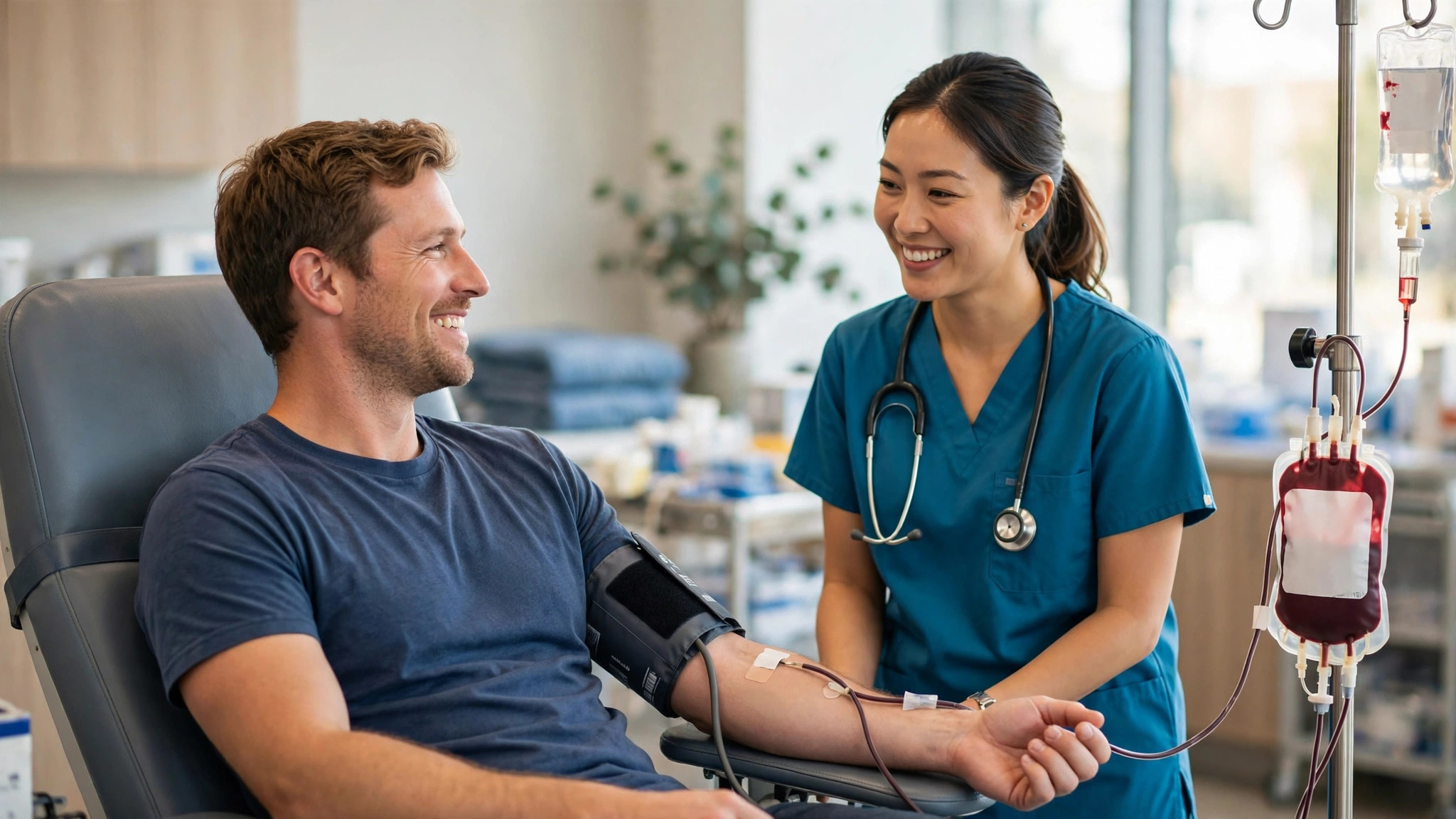
Every two seconds, someone in the United States needs blood. And right now, the nation's blood supply is running on empty — the American Red Cross has repeatedly declared emergency shortages in recent years, noting that fewer than 3% of eligible Americans actually donate in a given year.
Most people think of blood donation as pure generosity — you give, a stranger benefits. That's true. One whole-blood donation can save up to three lives. But here's what rarely makes the headlines: your body may thank you, too.
Donating blood isn't a health hack or a substitute for a checkup. But researchers have found real, measurable upsides for donors — from a free mini health screening to healthier iron levels. Here's what the science actually says.
You get a free mini health check
Before you're allowed to donate, the blood center runs you through a mini physical — and it's more thorough than most people expect.
A screener checks your blood pressure, pulse, body temperature, and hemoglobin level. Your blood is then tested for infectious diseases including HIV, hepatitis B and C, syphilis, and West Nile virus. You'll get results (and confidential notification) if anything flags.
This isn't a replacement for a doctor's visit. But for the millions of Americans who skip annual checkups — surveys show roughly a quarter of U.S. adults haven't seen a primary care doctor in over a year — it can be the only health screening they get. Occasionally, donors learn about high blood pressure or low hemoglobin they never knew they had, and that discovery sends them to a doctor in time to matter.
Bonus checkup: after donation, you'll also learn your blood type if you didn't already know it — handy information for emergencies and for anyone planning to donate again.
It may help your heart
Here's the most interesting finding. A widely cited 1998 study in the American Journal of Epidemiology followed nearly 3,000 men and found that those who donated blood had a lower risk of heart attacks and strokes than non-donors. The researchers proposed a mechanism: donated blood lowers the body's iron stores.
Iron is essential — but too much iron is linked to oxidative stress, which can damage arteries over time. People with the genetic condition hemochromatosis, which causes iron overload, have markedly higher rates of cardiovascular disease. Each whole-blood donation removes about 225–250 milligrams of iron, giving the body a reset.
A later 2007 study in Transfusion found that regular donors had fewer cardiovascular events than people who only gave once, suggesting the benefit compounds with repeated donations. That said, researchers are careful: donors tend to be healthier and more health-conscious than the general population, so the "healthy donor effect" likely explains part of the gap. The iron mechanism is plausible and supported by lab science, but donation alone won't protect a heart fed on cheeseburgers.
It burns a few calories (honestly, not many)
Here's a fact that gets exaggerated online, so let's be precise. Donating one pint of blood burns roughly 600–650 calories — the energy your body spends replacing the lost blood cells over the following weeks.
That's real, but it's not a weight-loss strategy. The Red Cross explicitly warns against donating to lose weight, and donating too often actually backfires (see below). Think of the calorie burn as a small bonus, not a reason.
The feel-good factor is physiological
This one's about your head, not your heart. Researchers have documented a measurable mood lift after donating, sometimes called the "helper's high." Acts of generosity trigger the brain's reward circuitry — the same pathways lit up by eating good food or receiving a gift.
In practice, donors routinely report lower stress and a genuine sense of purpose after giving. Given that around 1 in 5 American adults report frequent anxiety, a free, 45-minute act that makes you feel better while saving lives is a pretty good deal.
What to expect: the 45-minute reality check
If you've never donated, the unknown is the biggest barrier. Here's the actual timeline:
- Registration and screening (10–15 min). You'll show ID, answer health-history questions on a tablet, and get the mini physical described above.
- The draw (8–10 min). A small pinch — most donors say it hurts less than a flu shot. You'll squeeze a foam ball while one pint (about 10% of your blood volume) flows into a bag.
- Snacks and rest (10–15 min). Juice, cookies, and a chair. This is mandatory, not optional — it lets your body stabilize.
- Back to your day. Drink extra water, skip the heavy gym session and the hot tub for 24 hours, and keep the bandage on for a few hours.
Most people feel completely normal within an hour. Your plasma is replaced within 24–48 hours, and your red cells bounce back in about 4–6 weeks — which is why whole-blood donors wait 56 days between donations, per FDA rules.
Who can donate (and the rules that changed)
The basics: most healthy adults who are at least 17 years old (16 in many states with parental consent) and weigh at least 110 pounds can donate. You'll be deferred temporarily for things like recent tattoos or piercings in some states, low iron, a cold or flu, or recent travel to certain regions.
One notable change: the FDA replaced its old blanket restrictions on gay and bisexual men with individual risk-based screening — all donors now answer the same questions about new or multiple sexual partners, regardless of gender or orientation. Anyone who has donated recently and feels uncertain can check eligibility on the Red Cross's website or call ahead.
Common deferrals, translated plainly: you ate a big breakfast (good — they want you fed and hydrated), you're on certain medications, your hemoglobin reads too low, or you just donated recently.
Myths worth busting
- "It'll make me weak for days." Plasma volume restores within a day or two. Athletes often train lightly the next day.
- "Needles and fainting." About 2–4% of donors feel lightheaded, and fainting is uncommon. If you're nervous, tell the staff — they're experts at putting first-timers at ease, and reclined chairs make fainting nearly impossible.
- "They'll take too much." A pint is 10% of your blood volume — your body replaces it without missing a beat.
- "My blood type is common, so they don't need me." They need you most. Type O-negative is the universal donor used in emergencies, but every type is in constant demand because blood can't be manufactured and red cells expire after 42 days.
When donating isn't the right move
Donation isn't for everyone, and that's fine. Skip it if you're currently ill, pregnant, severely anemic, or managing a condition like uncontrolled high blood pressure. The screening exists precisely to protect donors as well as recipients — a low hemoglobin reading isn't a failure, it's the system working.
The bottom line
Blood donation is one of those rare win-wins in health: hospitals get a supply that literally cannot be made in a factory, and you walk out with a free health screening, healthier iron balance, a small calorie burn, and a well-documented mood boost.
The need is real — blood drives across the U.S. are operating below comfortable inventory levels, and winter months are historically the toughest. If you're healthy and eligible, one afternoon can matter more than you think. Book a slot with the American Red Cross or your local blood bank, eat a solid breakfast, drink water, and bring a friend. You'll both walk out feeling better than you walked in.
VitalDaily's content is for informational purposes only and is not medical advice. If you have a health condition or take medication, ask your doctor or the blood center staff whether donating is right for you.
Rao Sajid is the founder and editor of VitalDaily. He covers everyday health topics — nutrition, sleep, fitness and wellness — turning guidance from public-health sources like the CDC, NIH and FDA into plain, practical advice. More about Rao →
📚 Keep reading:
Tonsil Stones: The Hidden Cause of Stubborn Bad Breath
You brush, floss, and gargle — yet your breath still smells. Tiny white pebbles hiding in your tonsils could be why. Here's what they are and how to get rid of them.

Social Jet Lag: Why Sleeping In on Weekends Hurts
You can't erase a week's sleep debt with one lie-in. Each hour of 'social jet lag' between weekday and weekend sleep is tied to higher heart and metabolic risk — here's the fix.

Honey for Coughs: Does It Actually Work?
Grandmothers have sworn by it for centuries, but does honey really calm a cough? Here's what clinical trials say about honey for coughs and how to use it right.