Eczema: Why Your Skin Flares and What Actually Helps
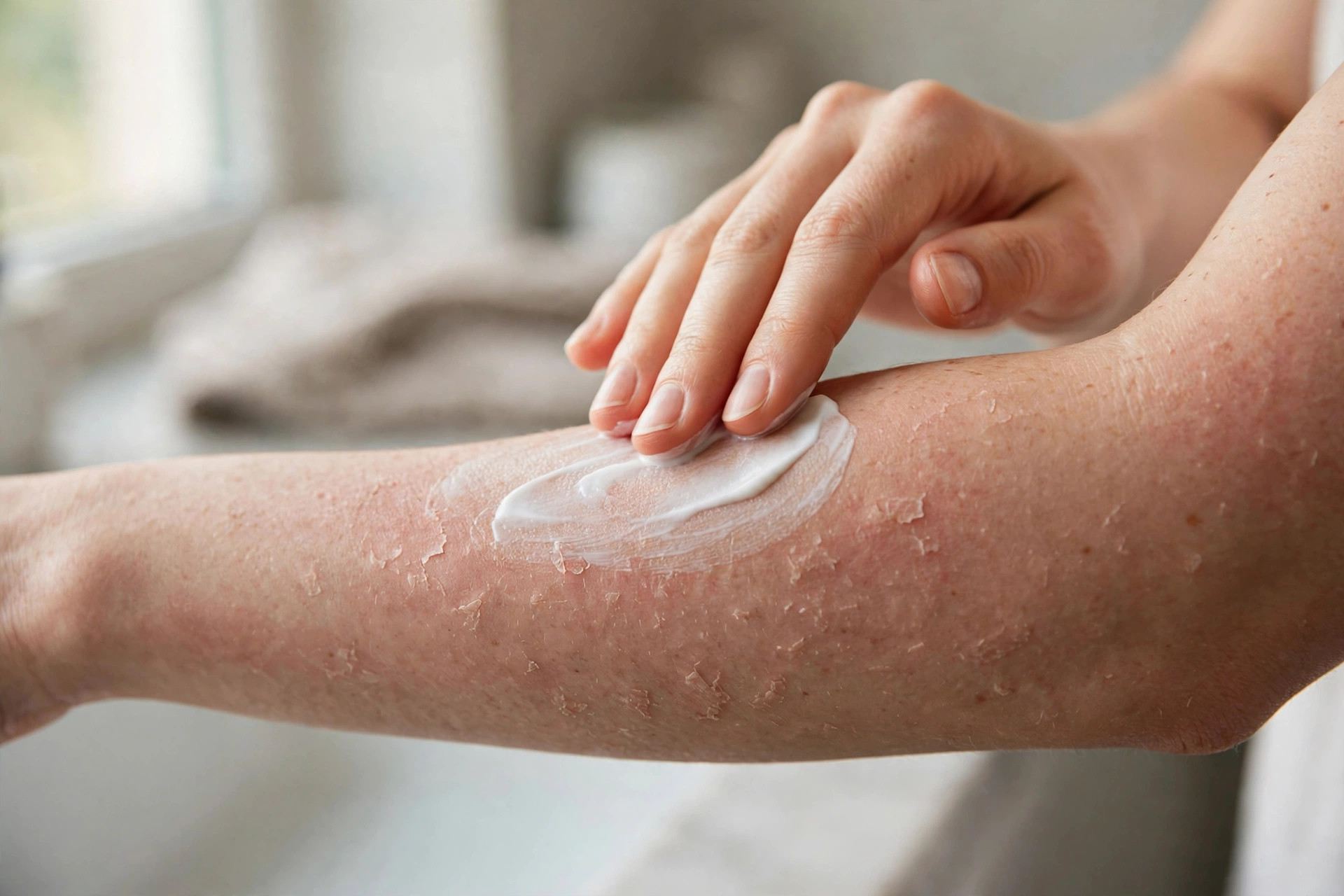
It starts the same way every time. A patch of skin — the inside of your elbow, the back of your knee, your hands — turns red, dry, and unbearably itchy. You scratch in your sleep. By morning it is raw. Moisturizer helps for an hour, then the itch creeps back. If this cycle sounds familiar, you are far from alone — and October is the month the country talks about it.
October is Eczema Awareness Month, and this year it comes with fresh data. The National Eczema Association (NEA) just published its first comprehensive national report on atopic dermatitis — the most common form of eczema — backed by CDC funding. The headline finding: the condition is far more common, and far more underdiagnosed, than most people realize. About 1 in 10 Americans will deal with eczema at some point in their lives, yet only about one in five of those estimated to have it carry a formal diagnosis.
What Eczema Actually Is
Eczema is an umbrella term for several itchy, inflammatory skin conditions. The most common is atopic dermatitis, which affects roughly 16.5 million U.S. adults and 9.6 million U.S. children, according to the NEA. It often begins in childhood but can appear for the first time in adulthood — and adult-onset cases are frequently misdiagnosed as simple dry skin.
Two things go wrong at once. First, the skin barrier — the outer layer that keeps moisture in and irritants out — is weakened, often because of a shortage of a structural protein called filaggrin. Second, the immune system overreacts, triggering inflammation at the slightest provocation. The result: dry, cracked, inflamed patches that itch intensely.
A few things eczema is not: it is not contagious, it is not caused by poor hygiene, and it is not "just dry skin." On light skin it often looks pink or red; on medium to dark skin tones it can appear dark brown, gray, or purple — a difference that contributes to underdiagnosis in people of color.
What Triggers a Flare
Eczema is a chronic condition that comes and goes, and flares almost always have a trigger. The most common ones:
- Cold, dry air. Winter is peak flare season — indoor heating drops humidity and saps moisture from already fragile skin.
- Hot, long showers. They feel great and strip the skin's natural oils. Dermatologists recommend lukewarm water and keeping it under 10 minutes.
- Fragrance and harsh soaps. Scented lotions, laundry detergent, dryer sheets, and antibacterial soaps are classic irritants. "Fragrance-free" on the label matters more than "unscented."
- Sweat. Exercise is good for you; dried sweat sitting on eczema-prone skin is not. Rinse off after workouts.
- Stress. It will not cause eczema, but it reliably makes flares worse — the immune system and the stress response are tightly linked.
- Fabrics. Wool and rough synthetics irritate; soft cotton and smooth blends are safer bets.
- Allergens. Dust mites, pet dander, and pollen can drive flares in people with the "atopic triad" — eczema plus asthma and hay fever, which commonly travel together.
Is It Eczema or Just Dry Skin?
Dry winter skin improves within days of regular moisturizing. Eczema does not — or it improves and then rebounds. Clues that point to eczema: intense itching (especially at night), patches in the classic spots (elbow creases, behind knees, wrists, hands, eyelids), a personal or family history of asthma or hay fever, and skin that looks thickened or leathery from chronic scratching. Psoriasis is the other common lookalike — its plaques tend to be thicker, better-defined, and silvery, often on elbows, knees, and scalp. When in doubt, a dermatologist can tell in one visit.
What Actually Works: The Dermatologist Playbook
There is no cure for eczema, but there is a well-tested ladder of treatments. Most people never need to climb past the first few rungs.
1. Moisturize like it is your job
This is the single highest-impact step, and most people do it wrong. The rules, per the American Academy of Dermatology:
- Ointments beat creams, and creams beat lotions. Thicker is better — petroleum jelly and thick ointments seal in far more moisture than watery lotions.
- Apply within 3 minutes of bathing ("soak and seal"): pat skin damp-dry, then moisturize immediately to lock the water in.
- Reapply through the day, especially on hands after washing.
2. Fix the bathing routine
Lukewarm water, 5 to 10 minutes, gentle fragrance-free cleanser only where needed (not a full-body lather). Skip bubble baths and harsh exfoliants during flares.
3. Wet wrap therapy for bad flares
For stubborn patches: after moisturizing (and any prescribed topical), wrap the area in a damp layer of clothing or gauze, then a dry layer over it, for a few hours or overnight. It boosts moisture absorption and calms itching. Pediatric dermatologists use this routinely for children — it works for adults too.
4. Over-the-counter hydrocortisone — short term
A 1% hydrocortisone cream can calm a mild flare for a few days. It is not a maintenance plan: prolonged steroid use thins the skin, especially on the face and skin folds. If you need it constantly, that is a sign to see a dermatologist.
5. Prescription topicals
When OTC is not enough, dermatologists have stronger tools: prescription-strength corticosteroids for short bursts, plus non-steroid options — calcineurin inhibitors (tacrolimus, pimecrolimus, safe for delicate areas like eyelids) and newer PDE4 inhibitors — that can be used longer-term without thinning the skin.
6. Systemic treatments for severe eczema
For moderate-to-severe cases that do not respond to topicals, the last decade has been transformative. Dupilumab (Dupixent), an injectable biologic that calms the specific immune pathways driving eczema, is FDA-approved for adults and children and has changed life for people who spent years in the itch-scratch cycle. Oral JAK inhibitors are newer options for severe cases. These are specialist-prescribed and not first-line — but if your eczema controls your life, ask about them.
7. What about antihistamines?
They do not treat the inflammation, but a sedating antihistamine at night can help you sleep through the itch during a flare. Think of it as symptom relief, not treatment.
When to See a Dermatologist
Book the visit if: the rash is not improving after two weeks of consistent moisturizing and OTC care; it is spreading or severely affecting your sleep, work, or mood; or you see signs of infection — oozing, yellow crusting, increasing pain, swelling, or fever. Infected eczema needs prompt medical treatment, not more moisturizer. Also go if you have never been formally diagnosed: per the NEA's new report, millions of Americans are managing this condition without ever having the conversation.
The Bottom Line
Eczema is not a cosmetic nuisance — it is a chronic immune condition that disrupts sleep, focus, and confidence, and it peaks exactly as winter arrives. The encouraging news is that the treatment ladder is long and effective, from a $5 tub of petroleum jelly applied the right way to modern biologics for severe cases. If the itch-scratch cycle is running your nights, Eczema Awareness Month is a good excuse to finally get it properly diagnosed and treated.
This article is for informational purposes only and is not a substitute for professional medical advice. If you have a persistent or worsening skin condition, consult your healthcare provider or a board-certified dermatologist.
Rao Sajid is the founder and editor of VitalDaily. He covers everyday health topics — nutrition, sleep, fitness and wellness — turning guidance from public-health sources like the CDC, NIH and FDA into plain, practical advice. More about Rao →
📚 Keep reading:

Excessive Sweating: Why It Happens and How to Stop It
About 15 million Americans live with hyperhidrosis — excessive sweating that soaks clothes and wrecks confidence. It is a real medical condition, and it is treatable. Here is what works.

Why You Wake Up With a Headache (And How to Fix It)
Roughly 1 in 14 Americans wakes up with head pain. From sleep apnea to teeth grinding to your evening drink, here is what morning headaches mean and how to stop them.

Why Coffee Makes You Poop: The Morning Sprint Explained
For about one in three Americans, the morning coffee doesn't just wake you up — it sends you running. Here's the real science behind coffee's laxative effect, and how to manage it.