Heart Palpitations: When to Worry, When to Relax
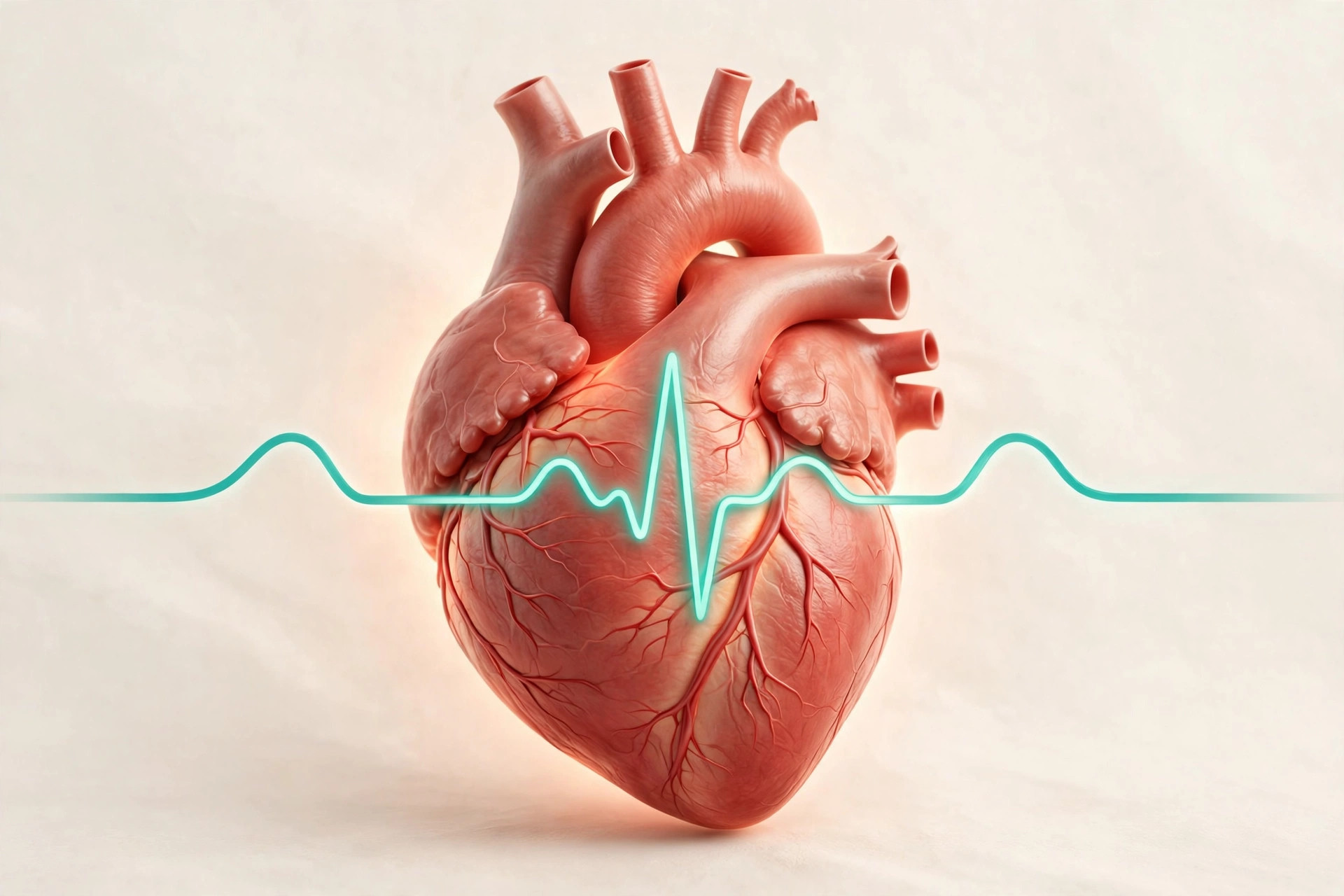
You're sitting perfectly still when your heart suddenly takes off — a flutter, a skipped beat, a hard thump in your chest that leaves you holding your breath, waiting to see what happens next. Then, just as fast, everything returns to normal, and you're left wondering whether your heart is trying to tell you something.
Here's the reassuring headline up front: palpitations are common, and in most cases they are not a sign of heart disease. They are simply the awareness of your own heartbeat — and most are harmless. But "most cases" is not all cases, and there's a short list of warning signs that turn this from a curiosity into an emergency.
What a palpitation actually is
A palpitation is any sensation that makes you suddenly aware of your heartbeat. It can feel like:
- A racing or pounding heartbeat
- A fluttering sensation in your chest
- A "skipped beat" or extra beat — a thump followed by a pause
- Your pulse in your neck or throat
In the majority of cases, what you're feeling is a benign extra beat — an electrical hiccup where the heart fires a beat early, pauses to reset, and then comes back with a slightly stronger contraction. That stronger "catch-up" beat is the thump that gets your attention. The heart's wiring is otherwise perfectly normal.
Lying quietly at night — especially on your left side — makes the heartbeat easier to feel, which is why many people notice palpitations for the first time in bed. More awareness, not necessarily more heart trouble.
The usual suspects (the benign causes)
In clinic after clinic, the same everyday triggers come up again and again:
Stimulants. Caffeine, energy drinks, and nicotine increase adrenaline-like activity in the heart and are among the most common triggers of extra beats. The FDA considers up to 400 milligrams of caffeine a day — roughly 4 to 5 cups of coffee — safe for most healthy adults, but if you're sensitive or sleeping poorly, much less can set you off. Decongestants containing pseudoephedrine do the same thing.
Stress and anxiety. Anxiety both causes palpitations and makes you hyper-aware of a normal heartbeat. Adrenaline speeds the heart and makes each beat feel stronger — which is why palpitations and panic attacks travel together.
Poor sleep and exhaustion. Running on fumes lowers your threshold for ectopic beats. One rough week of short nights is enough for some people to start noticing flutters.
Dehydration and missed meals. Low fluid volume, low blood sugar, and electrolyte shifts (from sweating, illness, or heavy drinking the night before) can all make the heart irritable.
Alcohol. Even moderate drinking can trigger palpitations — the "holiday heart" phenomenon cardiologists see every Monday morning and every January.
Hormonal shifts. Menstrual cycles, pregnancy, perimenopause, and an overactive thyroid (hyperthyroidism) can all change how the heart beats.
Hard exercise. Strenuous workouts, especially with dehydration or pre-workout stimulants, can produce palpitations that settle once you recover.
Most palpitations driven by these triggers are brief, settle on their own within seconds to minutes, and come with no other symptoms. Cutting back the trigger is usually all it takes.
Patterns that offer clues
Some patterns help you (and your doctor) read what's happening:
- After eating. A large or rich meal diverts blood toward digestion and can make the heartbeat more noticeable — occasionally called the "food coma" heart effect. Caffeine or alcohol with the meal makes it worse.
- Sudden-onset, sudden-stop racing. A heartbeat that flips on like a switch — very fast, then abruptly normal — suggests supraventricular tachycardia (SVT), a real rhythm disorder. It's usually not dangerous but deserves a cardiology check.
- Completely irregular for minutes or hours. A chaotic, fluttery, irregular rhythm that persists suggests atrial fibrillation, the most common sustained arrhythmia in America. That one matters — it raises stroke risk and needs treatment.
The red flags: when palpitations are an emergency
Call 911 immediately if palpitations come with any of these:
- Chest pain, pressure, or tightness
- Fainting or collapsing
- Severe shortness of breath or trouble speaking
- Severe dizziness or confusion
- Pain spreading to the arm, jaw, neck, or back
- Sudden face drooping, arm weakness, or slurred speech (possible stroke)
Book a doctor's visit soon — not an emergency, but don't shrug it off — if your palpitations keep coming back, last longer than a few minutes, happen during exercise, are new for you, wake you from sleep with breathlessness, or if you have known heart disease or a family history of sudden unexplained death.
How doctors sort it out
A normal ECG taken between episodes doesn't rule out a rhythm problem — the trick is catching the heart misbehaving. That's why cardiologists lean on:
- ECG — a snapshot of the heart's electrical activity in the office
- Holter monitor — a portable recorder worn for 24 to 48 hours (or a patch worn up to 2 weeks) to catch intermittent episodes
- Blood tests — to check thyroid function, anemia, and electrolytes
- Echocardiogram — an ultrasound of the heart's structure, if indicated
Most people are reassured after a basic assessment. When a rhythm disorder like SVT is found, treatments are excellent — SVT can often be cured with catheter ablation, a minimally invasive procedure.
What you can do right now
- Track it. Note the time, what you were doing, what you consumed in the prior few hours, how long it lasted, and any accompanying symptoms. Patterns leap off the page.
- Cut the obvious triggers. Scale back caffeine and energy drinks, fix your sleep, hydrate, and go easy on alcohol for a couple of weeks. For many people, that's the whole fix.
- Check your meds and supplements. Decongestants, some asthma inhalers, diet pills, and thyroid medication can all trigger palpitations — ask your pharmacist, don't just stop them.
- Manage the anxiety loop. Slow breathing exercises and cutting caffeine do double duty: they calm both the heart and the mind monitoring it.
A fluttering heart is designed to scare you — it hijacks your full attention. That alarm is useful when it's accompanied by real danger signs. The rest of the time, it's usually your heart doing its job a little too loudly. Know the red flags, cut the triggers, and when in doubt, get checked. Your heart health is too important to guess about — and a clear answer is the fastest cure for the worry itself.
This article is for informational purposes only and is not medical advice. If you experience palpitations with chest pain, fainting, or shortness of breath, call 911 or seek emergency care immediately.
Rao Sajid is the founder and editor of VitalDaily. He covers everyday health topics — nutrition, sleep, fitness and wellness — turning guidance from public-health sources like the CDC, NIH and FDA into plain, practical advice. More about Rao →
📚 Keep reading:

Motion Sickness: Why It Happens and How to Stop It
Winding roads, choppy flights, holiday road trips — motion sickness hits 1 in 3 Americans. Here's the science of why your stomach rebels and the fixes that work.

Berberine: 'Nature's Ozempic' or Just Hype?
TikTok calls berberine 'Nature's Ozempic.' The clinical trials tell a more modest story: real blood-sugar benefits, small weight loss, and side effects worth knowing.

Why Am I So Bloated? Causes and Fixes That Work
Bloating is one of the most common gut complaints in America — and usually fixable. Here's what's actually causing that tight, gassy feeling, the fixes with real evidence, and the red flags to never ignore.