Heartburn or Heart Attack? How to Tell Fast
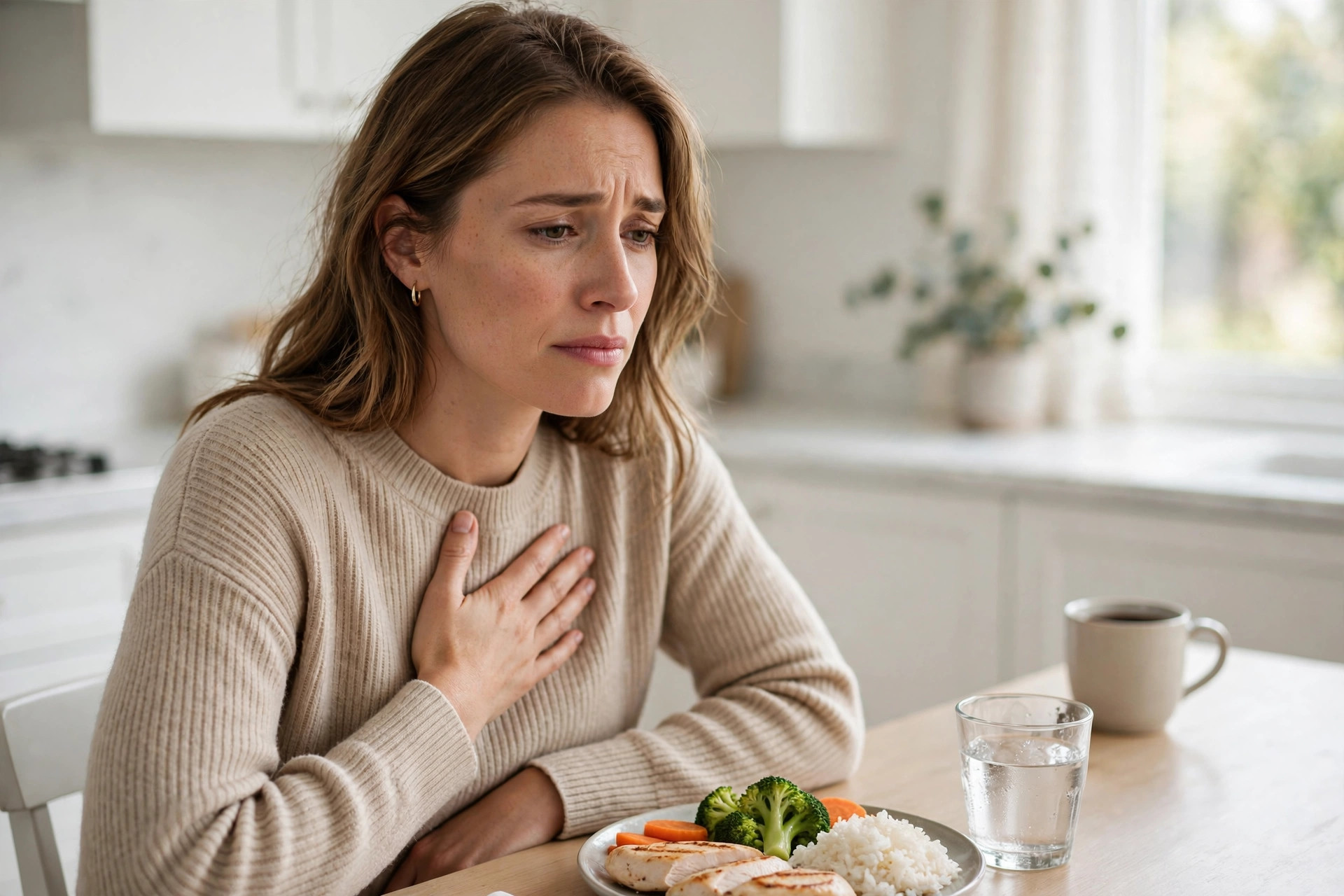
It's 8 PM. Dinner's over, and a burning, squeezing sensation is spreading across your chest. Your mind goes straight to the worst-case scenario: Is this a heart attack — or did the chili just disagree with me?
You're not alone in asking. Chest pain sends roughly 8 million Americans to emergency departments every year, according to the National Hospital Ambulatory Medical Care Survey — and a large share of those visits turn out to be heartburn, not heart trouble. The problem is that heartburn and a heart attack can feel strikingly similar, and guessing wrong in either direction is dangerous. Ignore a heart attack and you lose precious minutes. Rush to the ER for every episode of reflux and you risk the opposite problem: people who "cried wolf" once hesitate the next time, when it might be real.
Here's how to tell the difference — and why, when in doubt, you should never try to diagnose yourself.
Why They Feel So Similar
Your esophagus runs directly behind your heart. When stomach acid splashes up into it, the burning pain lands in almost exactly the same territory as heart-related chest pain: center or left of the chest, sometimes radiating to the neck or jaw. Your body isn't great at pinpointing internal pain, so both can register as a vague, alarming pressure or burn.
About 20% of American adults experience GERD — gastroesophageal reflux disease — according to the National Institutes of Health, so heartburn is extraordinarily common. Heart attacks are also common: the American Heart Association estimates about 805,000 happen in the U.S. each year. With both this widespread, the overlap is inevitable.
Signs It's More Likely Heartburn
Heartburn has a distinctive pattern. Look for:
- Burning that rises. The classic description is a hot, sour burn that starts in the upper belly and climbs toward the throat. A sour or bitter taste in the mouth is a strong heartburn clue.
- A clear trigger. It often arrives after a heavy, fatty, or spicy meal, after alcohol or coffee, or after lying down or bending over. If your chest pain shows up on a predictable schedule after eating, reflux is a strong suspect.
- Bloating or burping. Gas, belching, or a feeling of food coming back up (regurgitation) points to the digestive system, not the heart.
- It responds to antacids. If a dose of Tums or an H2 blocker eases the pain within 15–30 minutes, that's heartburn, not cardiac trouble.
Signs It's More Likely a Heart Attack
A heart attack doesn't always look like the movies — most don't start with dramatic clutching of the chest. According to the CDC, the key symptoms are:
- Pressure, squeezing, or fullness in the center of the chest that lasts more than a few minutes, or comes and goes.
- Pain or discomfort spreading to one or both arms, the back, neck, jaw, or stomach.
- Shortness of breath, with or without chest discomfort.
- Cold sweats, nausea, or lightheadedness.
Women: Know Your Atypical Signs
Heart disease is the leading cause of death for women in the United States — roughly 1 in 5 female deaths, per the CDC — yet women's heart attacks are frequently missed. Women are more likely than men to experience symptoms without obvious chest pain: unusual fatigue, sleep disturbances, shortness of breath, nausea, and pain in the back, jaw, or upper abdomen. If you're a woman over 40 with unexplained exhaustion and stomach discomfort, take it seriously.
The Only Safe Rule: When in Doubt, Call 911
Here is the rule cardiologists want everyone to memorize: if you're unsure, treat it as an emergency.
- Call 911 rather than driving yourself. Paramedics can begin treatment en route and get you to a cardiac-ready hospital.
- If you know you're having a heart attack and aren't allergic, chewing a regular (325 mg) aspirin can help — but don't delay calling 911 to find one, and don't take aspirin just in case without symptoms.
- Never try to "wait and see" with new, severe, or unfamiliar chest pain. Heart muscle starts dying within minutes of a blocked artery; faster treatment means less permanent damage.
ER doctors would rather evaluate you and send you home with antacids than have you stay home with a dying heart. Nobody at the hospital will judge you for a false alarm.
Red Flags That Change the Math
Certain factors tilt the odds. If you have diabetes, high blood pressure, high cholesterol, a family history of heart disease, or you smoke, treat any chest discomfort with extra urgency — diabetics in particular may have a heart attack with surprisingly mild symptoms. On the flip side, if you get the same burning sensation after the same foods, every time, and it always fades with an antacid, that's a heartburn pattern worth managing — but still worth mentioning to your doctor at your next visit.
Taming Heartburn So It Stops Scaring You
If reflux is your recurring problem, these evidence-based habits can dramatically reduce episodes:
- Eat smaller meals and finish dinner 2–3 hours before bed. A full stomach lying flat is the classic reflux setup.
- Identify your triggers. Common culprits: fried foods, spicy dishes, citrus, tomatoes, chocolate, peppermint, coffee, and alcohol. Keep a simple food log for two weeks.
- Elevate the head of your bed 6–8 inches (blocks under the headboard legs work better than extra pillows).
- Maintain a healthy weight. Even modest weight loss reduces pressure on the stomach — the NIH cites it as one of the most effective reflux interventions.
- Don't self-medicate indefinitely. If you need antacids more than twice a week, see your doctor. Long-term frequent heartburn deserves evaluation, and chronic PPI use should be monitored.
Protecting Your Heart Every Day
The best way to win the "is it my heart?" debate is to make the answer less likely:
- Get 150 minutes of moderate aerobic exercise per week — the CDC's baseline recommendation. Brisk walking counts.
- Eat like your heart depends on it — because it does: plenty of vegetables, fruits, whole grains, and lean protein; less sodium and saturated fat.
- Quit smoking. Smoking roughly doubles heart disease risk, per the CDC.
- Know your numbers. Blood pressure, cholesterol, and blood sugar — check them at least annually after 40, more often if you have risk factors.
- Take chest pain seriously forever. Having a history of heartburn does not grant immunity from heart attacks. People can — and do — have both.
The Bottom Line
Heartburn announces itself with burning, sourness, and clear food triggers. A heart attack brings pressure, spreading pain, sweating, and shortness of breath. But symptoms overlap, women experience them differently, and even experienced doctors order an EKG rather than guessing. So keep this article's one rule handy: uncertain chest pain = call 911. It's the one decision in this whole topic you never have to think twice about.
📚 Keep reading:

Why You Crave Sugar at Night (and How to Stop It)
Nighttime sugar cravings aren't a willpower failure — they're biology. Here's why your brain begs for dessert after dinner, and science-backed ways to shut the craving down.

Couch to 5K by Thanksgiving: Your 6-Week Turkey Trot Plan
Six weeks until Thanksgiving is enough time to go from couch to 5K. Here's the exact run-walk plan, gear tips, and race-day strategy for your first Turkey Trot.

Carpal Tunnel Syndrome: Signs, Causes, and Proven Fixes
Waking up with tingling, numb hands at night? That's the classic first sign of carpal tunnel syndrome, which affects millions of Americans. Here's how to spot it, ease it, and know when to see a doctor.