Hiccups That Won't Stop: Causes & Proven Fixes
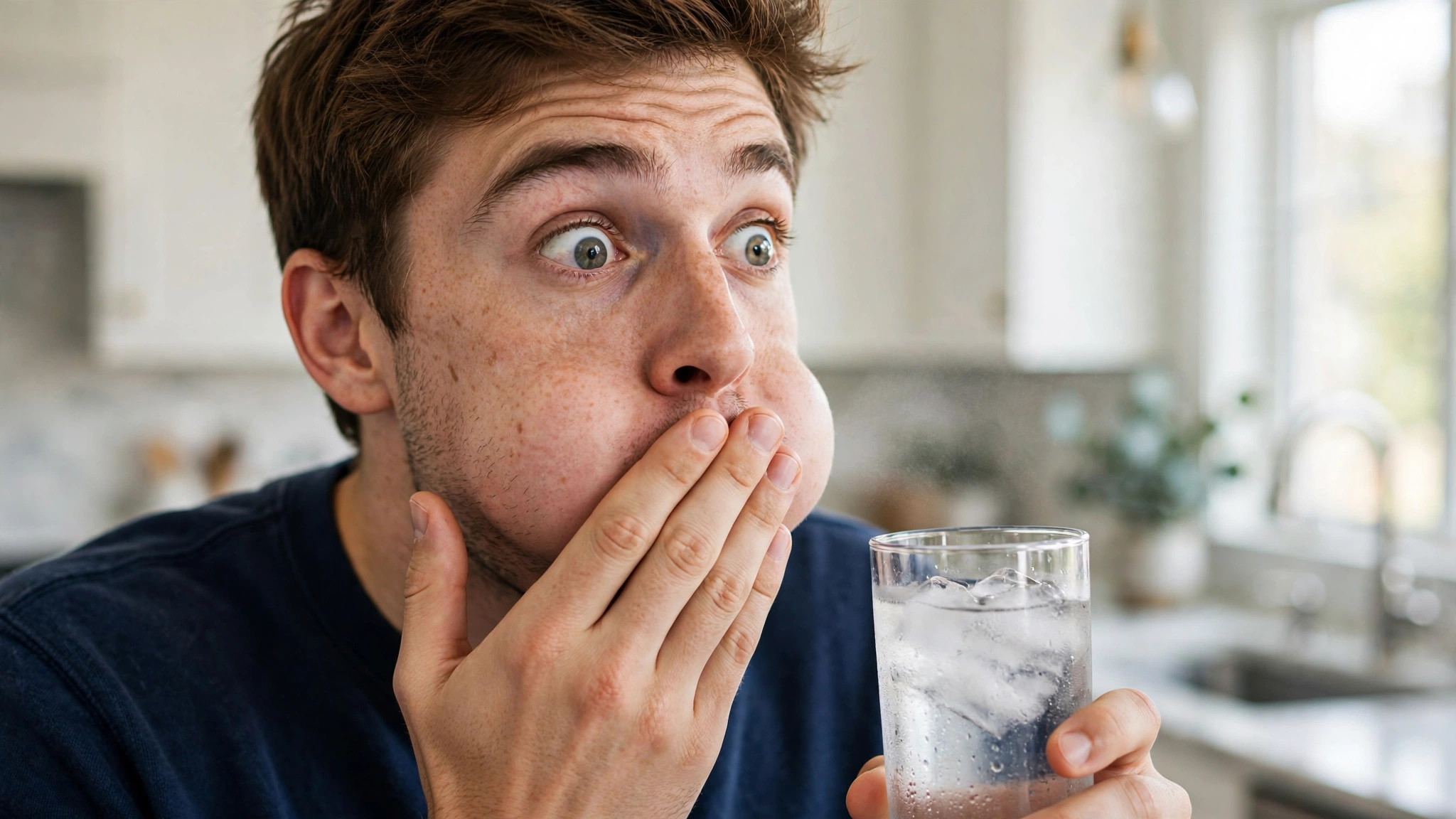
It always strikes at the worst possible moment: the third slide of your presentation, the quiet middle of a movie, a first date. Hic. Then another, every few seconds, and the whole table is trying not to laugh while you search "how to stop hiccups" under the table.
Most bouts last a few minutes and then politely leave. But some don't — stretching into hours, days, or (rarely) far worse. Here's what's actually going on in your body, which remedies are worth your time, and the warning signs that mean a hiccup is not just a hiccup.
What's Actually Happening in Your Body
A hiccup is an involuntary spasm of your diaphragm — the large, dome-shaped muscle that sits under your lungs and drives most of your breathing. The spasm yanks air into your lungs suddenly, and your glottis (the opening between your vocal cords) snaps shut to check the rush. That sharp closure is what makes the classic "hic" sound.
The whole event is coordinated by a nerve circuit called the hiccup reflex arc: the vagus and phrenic nerves carry signals in, a center in your brainstem (likely the medulla) processes them, and the phrenic nerve fires back out to the diaphragm. Hiccups are essentially a glitch in this loop — a reflex that starts firing when it shouldn't and doesn't always switch itself off.
Why They Start: The Usual Triggers
Most bouts are set off by something irritating the stomach, esophagus, or the nerves of the reflex arc. The most common American culprits:
- Eating too fast or too much — a distended stomach presses against the diaphragm. The classic post-Thanksgiving scenario.
- Carbonated drinks and beer — gas expands your stomach; the expansion irritates the vagus nerve.
- Alcohol — it irritates both the esophagus and the nervous system, which is why a night out so often ends with hiccups.
- Spicy or very hot/cold food — sudden temperature or chemical irritation of the esophagus.
- Sudden excitement or stress — laughing too hard, nerves before a big moment, a fright.
- Swallowing air — from chewing gum, smoking, or chugging a soda.
Anything that inflates, stretches, or inflames the stomach or esophagus can wake up the reflex. People with acid reflux tend to hiccup more often, because stomach acid repeatedly irritating the esophagus keeps the vagus nerve on a hair trigger.
Fixes, Ranked by Actual Evidence
The internet is full of hiccup "cures" — being scared, drinking upside down, a spoonful of peanut butter. Most are folklore. The ones below either have real evidence behind them or a plausible physiological mechanism. None are dangerous, and you can stack them.
1. The breath-hold / Valsalva maneuver (best first move)
Take a deep breath, hold it, and bear down as if you're having a bowel movement for 10–20 seconds, then exhale slowly. This is the Valsalva maneuver, and it does two useful things at once: it raises pressure in the chest and stimulates the vagus nerve, which can break the reflex loop. Exhaling into your cupped hands or inflating a balloon achieves a similar effect.
2. Ice-cold water
Gulping a large glass of very cold water works for many people, likely because the cold stimulates the vagus nerve as it travels down the esophagus. Sipping through a straw from the far side of the glass (the "upside-down drinking" trick) probably works for the same reason — plus it forces you to concentrate, which shifts attention away from the reflex.
3. A spoonful of sugar
Swallowing a teaspoon of dry granulated sugar was reported as an effective hiccup cure in a medical letter published in the New England Journal of Medicine in 1971 — and unlike most folk remedies, it has plausible science. The grainy texture overstimulates the vagus nerve endings in the back of the throat, essentially rebooting the reflex arc. A spoonful of peanut butter may work the same way by forcing extra swallowing effort.
4. The FISST straw
In 2021, researchers published a study in JAMA Network Open on the Forced Inspiratory Suction and Swallow Tool (FISST) — essentially a straw with a pressure valve that requires hard suction followed by an immediate swallow. The study reported it stopped hiccups in the vast majority of volunteers, by combining diaphragm work (strong inhalation) with vagal stimulation (swallowing). You can buy one, but a homemade version — sipping a thick drink through a narrow straw — hits a similar mechanism.
5. Sour and bitter tastes
A bite of lemon, a teaspoon of vinegar, or bitters on the tongue may stop hiccups by shocking the vagus nerve with a strong taste signal. This is the principle behind the bartender's "Angostura bitters" cure — it probably has more science behind it than being scared by a friend.
What doesn't work: being frightened. The scare theory says a shock interrupts the reflex, but there is no good evidence for it — it mostly just gives your friends something to enjoy.
When Hiccups Are a Warning Sign
Doctors draw a line at time:
- Acute hiccups — under 48 hours. Annoying, not dangerous.
- Persistent hiccups — lasting more than 48 hours.
- Intractable hiccups — lasting more than a month.
Hiccups past the 48-hour mark deserve a doctor's visit, because the reflex arc can be irritated by genuinely serious conditions: GERD and hiatal hernia, damage or inflammation of the vagus or phrenic nerves (from a cyst, tumor, or goiter in the neck), central nervous system disorders (multiple sclerosis, meningitis, stroke), and metabolic problems like diabetes or kidney failure. Certain medications — especially steroids and some sedatives — can also trigger persistent hiccups.
The red flags: hiccups that last days, keep coming back over weeks, or arrive with other symptoms like difficulty swallowing, abdominal pain, unexplained weight loss, or numbness. That's not a home-remedy situation anymore.
The record-holder for hiccup endurance, incidentally, was Iowa pig farmer Charles Osborne, who hiccuped continuously for 68 years — an estimated 430 million hiccups — after a farm accident in 1922. Nobody wants to join that club.
Keeping Them Away in the First Place
You can't eliminate hiccups, but you can cut down the bouts:
- Slow down at meals. Put the fork down between bites; inhaled air and a rapidly expanding stomach are the top two triggers.
- Go easy on the fizz. If you're hiccup-prone, carbonated water and soda at the same meal are asking for it.
- Manage reflux. If you hiccup after nearly every meal, talk to your doctor about GERD — treating it often quiets the hiccups too.
- Watch the alcohol. Pace yourself, and alternate each drink with water.
- Avoid extreme food temperatures. Very hot soup followed by ice water can irritate the esophagus enough to start a bout.
Most hiccups are a harmless nuisance that a held breath and a cold glass of water will fix. But now you know the difference between an ordinary bout and the kind that earns a trip to the clinic — and next time the whole table is watching you hic through dessert, you'll know exactly what to do.
📚 Keep reading:
Why You're Constipated — and 9 Fixes That Actually Work
About 16 in 100 American adults deal with constipation, a third of those over 60. Gastroenterologists explain what's slowing things down — and the fixes that work.

That Q-Tip in Your Ear Is Doing More Harm Than Good
About 34 kids a day land in the ER from cotton-swab ear injuries. Ear doctors say the ear canal cleans itself — here's the safe way to deal with earwax.

Appendicitis: 7 Warning Signs Your Belly Pain Is Serious
Lower-right belly pain, fever, nausea, no appetite? Appendicitis moves fast — and a burst appendix can turn deadly. Here's how ER doctors tell it apart from gas or a stomach bug.