The Salt You Never Taste: Where America's Sodium Hides
You haven't touched the salt shaker in years. Maybe you even bought the fancy sea salt "for health." So when your doctor raises an eyebrow at your blood pressure numbers, your first thought is probably: How? I barely use salt.
Here's the uncomfortable truth: your salt shaker is almost innocent. The CDC estimates that more than 70 percent of the sodium Americans consume comes from processed and restaurant foods — the salt was added long before the food reached you. According to federal data, the average American takes in about 3,400 milligrams of sodium a day. The federal recommendation? No more than 2,300 mg per day — roughly one teaspoon of salt — and the American Heart Association considers 1,500 mg the ideal daily target.
The numbers say almost nobody is hitting those targets: about 90 percent of Americans over age 2 consume more sodium than recommended. This isn't a story about willpower. It's a story about a food supply that salts things you would never expect.
Why Sodium Matters So Much
Sodium itself isn't poison — your body needs it for fluid balance and nerve function. The problem is the dose.
When you eat more sodium than your kidneys can comfortably excrete, your body holds onto water to dilute it. More water in your bloodstream means more volume for your heart to pump — which means higher blood pressure. High blood pressure is called the "silent killer" for a reason: it has no symptoms while it quietly damages arteries, the heart, kidneys, and brain. The CDC links excess sodium intake to hypertension, heart disease, and stroke, and estimates that tens of billions of dollars in health care costs each year are tied to diet-related high blood pressure.
There's also the immediate stuff nobody talks about: excess sodium can leave you bloated, puffy-faced, and sluggish the next morning — that "I woke up swollen" feeling after a restaurant dinner is often a sodium bomb, not real weight gain.
Your Salt Shaker Is Only 5 Percent of the Story
One of the most surprising findings in nutrition research: the salt you add while cooking or at the table accounts for only a small fraction of your daily intake — the CDC puts it around 5 percent. Sodium that occurs naturally in foods is another ~15 percent. Everything else — roughly 70 percent — was added during manufacturing or restaurant preparation.
That's why "I never salt my food" is such a common, and completely understandable, misconception. You're judging the tip of the iceberg while the ocean of sodium stays underwater.
The 10 Biggest Hidden-Sodium Culprits
The CDC's analysis of American diets names these as the top contributors of sodium. Note what tops the list — it's not chips:
- Bread and rolls. America's number-one source of sodium, not because bread is salty, but because Americans eat it constantly. A single slice of bread can carry 150–200 mg of sodium — and it adds up fast across sandwiches, toast, and dinner rolls.
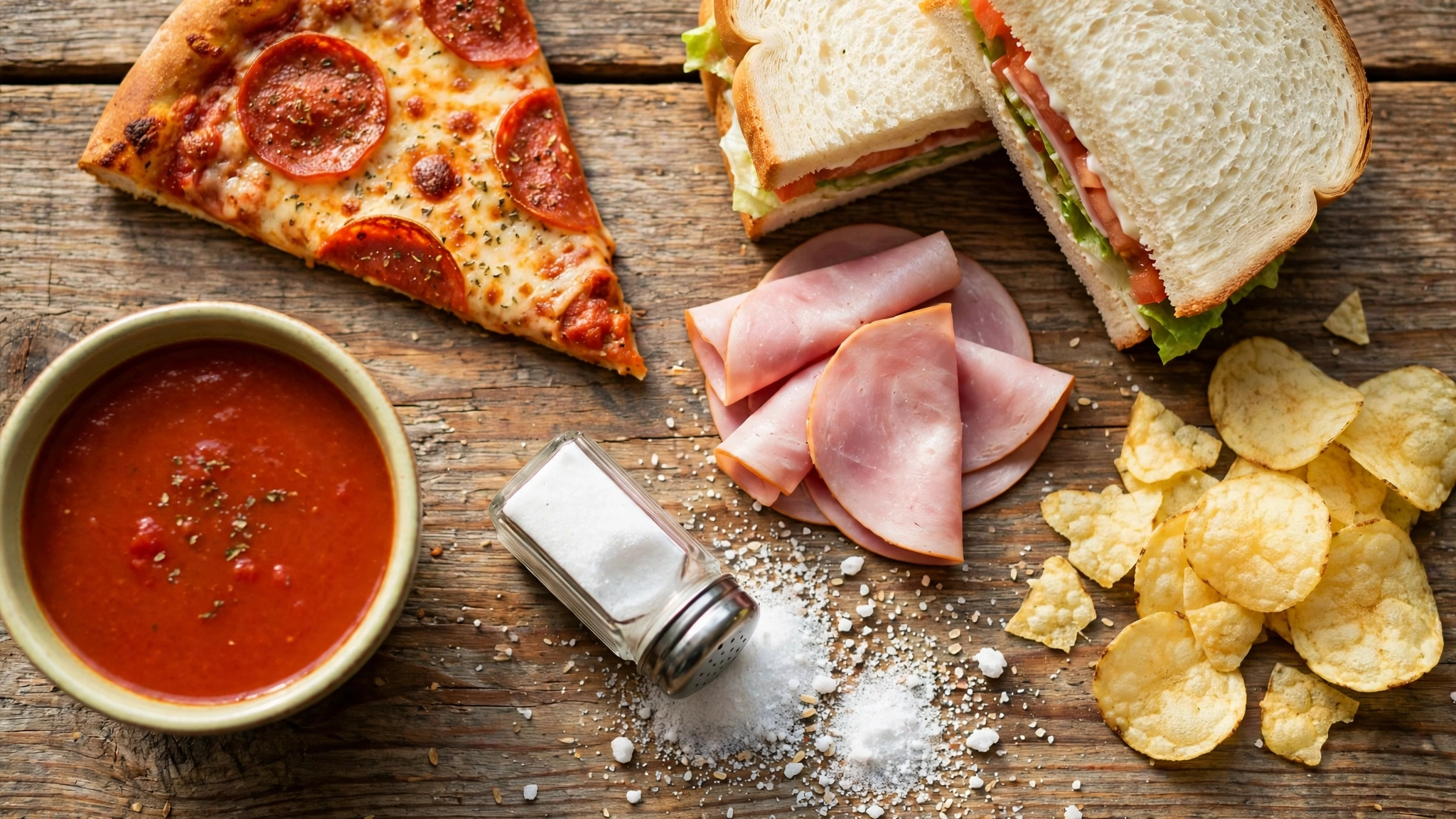
- Pizza. The perfect storm: salty cheese, processed pepperoni, and a crust that itself is loaded with sodium. A single slice of pepperoni pizza can deliver 600–800 mg.
- Sandwiches. Deli meat, cheese, bread, condiments — every layer brings its own sodium. A standard deli sandwich can easily pack 1,500 mg, more than half your daily limit in one meal.
- Cold cuts and cured meats. Ham, salami, bacon, and hot dogs are cured with salt by definition. Two ounces of deli ham can contain 600 mg.
- Soups. Canned soup is one of the saltiest foods on the shelf. A single cup of canned chicken noodle soup can contain 800–900 mg — and cans often hold two servings, which many people eat at once.
- Burritos and tacos. Between seasoned meat, cheese, refried beans, and salsa, a restaurant burrito can blow past 1,500 mg without breaking a sweat.
- Salty snacks. Chips, pretzels, and crackers — these taste salty because they are.
- Chicken dishes. Rotisserie chickens and fast-food chicken are often brined or injected with sodium solution to stay juicy. That "plump and moist" texture comes from salt.
- Cheese. An ounce of cheddar has about 180 mg. Add it to a sandwich, pizza, or eggs, and it multiplies.
- Egg dishes. Omelets and egg sandwiches at restaurants often carry 600–1,000 mg of sodium from cheese, ham, and the cooking process.
Restaurant Food Is a Sodium Minefield
Restaurant meals deserve their own warning. A typical sit-down restaurant entrée can contain 2,000 mg of sodium or more — nearly a full day's allowance in a single plate. Chain restaurants are required to post calorie counts, but sodium is usually buried in the nutrition PDF online. If you're eating out, check the numbers before you go — you'd be surprised which "healthy-looking" grilled chicken plate is the saltiest thing on the menu.
How to Read a Sodium Label in 10 Seconds
You don't need to become a nutrition scientist. Two quick checks:
- Milligrams per serving. Compare against your 2,300 mg daily budget. A single item with 600+ mg is a red flag.
- % Daily Value. The FDA's %DV for sodium is based on 2,300 mg. A food with 20% DV or more of sodium per serving is considered high; 5% DV or less is low.
And always check the servings per container — a can of soup that says "430 mg per serving" but contains two servings is really 860 mg.
7 Practical Ways to Cut Hidden Sodium
Cutting sodium doesn't mean eating bland food. It means being strategic:
- Choose low-sodium or "no salt added" versions of canned beans, tomatoes, broth, and vegetables. Rinse canned beans — it washes away some surface sodium.
- Compare bread labels. Sodium per slice varies wildly between brands. Switching brands alone can save hundreds of milligrams a day.
- Ask for dressings and sauces on the side at restaurants — and use them sparingly. Sauces are concentrated sodium delivery systems.
- Flavor with acid and herbs instead of salt. Lemon juice, vinegar, garlic, and fresh herbs make food taste brighter without a milligram of sodium.
- Cook one more meal at home per week. Home cooking gives you the shaker — and the control.
- Eat more potassium-rich foods. Bananas, beans, spinach, and potatoes help your body balance sodium's effect on blood pressure (ask your doctor first if you take blood pressure medication).
- Watch the "health halos." Cottage cheese, whole-grain bread, and canned tuna sound wholesome — but can be surprisingly high in sodium. The label doesn't lie.
The Bottom Line
If you're worried about your sodium intake, the salt shaker on your table is the last thing to blame. The real change comes from the bread aisle, the deli counter, the canned-soup shelf, and the restaurant menu. Start with just one swap — a lower-sodium bread, a home-cooked lunch, or sauces on the side — and you've already cut more sodium than a lifetime of avoiding the shaker ever would.
Your blood pressure, your kidneys, and your morning face will thank you.
This article is for informational purposes only and is not a substitute for professional medical advice. If you have high blood pressure, kidney disease, or heart failure, talk to your doctor before making major changes to your sodium intake.
📚 Keep reading:

Stroke Warning Signs: Know BE FAST Before It Matters
Every 40 seconds, an American has a stroke. Learn the BE FAST warning signs — recognizing them in time can save a life and prevent lasting disability.

Migraines: Why 39 Million Americans Keep Getting Them
The aura, the nausea, the one-sided pounding that ruins your day. Migraine affects 1 in 7 Americans — here's what triggers attacks and which treatments actually work.

Your Screens Are Drying Out Your Eyes — Here's the Fix
Burning, gritty, tired eyes by evening? You're not alone — a new survey says 3 in 4 Americans battle dry eye weekly. Here's the science of dry eye and what actually fixes it.