Holiday Weight Gain: The Real Numbers (Not 10 Lbs)
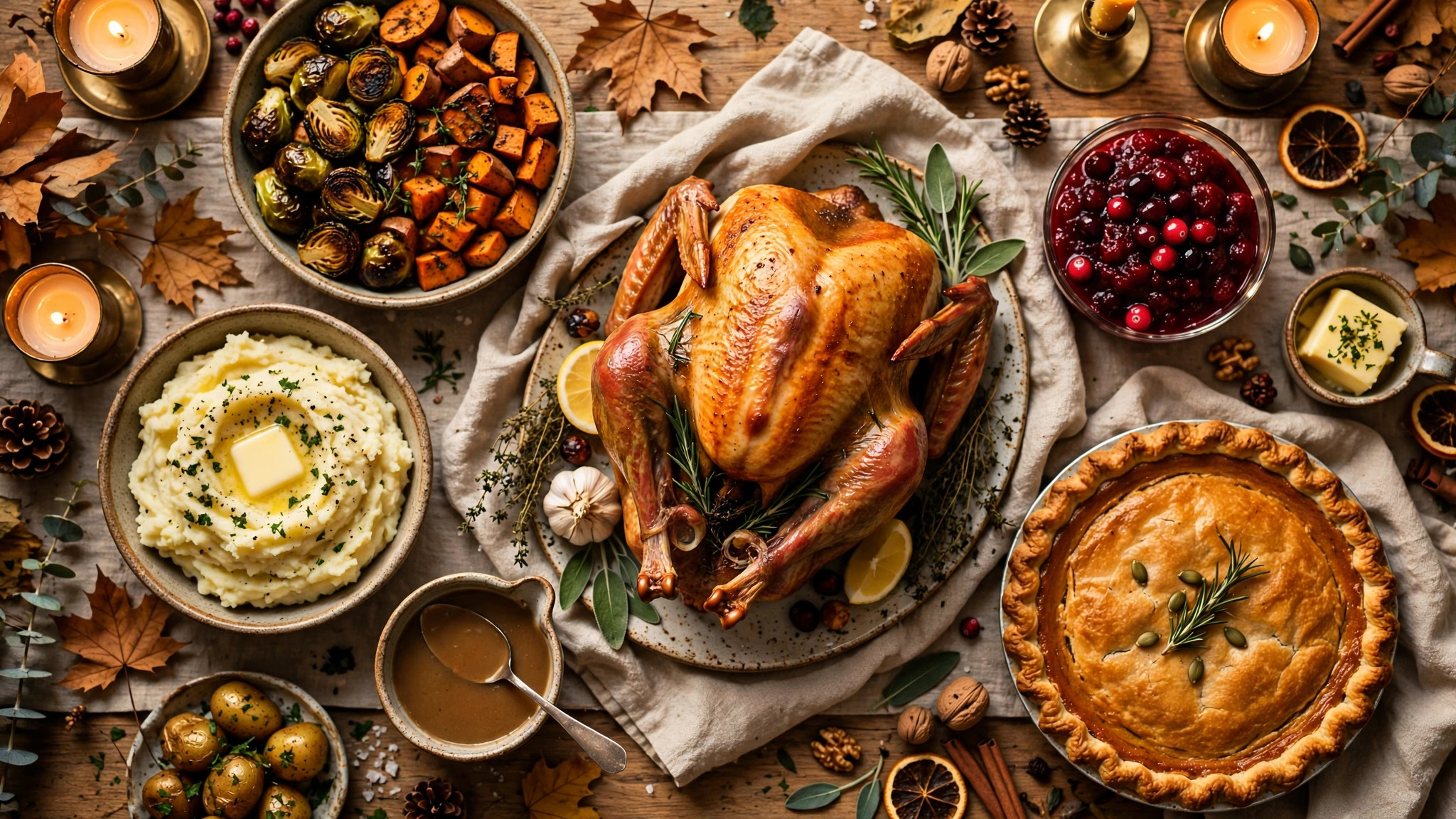
Every October, the warnings start rolling in: watch out, the average American gains 7 to 10 pounds between Thanksgiving and New Year's. It sounds terrifying enough to make you want to skip the pumpkin pie entirely.
Here is the good news: that number is a myth. The bad news: what actually happens is sneakier — and, over the years, it adds up to something far more consequential than a single season of indulgence.
The 10-pound myth vs. the real numbers
The most-cited figure comes from a landmark study published in the New England Journal of Medicine in 2000, which tracked 195 adults through a full year. Between mid-November and mid-January, participants gained an average of just under one pound — about 0.48 kilograms. Fewer than 10% gained five pounds or more.
A later study, also published in NEJM in 2016, weighed participants daily for a year in the United States, Germany, and Japan. The American participants gained an average of 1.3 pounds (0.6 kg) during the Christmas-to-New-Year window — the sharpest gain of the year, concentrated in the 10 days right after Christmas.
So why does everyone believe the 10-pound figure? Self-report surveys show that people think they gained at least five pounds. The scale moves more than reality does, thanks to water retention from salty restaurant meals, heavy carbs, and alcohol. A big Thanksgiving dinner can make the scale jump 3 to 5 pounds overnight — almost entirely water and food still working its way through your system.
The part nobody talks about: it doesn't come off
Here is where the real story gets serious. The 2000 NEJM study found something that should change how you think about the holidays: the weight gained in fall and winter was not reversed during the spring or summer. Participants did not lose it back. Year after year, that one pound compounds.
Researchers estimate most American adults gain between 0.6 and 1.7 pounds per year. It sounds trivial — until you realize that over 10 years, that is 6 to 17 pounds, and over 20 years, it is the difference between a healthy weight and obesity. The holiday season, researchers believe, is responsible for a disproportionate share of that creep.
And the stakes are high. According to the CDC, roughly 40% of American adults are obese — a condition tied to heart disease, type 2 diabetes, stroke, and several cancers. Preventing a pound a year is not about vanity; it is one of the highest-leverage health moves you can make.
Why the holidays are engineered for weight gain
It is not just willpower. The season stacks the deck in several specific ways:
- The food environment changes completely. Office candy bowls, cookie exchanges, cocktail parties, and a Thanksgiving table groaning with calorie-dense dishes mean high-reward food is everywhere, all the time.
- Routines collapse. Travel, houseguests, shorter days, and cold weather disrupt workouts, sleep schedules, and meal timing.
- Alcohol flows freely. A single glass of eggnog or a holiday cocktail can pack 300 to 500 calories — and alcohol lowers inhibitions around food while you are at it.
- Stress spikes. Family dynamics, finances, and end-of-year deadlines drive stress eating for millions of Americans.
Understanding these forces matters, because the strategies that work are the ones that account for them — not the ones that demand monk-like discipline in the middle of December.
9 science-backed ways to hold your weight this season
1. Eat a protein-rich breakfast every day. Skipping meals to "save calories" for a party backfires reliably — you arrive starving and eat past fullness. Research consistently shows breakfast eaters consume fewer calories across the day. Eggs, Greek yogurt, or a protein smoothie keep you steady.
2. Use the plate method at every gathering. Fill half your plate with vegetables and salad first, a quarter with lean protein (turkey breast, not the skin), and a quarter with whatever indulgent sides you love most. You eat everything you want — just in better proportions.
3. Walk for 10–15 minutes after big meals. A short post-meal walk measurably blunts blood sugar spikes and aids digestion. The family Turkey Trot is not just tradition; it is physiology. Even a loop around the block after Thanksgiving dinner counts.
4. Pick your indulgences deliberately. You cannot have everything, but you can have anything — the dishes that are genuinely special to you. Aunt Linda's once-a-year pecan pie? Worth it. The store-bought dinner rolls and the generic cheese cube tray? Skip without regret.
5. Alternate every alcoholic drink with water. This one rule halves your drink calories, keeps you hydrated, and slows the pace enough that one glass of wine does not become four. Holiday cocktails and eggnog are among the most calorie-dense things you will consume all season.
6. Slow down and actually taste it. It takes about 20 minutes for fullness signals to reach your brain. Put your fork down between bites, join the conversation, and check in with yourself halfway through the plate. Mindful eating is not a buzzword — it is the mechanism that stops the second helping you did not need.
7. Keep moving, even in small doses. You do not need 90-minute gym sessions in December. Ten-minute bursts — a walk at lunch, bodyweight squats while the coffee brews, taking the stairs — add up across six weeks. Consistency beats intensity during the holidays.
8. Protect your sleep. Short sleep raises ghrelin (the hunger hormone) and lowers leptin (the fullness hormone). Late nights of holiday movies and early mornings of shopping are a recipe for next-day cravings. Aim for your usual 7 to 9 hours.
9. Weigh yourself weekly — not daily, not never. People who step on the scale once a week during the holidays gain significantly less than those who avoid it. The scale is feedback, not judgment. Catching a two-pound drift in early December is easy to correct; discovering eight pounds in January is not.
The mindset that actually works
Forget "I will be perfect this holiday season." Perfection is brittle, and one bad weekend shatters it. The goal is not zero gain — it is damage control and damage prevention: enjoy the foods that matter, skip the ones that do not, keep your routines limping along, and come out of January roughly where you started October.
That one un-gained pound, kept off year after year, is worth more than any January crash diet. The research is clear: the people who maintain their weight over decades are not the ones with the most willpower. They are the ones with the best systems — and the holidays are exactly when your systems matter most.
So go ahead and enjoy Thanksgiving. Just bring a plan to the table along with the pie.
📚 Keep reading:

Forever Chemicals in Tap Water: What the EPA Found
PFAS 'forever chemicals' are in the tap water of millions of Americans. Here is what the science says about health risks — and the practical steps to protect your family.

Fall Allergies: Why Ragweed Season Is Worse Than Ever
Ragweed season now stretches weeks longer than it used to. Here's why fall allergies keep getting worse — and the doctor-backed plan to finally get through it.

Enlarged Prostate: Signs Every Man Over 50 Should Know
Waking up twice a night to pee? A weak stream that takes forever to start? An enlarged prostate affects half of American men by 60 — here's what's normal, what's not, and what helps.