Late-Night Snacking May Raise Liver Disease Risk 30%
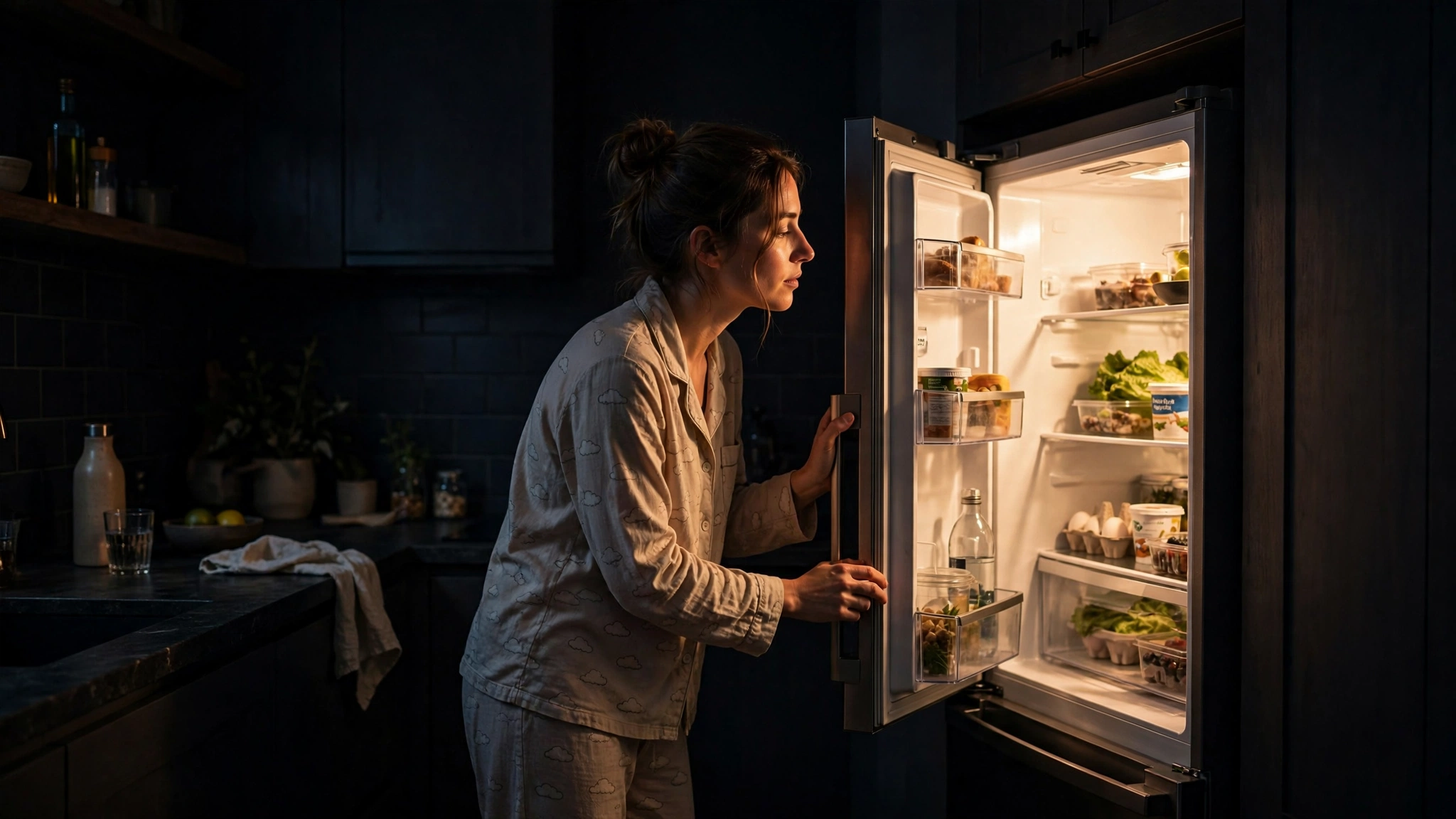
That midnight snack may be costing you more than extra calories. New research out of Oregon Health & Science University (OHSU), published this month in Clinical Gastroenterology and Hepatology, tracked nearly 200,000 U.S. adults and found that people who regularly ate after dinner faced a 20 to 30 percent higher risk of fatty liver disease and cirrhosis — two potentially serious liver conditions.
As many as 30% of Americans already have fatty liver disease, often without knowing it. And chronic liver disease kills more than 52,000 Americans every year, according to federal data. If something as simple as when you eat could shift those odds, that's worth a closer look.
Why the liver cares what time you eat
Your liver isn't just filtering toxins around the clock — it runs on your circadian rhythm, the body's internal 24-hour clock. During the day, it's primed to process nutrients. At night, when your brain is promoting sleep, the liver shifts into repair and maintenance mode. Eating during that window forces it back to work when it's least efficient.
"We know the liver is very much in tune with the body's circadian rhythms," said lead author Dr. Robert Wilechansky, a hepatologist at OHSU. "So we're interested in changing the timing of eating in a way that could make a difference in health without changing the composition of what people eat."
That last part is the striking thing: the study suggests meal timing alone — not just what's on the plate — may influence liver health. Previous research from co-author Dr. Andrew McHill, a sleep and circadian physiologist at OHSU, has shown that eating when your internal clock is promoting sleep reduces your body's ability to metabolize food efficiently, a pathway also linked to obesity and diabetes.
What the study found — and what it didn't
The researchers drew on three of the largest long-running health studies in the country — the Nurses' Health Study, the Nurses' Health Study II, and the Health Professionals Follow-up Study — and sorted nearly 200,000 participants by eating habits, including whether they ate after dinner or after going to bed.
They found a 20 to 30 percent increase in both metabolic dysfunction-associated steatotic liver disease (MASLD, formerly called nonalcoholic fatty liver disease) and cirrhosis among late-night eaters compared with those who didn't eat late. Before you panic, a few caveats:
- It's observational. The study relied on self-reported eating and health data, so it can't prove late-night eating causes liver disease — only that the two are linked. Late-night eaters may also differ in other ways (stress, sleep quality, snack choices).
- What you eat late still matters. Previous studies have linked sugary drinks and ultra-processed snacks — cookies, chips, soda — to liver disease on their own. A handful of almonds at 10 p.m. isn't the same as a sleeve of cookies at midnight.
- Only a small fraction of fatty liver cases progress. "It's important to remember, of the people who developed fatty liver disease, only a small fraction develop serious forms of the condition like cirrhosis," Wilechansky noted. The risk is real but not destiny.
The sleep connection: eating late steals your rest too
Liver disease isn't the only reason to close the kitchen. Eating close to bedtime forces your digestive system to work while your body is trying to wind down, and that creates a cascade:
Sleep disruption. A large meal raises your core body temperature and can trigger acid reflux. About 1 in 5 Americans experiences heartburn or GERD symptoms regularly — and lying down after a heavy snack is a recipe for a restless night. Adults need 7 to 9 hours of sleep, per CDC guidelines, yet roughly a third of U.S. adults routinely get less than 7.
Blood sugar rollercoaster. Your insulin sensitivity is lowest in the evening. The same snack that barely moves your blood sugar at noon can cause a bigger spike — and a harder crash — at midnight, which can wake you up or leave you wired.
The cravings loop. Poor sleep drives up ghrelin (the hunger hormone) and drops leptin (the fullness hormone) the next day. So the midnight snack that cost you sleep becomes tomorrow's mid-morning binge.
When should you stop eating? The practical rule
The researchers' own takeaway was simple: "confining your calorie intake to several hours before bedtime might be beneficial."
You don't need a rigid fasting window to act on this. Most dietitians land on a practical version: finish your last meal or snack 2 to 3 hours before bed. If you go to bed at 11 p.m., aim to be done eating by 8 or 8:30 p.m. The strongest signal in the research comes from regular late-night eating, not the occasional late meal.
But I get hungry at night — what do I do?
Night hunger is real, and fighting it with willpower alone usually fails. Here's what actually works:
1. Make dinner count
Most late-night snacking starts at 6 p.m. A dinner with 25 to 30 grams of protein (a palm-and-a-half of chicken, fish, tofu, or beans), plenty of fiber from vegetables or whole grains, and some healthy fat keeps you full for 4 to 5 hours. If you barely ate dinner, your 10 p.m. hunger is just biology doing its job.
2. If you must snack, go small and simple
Keep it around 100 to 150 calories, and reach for protein, fiber, or both instead of sugar:
- Plain Greek yogurt with a few berries
- A small banana with a tablespoon of peanut butter
- A handful of unsalted almonds (about 23)
- A hard-boiled egg
Skip the "just a few" chips, ice cream, cookies, and soda — the ultra-processed snacks the research flags as especially linked to liver problems.
3. Break the ritual, not just the hunger
A lot of midnight snacking isn't hunger — it's habit. Try swapping the edible part: brush your teeth right after dinner (the mint signal tells your brain the kitchen is closed), make herbal tea instead of grabbing food, or do 10 minutes of stretching. The urge usually passes in about 15 minutes.
4. Don't keep trigger foods where you'll see them
This sounds obvious because it is. If the ice cream is in the freezer at midnight, you'll eat it. Keep the ultra-processed snacks out of the house — or at least out of sight — and put the good options at eye level.
5. Check your sleep
If you're snacking at 1 a.m., the fix may not be in the kitchen at all. Sleep deprivation ramps up hunger hormones the next day, and being awake at midnight puts you in the snacking danger zone by default. A consistent bedtime calms your appetite more than any snack swap.
The bottom line
The new OHSU research doesn't say you can never eat after dinner again. It says something subtler and more useful: your body keeps a clock, and your liver keeps time. Eating most of your food during daylight hours and giving yourself a few hours of digestive rest before bed is a low-cost, no-supplement habit with growing evidence behind it — in the researchers' own words, a difference when you eat might make without changing a single thing about what you eat.
📚 Keep reading:
Lower Cholesterol Naturally: 9 Proven Strategies That Work
Nearly 86 million American adults have high cholesterol. Here's what cardiologists say actually lowers it — no crash diets, no fads, just proven moves.

Zone 2 Cardio: The Longevity Exercise Americans Skip
Longevity doctors spend most of their cardio time exercising EASY, not hard. Here's the Zone 2 science, how to find your pace, and a simple weekly plan.

Menopause Explained: Symptoms, Relief & What Works
Half of America will go through menopause, yet few understand it. Here's what science says about symptoms, hormone therapy, and real relief.