Why You Wake Up Drenched in Sweat: Night Sweats Explained
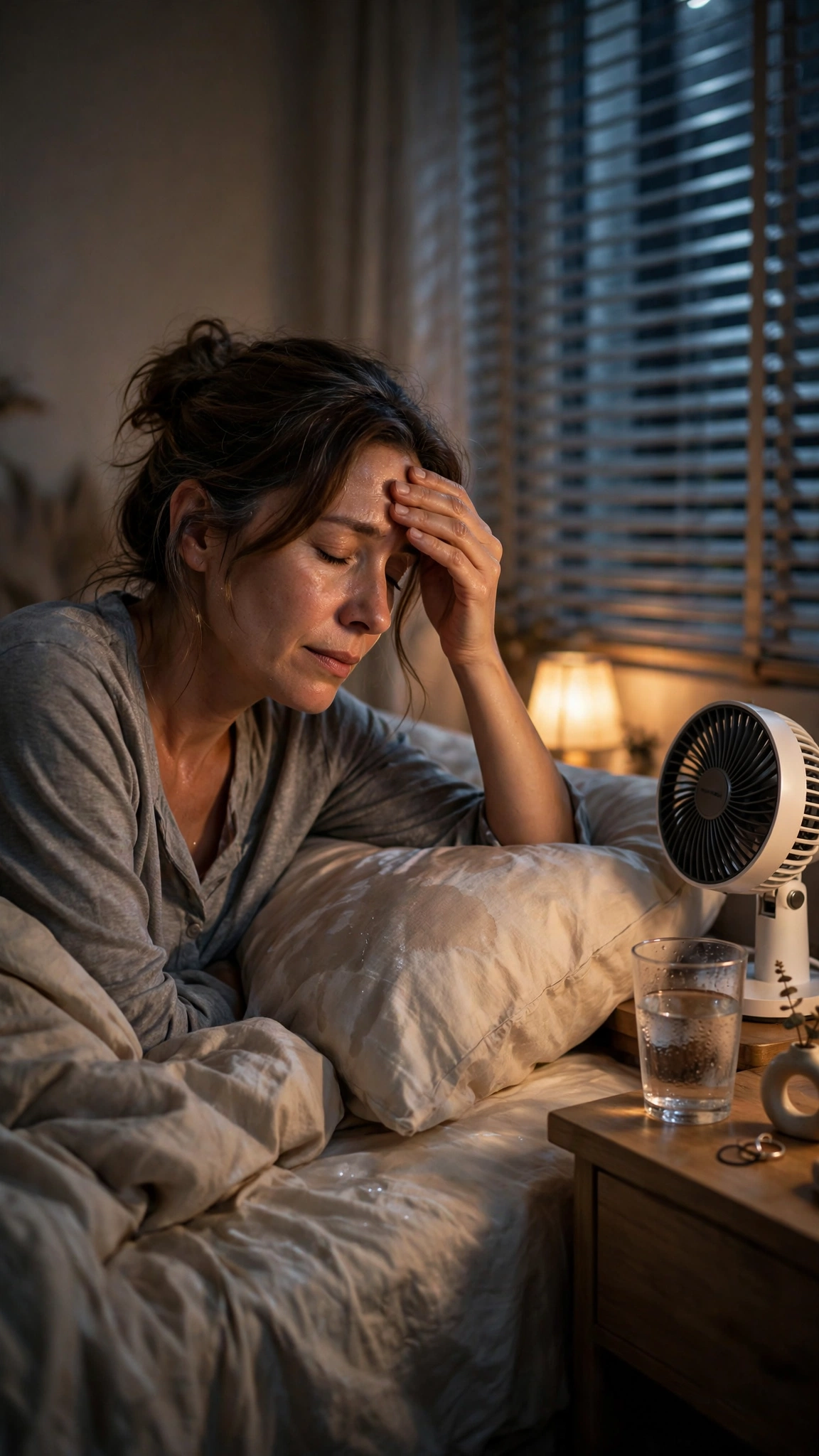
You wake up at 3 a.m., and your T-shirt is clinging to you. Your sheets are damp. Your pillow feels swampy. You flip it over, grope for the thermostat, and lie there wide awake, wondering why your own body just turned your bed into a sauna.
Most of the time, night sweats are harmless — a hot room, heavy blankets, or dinner decisions coming back to haunt you. But persistent, drenching night sweats that soak through your clothes are worth paying attention to. Here is what your body is telling you, and how to stop it from ruining your sleep.
What counts as a "real" night sweat
There is a difference between feeling warm at night and true night sweats. Doctors define night sweats as repeated episodes of extreme sweating during sleep — sweating intense enough to soak your pajamas or bedding — that are not caused by a hot bedroom or too many blankets.
Occasional dampness on a warm night in July is normal. Waking up drenched several times a week in a cool bedroom is not. If you are changing your shirt or your sheets, you are in the second category, and your body is reacting to something.
The most common causes (the benign ones first)
Your bedroom is too warm
This is the number-one cause, and it is embarrassingly simple. The ideal sleep temperature for most adults is 65 to 68°F (18 to 20°C). The National Sleep Foundation notes that a cool room signals your brain that it is time to sleep — while a warm one disrupts the process. Memory foam mattresses, down comforters, flannel sheets, and synthetic fabrics all trap body heat. Before you suspect anything medical, set the thermostat to 67°F, switch to breathable cotton or bamboo sheets, and see if the problem vanishes within a week.
Hormones — menopause and perimenopause
This is the classic cause. Roughly 80% of women experience hot flashes and night sweats around menopause, according to the North American Menopause Society, and for many they start during perimenopause — up to 10 years before the final menstrual period. The mechanism: dropping estrogen scrambles the brain's thermostat, narrowing your body's "comfort zone," so tiny temperature shifts trigger a full overheating alarm.
But this is not only a women's issue. Men with low testosterone — or men taking testosterone-blocking prostate treatments — can also experience night sweats.
Medications
This is the most overlooked cause in America. Some of the most widely prescribed drugs list night sweats as a side effect:
- Antidepressants (SSRIs like sertraline, SNRIs like venlafaxine) — up to 1 in 5 users report sweating
- Hormone therapy drugs — including tamoxifen and some prostate medications
- Over-the-counter pain relievers — yes, even regular aspirin and ibuprofen can trigger sweating in some people
- Diabetes medications — including insulin, especially when blood sugar dips overnight
If your sweats started within a few weeks of a new prescription, do not stop the drug — talk to your doctor about timing, dosing, or alternatives.
Alcohol and spicy food
Alcohol is one of the most common triggers of a single bad night of sweating. It widens your blood vessels, raises your body temperature, and fragments your sleep — which is why that glass (or three) of wine often ends in a 3 a.m. wake-up drenched. Spicy dinners raise core temperature through the same vasodilation effect. Try moving both earlier in the evening, or cutting them out on weeknights, as an experiment.
Sleep apnea
Obstructive sleep apnea — pauses in breathing during sleep — forces your body to work harder for oxygen, and that effort can show up as profuse night sweating. If you snore loudly, wake up gasping, or feel exhausted despite a full night in bed, the sweats may be a symptom of something that also raises your risk of heart disease and stroke. An estimated 30 million Americans have sleep apnea, and most are undiagnosed, per the American Academy of Sleep Medicine.
Less common causes worth knowing
These are rarer, but they are the reason doctors take persistent night sweats seriously:
- Thyroid disorders — an overactive thyroid (hyperthyroidism) revs up your metabolism and can cause heat intolerance and night sweating
- Infections — tuberculosis, endocarditis, HIV, and even a lingering viral infection can cause drenching sweats
- Cancers — night sweats are a known symptom of lymphoma, where they often appear with unexplained weight loss and fever
- Anxiety disorders — chronic stress and panic attacks can trigger the fight-or-flight response during sleep
The pattern matters: occasional sweats with an obvious trigger (hot room, wine, new medication) are usually nothing to worry about. Sweats that persist for weeks, come with fever, unexplained weight loss, or swollen glands, or appear suddenly with no lifestyle change — those deserve a doctor's visit.
How to stop waking up soaked: what actually works
Start with the environment, because it fixes the majority of cases:
- Cool the room to 65–68°F. This single change resolves more cases than anything else. If you cannot afford to cool the whole house, a bedside fan aimed at your torso works surprisingly well.
- Swap your bedding. Breathable cotton or bamboo sheets, a lighter comforter, and moisture-wicking sleepwear beat flannel and polyester every time. Sleep in layers so you can shed one mid-night.
- Cut the triggers before bed. No alcohol within three hours of sleep, lighter evening meals, and skip the hot sauce at dinner for a week to test.
- Keep the room dark and quiet. Light and noise fragment sleep, and fragmented sleep makes every sweat episode feel worse — a simple fan or white noise machine helps twice over.
- Track it. Note the dates, what you ate and drank, the room temperature, and any new medications. Patterns jump out fast — and a two-week log gives your doctor something concrete to work with.
- See your doctor if sweats persist. If you have cooled the room, ditched the triggers, and you are still waking up soaked after two to three weeks — or if you have fever, weight loss, or swollen glands — make an appointment. Persistent night sweats can be the first visible sign of something treatable.
The bottom line
Waking up drenched is miserable, but it is also information. Most of the time your body is simply reacting to a warm bedroom, a glass of wine, or a medication — and a cooler room, lighter blankets, and smarter evening habits fix it within days. But night sweats that keep coming back without an obvious cause are your body asking for a checkup. Sleep is too important to spend it wringing out your sheets.
Rao Sajid is the founder and editor of VitalDaily. He covers everyday health topics — nutrition, sleep, fitness and wellness — turning guidance from public-health sources like the CDC, NIH and FDA into plain, practical advice. More about Rao →
📚 Keep reading:
Pink Eye: Is It Contagious? Causes, Treatment & Relief
Woke up with a red, goopy eye? That is likely pink eye. Here is what causes it, how contagious it really is, and the home care that clears it fastest.
Does Cold Weather Make You Sick? What Science Says
Don't go out with wet hair — you'll catch a cold. But colds come from viruses, not temperature. So why does everyone get sick every winter? Science has answers.

Urgent Care vs. ER: Where to Go (and Save Thousands)
A sore throat at the ER can cost you $2,700 and four hours. The same visit at urgent care? About $175 and 45 minutes. Here's how to pick the right door every time.