Pink Eye: Is It Contagious? Causes, Treatment & Relief
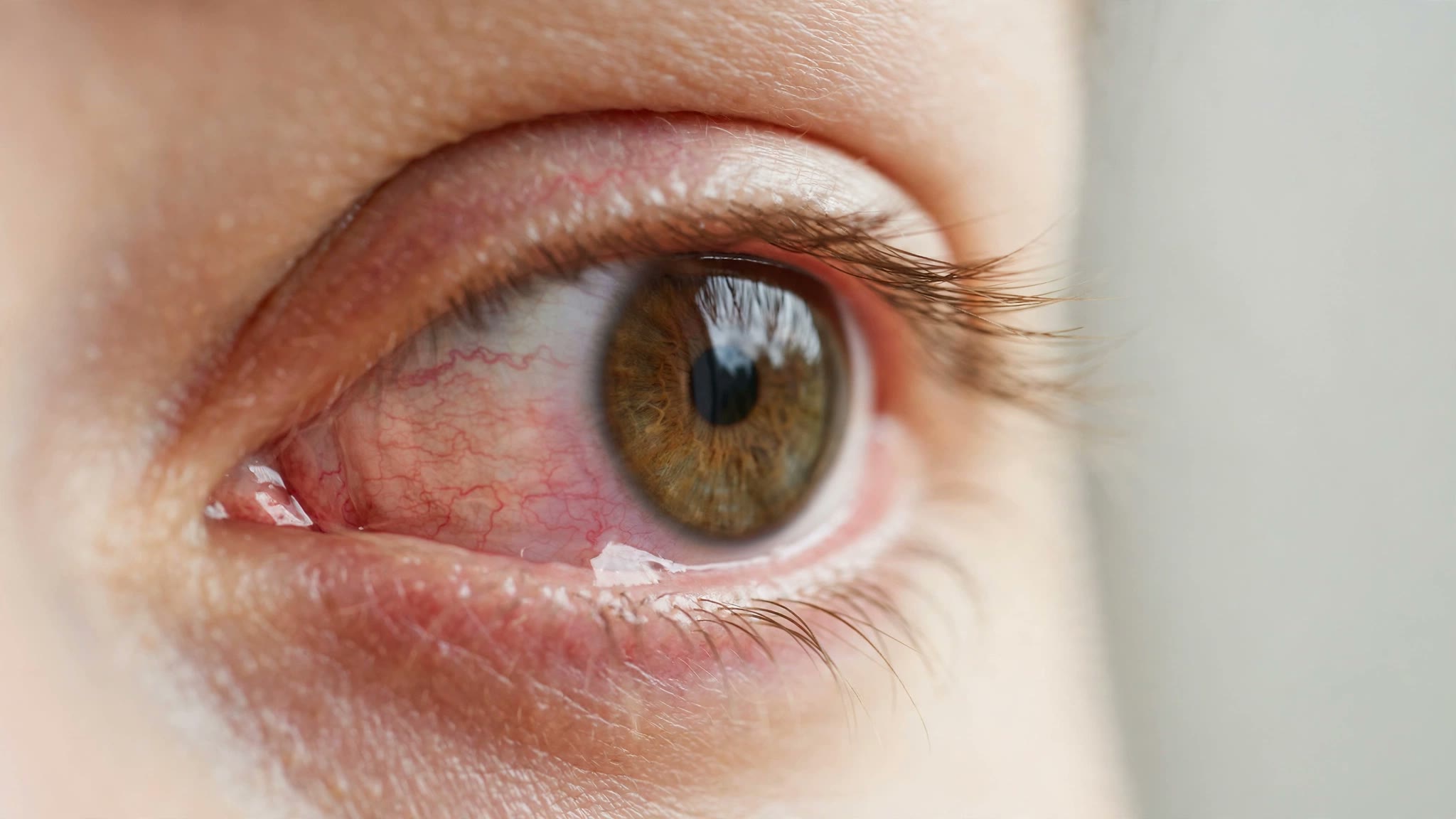
You wake up, and your eyelids are glued shut. You pry them open and look in the mirror: one eye is bloodshot, watery, and crusty at the corners. Congratulations — you may have just joined the millions of Americans who get pink eye every year.
Pink eye sounds dramatic, but it is usually more annoying than dangerous. The problem is that most people have no idea which kind they have — and the treatment depends entirely on that. Here is what is actually going on behind the redness, and how to deal with it.
What pink eye really is
Pink eye is the nickname for conjunctivitis — inflammation of the conjunctiva, the clear, thin membrane that covers the white of your eye and lines the inside of your eyelids. When it gets inflamed, its tiny blood vessels swell, and that is what turns the white of your eye pink or red.
The inflammation has four main causes, and they behave very differently:
- Viral (most common in adults) — usually caused by adenoviruses, the same family behind many colds. Starts in one eye, often spreads to the other. Watery discharge.
- Bacterial — caused by bacteria like Staphylococcus or Streptococcus. Thick yellow-green discharge that can crust the eyes shut overnight.
- Allergic — triggered by pollen, dust mites, pet dander. Itchy, watery, and almost always in both eyes at once.
- Irritant/chemical — smoke, chlorine, air pollution, or a splash of shampoo. Redness that clears once the irritant is gone.
Most cases in otherwise healthy adults are viral or allergic — and neither is helped by antibiotic eye drops.
Is pink eye contagious? It depends on the type
This is the question everyone asks, usually while trying to decide whether to go to work or send their kid to school.
Viral and bacterial pink eye are contagious. They spread the way colds do — through hand-to-eye contact after touching contaminated surfaces, or by sharing towels, pillowcases, eye makeup, or contact lens solution. Viral pink eye is typically contagious while symptoms are present, which can be 10 to 14 days. Bacterial pink eye is usually no longer contagious after about 24 hours on antibiotic drops.
Allergic and irritant pink eye are not contagious at all. You cannot catch them from someone else, and no one can catch them from you.
So the school-and-work rule of thumb: if your eyes are goopy and crusty (bacterial), stay home until you have had a day of antibiotic treatment. If they are just watery and itchy (allergic), you are safe to go about your day.
How to tell which kind you have
You are not expected to diagnose yourself perfectly — but these clues point in the right direction:
- Watery discharge, gritty feeling, started in one eye — most likely viral.
- Thick yellow or green discharge, eyelids stuck shut in the morning — most likely bacterial.
- Intense itching, both eyes, sneezing or runny nose at the same time — most likely allergic.
- Redness after swimming, smoke exposure, or a new product — likely irritant.
One important distinction: pink eye almost never causes real eye pain or vision changes. If you have sharp pain, blurred or reduced vision, or extreme sensitivity to light, do not assume pink eye — get checked the same day. Those symptoms can signal keratitis, uveitis, or a corneal scratch, which are different problems.
Treatment: what actually helps
The good news first: most pink eye clears up on its own, and home care handles most of it.
For viral pink eye — there is no cure, so the goal is comfort and stopping the spread:
- Apply a cool, damp compress to the closed eye for 10–15 minutes, several times a day. It eases the grittiness and washes away discharge.
- Artificial tears (lubricating eye drops, not "redness relief" drops) soothe the scratchy feeling. Use single-use vials or a fresh bottle — never share them.
- Do not wear contact lenses until your symptoms are completely gone, and toss any disposables you were wearing when symptoms started.
- Skip the antibiotic drops. They do nothing against viruses, and unnecessary antibiotics fuel resistance.
For bacterial pink eye — antibiotic eye drops or ointment, prescribed by a doctor or urgent-care clinician, usually clear it within a few days. Get treatment if symptoms worsen after 2–3 days or you cannot open your eye in the morning.
For allergic pink eye — oral antihistamines (cetirizine, loratadine) and antihistamine or mast-cell-stabilizer eye drops work well. A cool compress helps, too. The real fix is reducing the trigger: wash bedding in hot water, shower before bed during pollen season, and keep windows closed on high-pollen days.
For irritant pink eye — flush the eye gently with clean water or saline for 15 minutes. If redness persists more than a day, get checked.
How to stop it spreading through your house
Pink eye has a talent for infecting entire households. Break the chain with these habits:
- Wash your hands constantly — and stop touching your eyes. This is the single most important step.
- Do not share towels, washcloths, pillowcases, or eye makeup. Change your pillowcase daily while you are symptomatic, and wash everything in hot water.
- Throw out eye makeup you used while infected, and never share makeup, ever.
- Clean your glasses and phone screen — both touch your face far more than you realize.
- If you wear contacts, switch to glasses until symptom-free, disinfect your lens case, and consider replacing it.
A common question: do you need to quarantine? The CDC does not require children or adults to stay home for most viral conjunctivitis, but many U.S. schools and daycares ask kids with bacterial pink eye to wait 24 hours after starting antibiotics. Check your school's policy — and when in doubt, a crusty, goopy eye is not a school-day eye.
When pink eye is an emergency, not an annoyance
Most pink eye is a nuisance. But see a doctor promptly — today, not next week — if you notice any of these:
- Significant eye pain, not just grittiness
- Blurred, reduced, or double vision
- Severe light sensitivity or intense swelling around the eye
- Redness after an eye injury or contact with chemicals
- A weakened immune system, or you wear contacts and the pain is severe
- A newborn with any eye redness or discharge — infections in newborns (including chlamydia and gonorrhea passed during birth) can damage vision fast and need immediate treatment
These red flags are uncommon, but they are the reason "just pink eye" should never be assumed when the symptoms do not fit the pattern.
The bottom line
Pink eye is a red, inflamed conjunctiva with four different causes — viral, bacterial, allergic, and irritant — and the treatment follows the cause. Viral and bacterial types are contagious; allergic and irritant types are not. Most cases resolve with compresses, artificial tears, and good hygiene in one to two weeks.
So next time you wake up glued shut: check the discharge (watery vs. crusty), skip the leftover antibiotic drops from your medicine cabinet, wash your hands, and change your pillowcase. Your eyes — and everyone in your household — will thank you.
Rao Sajid is the founder and editor of VitalDaily. He covers everyday health topics — nutrition, sleep, fitness and wellness — turning guidance from public-health sources like the CDC, NIH and FDA into plain, practical advice. More about Rao →
📚 Keep reading:

Does Cold Weather Make You Sick? What Science Says
Don't go out with wet hair — you'll catch a cold. But colds come from viruses, not temperature. So why does everyone get sick every winter? Science has answers.

Urgent Care vs. ER: Where to Go (and Save Thousands)
A sore throat at the ER can cost you $2,700 and four hours. The same visit at urgent care? About $175 and 45 minutes. Here's how to pick the right door every time.

Fibromyalgia: Causes, Symptoms, and What Helps
Fibromyalgia affects roughly 4 million U.S. adults with widespread pain, crushing fatigue, and brain fog. Here's what science knows about causes, diagnosis, and treatments that work.