Nosebleeds: Why Winter Makes Them Worse
It is January, 6 AM, and you wake up with the unmistakable copper taste of blood in your mouth. Your pillow has a rust-colored smudge. You did nothing dramatic — you just slept. Welcome to winter nosebleed season.
If nosebleeds seem to hunt you down between Thanksgiving and March, it is not your imagination. The dry, heated air of American winters cracks the delicate lining inside your nose until even a sneeze, a hard blow, or a restless night's sleep can set it off. Researchers estimate that up to 60% of Americans will have at least one nosebleed in their lifetime, and clinics consistently see a winter surge. The good news: about 9 in 10 nosebleeds start in the front of the nose, and most can be stopped at home with the right technique — a technique most of us do wrong.
Why Winter Is Nosebleed Prime Time
Your nose is a humidifier. Every breath of cold winter air gets warmed and moistened by the thin, blood-rich lining (mucosa) inside your nasal passages. But when that air is cold outside and furnace-dry inside — many heated homes drop to 15–20% humidity, while your nose prefers 30–50% — the mucosa dries out, shrinks, and cracks.
Those cracks expose tiny, fragile blood vessels clustered just inside the nostril, in a spot doctors call Kiesselbach's plexus (or the "Little area"). This dense knot of vessels sits only millimeters beneath the surface, which is why a nosebleed can look dramatic from what feels like nothing.
The winter one-two punch:
- Indoor heating bakes moisture out of the air for 12–16 hours a day
- Cold outdoor air holds almost no moisture to begin with
- Hot showers and mouth breathing dry the lining further overnight
- Colds and flu mean constant blowing, plus decongestant sprays that dry and irritate
The result: by February, your nasal lining is one vigorous blow away from bleeding.
The Right Way to Stop a Nosebleed (Most People Get This Wrong)
Forget everything about tilting your head back. That only sends blood down your throat — it does not stop the bleeding and can make you nauseous. The American Academy of Otolaryngology's recommended method:
The 15-Minute Pinch
- Sit up and lean slightly forward. Spit out any blood in your mouth rather than swallowing it.
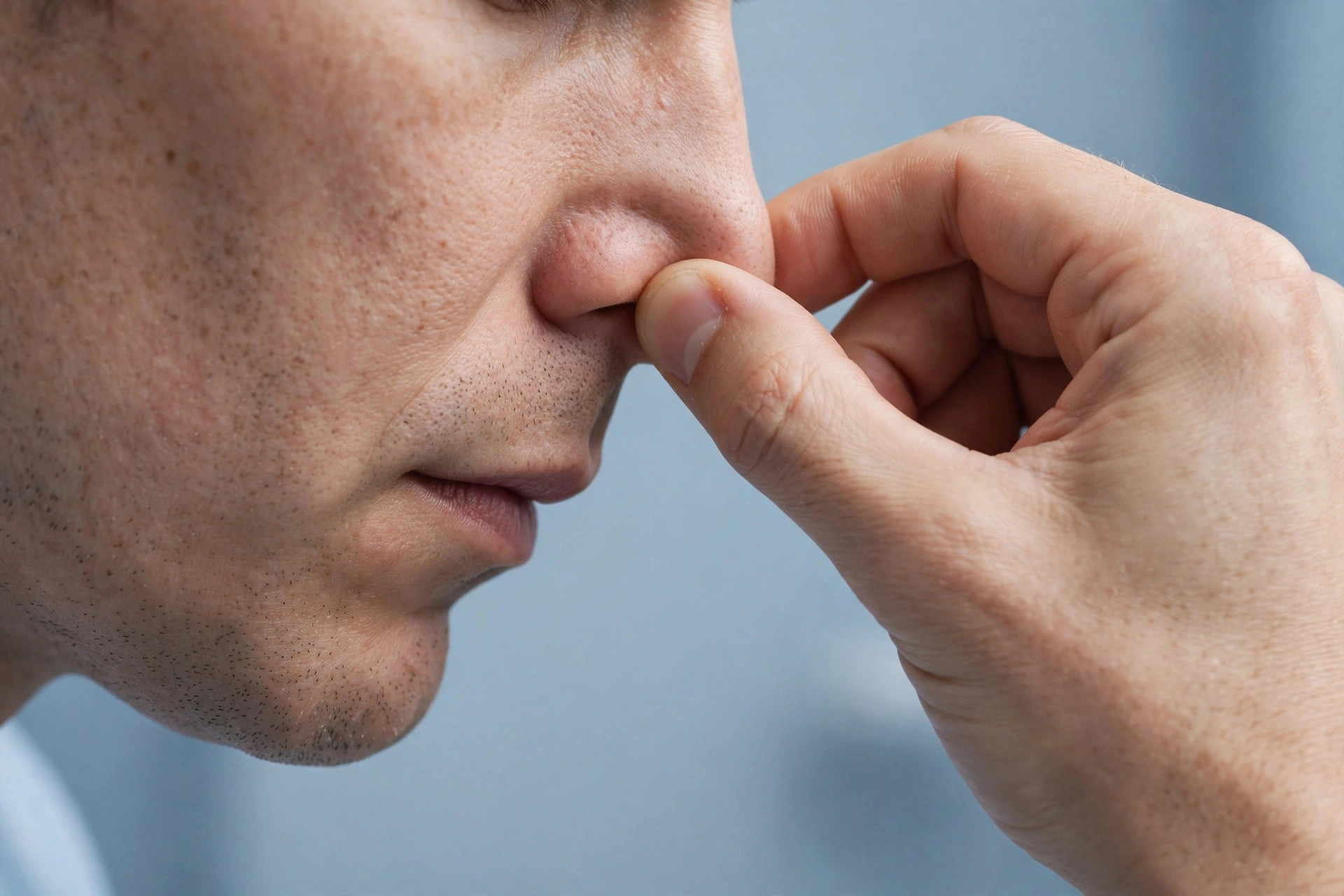
- Pinch the soft, lower part of your nose — not the bony bridge — between your thumb and forefinger. Squeeze firmly.
- Hold for a full 15 minutes without peeking. Checking early breaks the forming clot and restarts the clock.
- If it is still bleeding after 15 minutes, hold another 15. A cold compress on the bridge can help constrict vessels.
- Once it stops, do not blow your nose for at least 24 hours, avoid bending over, heavy lifting, and vigorous exercise.
A dab of petroleum jelly or saline gel just inside each nostril a few times a day keeps the lining from re-cracking. A basic over-the-counter saline nasal spray does the same job.
What NOT to Do
- Tilt your head back — sends blood to the stomach, causing nausea and vomiting
- Lie flat — same problem
- Stuff tissues up your nose — they stick to the clot and restart bleeding when pulled out
- Blow your nose right after stopping — blows the clot off
Prevention: Your Winter Nose Kit
If you are prone to winter nosebleeds, a few cheap fixes cut episodes dramatically:
- Run a humidifier in your bedroom. Keep indoor humidity at 30–50%. Clean it regularly — a dirty humidifier can spread mold.
- Saline spray or gel, daily. It takes 20 seconds and costs a few dollars.
- Stay hydrated. Dehydration concentrates the problem; aim for steady water intake through the day.
- Trim, don't pick. Keep fingernails short. If you must clear your nose, blow gently, one nostril at a time.
- Ask your pharmacist about your meds. Blood thinners like aspirin, warfarin, and some NSAIDs make bleeding longer; do not stop prescriptions — just tell your doctor nosebleeds are happening.
When a Nosebleed Means "Call the Doctor"
Most nosebleeds are annoying, not dangerous. But call your doctor or head to urgent care if:
- Bleeding lasts more than 20–30 minutes despite correct pressure
- Blood flows heavily down the back of your throat even while leaning forward (a likely posterior bleed, more common in adults over 50 and those on blood thinners)
- You bleed frequently — several times a week, or every week through winter
- It follows a head or face injury
- You notice unusual bruising, very heavy periods, or bleeding gums — these together can signal a clotting issue
- You have one-sided nasal blockage with foul-smelling discharge, especially in a child — could be a stuck object
For children, persistent one-sided nosebleeds deserve a doctor's look, not a home shrug.
The Bottom Line
Winter nosebleeds are one of the most predictable health annoyances of the season — dry air, fragile vessels, done deal. But they are also one of the easiest to control: sit up, lean forward, pinch the soft part for 15 unbroken minutes, and keep the lining moist with a humidifier and saline. Do it right and the winter nosebleed season becomes a minor footnote instead of a recurring alarm clock.
Medical disclaimer: This article is for general information only and is not a substitute for professional medical advice, diagnosis, or treatment. If you have frequent or severe nosebleeds, consult your healthcare provider.
📚 Keep reading:
Why You're Constipated — and 9 Fixes That Actually Work
About 16 in 100 American adults deal with constipation, a third of those over 60. Gastroenterologists explain what's slowing things down — and the fixes that work.

That Q-Tip in Your Ear Is Doing More Harm Than Good
About 34 kids a day land in the ER from cotton-swab ear injuries. Ear doctors say the ear canal cleans itself — here's the safe way to deal with earwax.
Appendicitis: 7 Warning Signs Your Belly Pain Is Serious
Lower-right belly pain, fever, nausea, no appetite? Appendicitis moves fast — and a burst appendix can turn deadly. Here's how ER doctors tell it apart from gas or a stomach bug.