Omega-3 Fish Oil: What the Science Actually Says
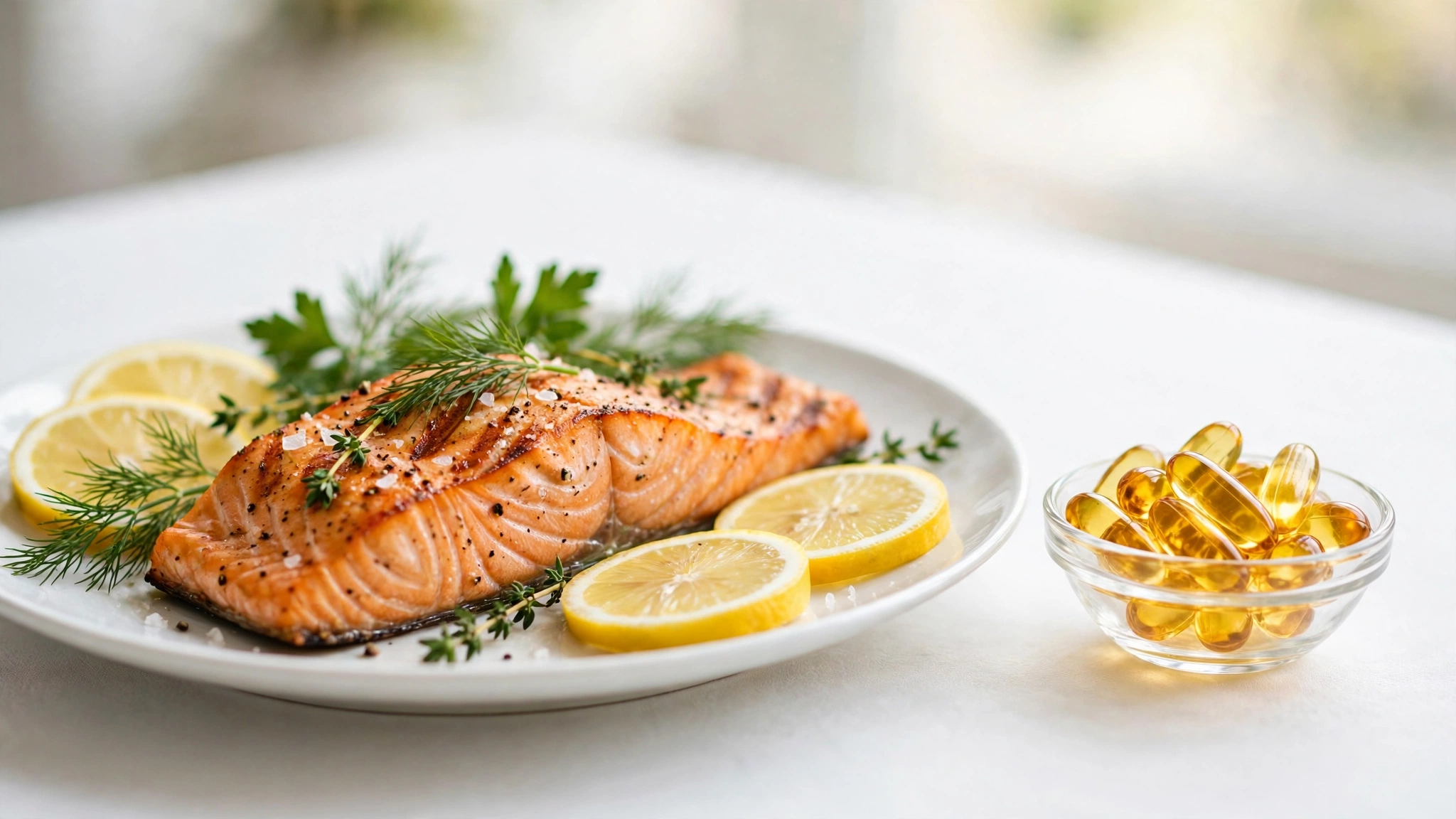
Walk into any American drugstore and you will find an entire aisle devoted to one supplement: fish oil. Roughly 1 in 13 American adults takes it, making omega-3 fish oil the most popular non-vitamin supplement in the country. The promises on the labels are sweeping — heart health, brain health, joint health, better mood, sharper memory.
So here is the honest question: does it actually work? After decades of research and trials involving hundreds of thousands of people, the answer is more nuanced than either the supplement industry or the skeptics admit.
First, what exactly are omega-3s?
Omega-3s are a family of fatty acids your body needs but mostly cannot make on its own. The three that matter:
- EPA (eicosapentaenoic acid) — found in fatty fish; the main driver of the heart and inflammation benefits seen in trials.
- DHA (docosahexaenoic acid) — also from fatty fish; a structural building block of the brain and retina.
- ALA (alpha-linolenic acid) — found in plants like flaxseed, chia seeds, and walnuts. Your body converts a small amount of ALA into EPA and DHA — usually under 10 percent — so plant sources alone are a weak substitute for fish.
Your body uses these fats to build cell membranes, calm inflammation, and regulate blood clotting and triglycerides. The problem is that the typical American diet delivers very little of them.
The heart evidence: where the science is strongest — and messiest
Heart health is where fish oil has been studied hardest, and where the story splits in two.
Eating fish works. Large population studies consistently find that people who eat fatty fish twice a week have lower rates of heart disease and sudden cardiac death. That is why the American Heart Association recommends two servings of fatty fish per week — about 8 ounces total — for the general population.
Standard fish oil pills are less impressive. The VITAL trial, one of the largest ever run, gave nearly 26,000 healthy American adults a standard 1-gram daily fish oil capsule for five years. The result: no significant reduction in major cardiovascular events overall, though there was a notable drop in heart attacks, especially among people who rarely ate fish.
But prescription-strength EPA delivered a breakthrough. The REDUCE-IT trial tested a purified prescription form of EPA — icosapent ethyl, 4 grams daily — in 8,179 statin-treated patients with high triglycerides. It cut the risk of major cardiovascular events by 25 percent, a result strong enough to earn FDA approval. The catch: this was a pharmaceutical-grade dose, four times what a typical supplement provides, in high-risk patients already on statins — not a drugstore capsule for healthy people.
The one real risk: heart rhythm at high doses
Fish oil is generally well tolerated — the classic complaints are fishy burps and mild stomach upset. But there is one risk worth knowing about, and it is dose-dependent.
A 2026 meta-analysis of 35 randomized trials covering more than 114,000 people found that omega-3s raised the risk of atrial fibrillation (AFib), an irregular heart rhythm, only in people who were already at high cardiovascular risk and taking high doses above 1,500 mg of EPA+DHA per day. The absolute increase was small — 0.8 percent — and no increased risk appeared at nutritional doses or in lower-risk people.
The practical takeaway: the standard dose in a typical capsule is fine for most people. Megadosing — swallowing handfuls of capsules chasing bigger benefits — is where the risk shows up.
Beyond the heart: brain, joints, and mood
Brain health. DHA makes up a large share of the fat in your brain, and low omega-3 levels are associated with faster cognitive decline. But trials of fish oil for preventing dementia have been disappointing. The most defensible position: omega-3s support a healthy brain over a lifetime, but they are not a treatment for Alzheimer's once it has taken hold.
Joints and inflammation. This is one of fish oil's quieter wins. Multiple trials show that EPA and DHA reduce joint tenderness and morning stiffness in rheumatoid arthritis, and some patients can lower their dose of anti-inflammatory drugs.
Mood. The evidence is mixed but leaning positive: people with low omega-3 levels have higher rates of depression, and EPA-heavy formulas show modest benefits as an add-on to standard treatment. It is not a replacement for therapy or medication.
Eyes. DHA is a major component of the retina, and higher omega-3 intake is linked to a lower risk of age-related macular degeneration, the leading cause of vision loss in Americans over 50.
Food first: the best omega-3 sources
Supplements exist because most Americans do not eat enough fish. But food is still the best delivery system — fish brings protein, selenium, vitamin D, and B12 along with the omega-3s. EPA+DHA per 3-ounce serving:
- Mackerel (Atlantic): about 1,000 mg
- Salmon (farmed): about 1,200–1,800 mg
- Sardines: about 1,400 mg
- Trout: about 800 mg
- Canned tuna (light): about 200 mg
Two servings of fatty fish a week lands you roughly in the 250–500 mg per day range of EPA+DHA.
A note on mercury: the FDA advises 2–3 servings per week of low-mercury fish (salmon, sardines, trout, canned light tuna) and limits albacore/white tuna to one serving per week. If you are pregnant, follow the FDA's fish guidance for pregnancy specifically.
If you take a supplement, do it right
If fish twice a week is not happening, a supplement is a reasonable fallback. Here is how to choose well:
- Read the EPA+DHA number, not the "fish oil" number. A capsule labeled "1,000 mg fish oil" typically contains only about 300 mg of EPA+DHA. That is the number that matters. Look for at least 500–1,000 mg of combined EPA+DHA per daily dose.
- Check for third-party testing. Supplements are not FDA-approved before sale, so look for USP, NSF, or IFOS seals — they verify the product contains what the label claims and is free of heavy metals.
- Fight the fishy burps. Take capsules with your largest meal, choose enteric-coated capsules, or keep the bottle in the freezer. Rancid oil smells strongly fishy and should be thrown out.
- Tell your doctor if you take blood thinners. Omega-3s mildly reduce clotting. At normal doses the effect is small, but it matters if you take warfarin, apixaban, or high-dose aspirin — or if you have surgery coming up.
The bottom line
Omega-3s are not a miracle, and they are not a scam. Eating fatty fish twice a week is one of the most consistently supported habits in nutrition science. A standard daily fish oil capsule is a reasonable substitute if you do not eat fish, and prescription-strength EPA is a proven medicine for specific high-risk patients.
If you take one thing from this: eat the salmon. The capsule is the backup plan, not the main event.
This article is for informational purposes only and is not medical advice. Talk to your doctor before starting any supplement, especially if you take prescription medications, blood thinners, or have a heart condition.
📚 Keep reading:

B12 Deficiency: The Hidden Cause of Fatigue and Brain Fog
Tired, foggy, and tingling? Millions of Americans run low on vitamin B12 without knowing it. Here are the signs, who is at risk, and how to fix it.

When Should You Start Mammograms? The 2026 Screening Guide
Breast Cancer Awareness Month: the latest U.S. guidelines on when to start mammograms, how often you need them, and what actually happens at your appointment.

Red Light Therapy: Real Science or Expensive Hype?
Red light therapy promises better skin, faster muscle recovery, and deeper sleep — but what does the research actually prove? We break down the real science and how to try it safely.