Red Light Therapy: Real Science or Expensive Hype?
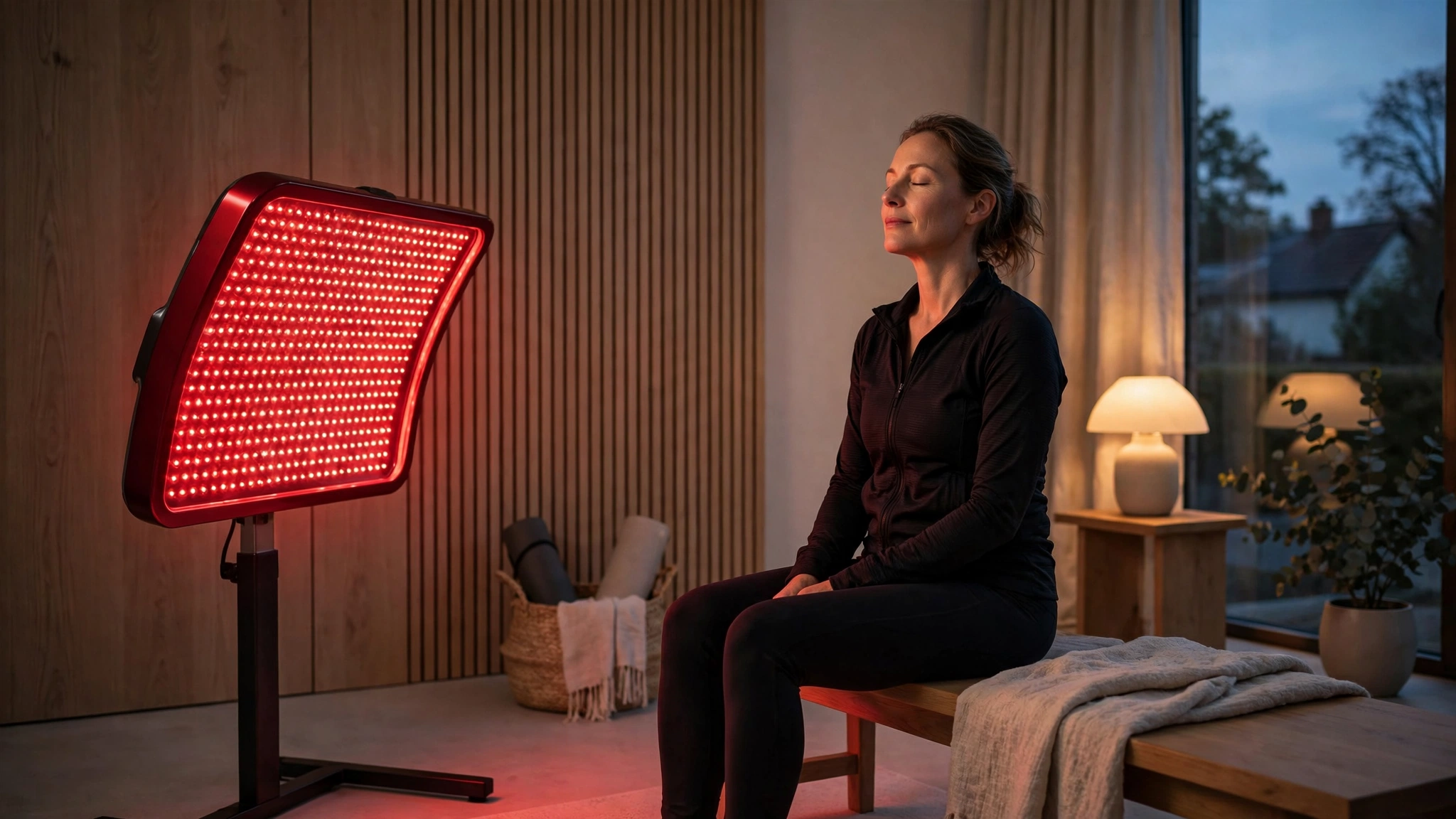
You have seen it by now: a celebrity on Instagram standing in front of a glowing red panel like it is a tanning bed from the future. NBA locker rooms have them. Boutique wellness spas charge $50 a session. And Amazon is happy to sell you a full-body panel for $1,500.
Red light therapy is one of the biggest wellness trends in America — marketed for smoother skin, faster muscle recovery, better sleep, even hair regrowth. So the fair question is: does any of it actually work, or is this just the world's most expensive mood lighting?
Here is what the science really says.
What red light therapy actually is
The technical name is photobiomodulation: exposing skin to low levels of red or near-infrared light, typically between 630 and 850 nanometers. The idea is that your cells' mitochondria — the little power plants inside them — absorb this light and make energy more efficiently, which may reduce inflammation and help tissues repair.
It is not new, and it did not start with influencers. NASA funded early research on the technology in the 1990s, studying whether it could help astronauts' wounds heal in space. Dermatologists have used medical-grade light devices for years. What is new is the consumer boom: panels and masks moving from clinics into living rooms.
What the research actually supports
Skin aging. A frequently cited 2014 randomized controlled trial found that twice-weekly red light sessions improved skin complexion and measurably increased collagen density in women with fine lines. Dermatology reviews since then have found modest but real effects on wrinkles and skin texture. Translation: do not expect a facelift in a box, but the skin claims have the most credible evidence behind them.
Hair loss. This is one of the strongest cases. The FDA has cleared several low-level light devices for treating pattern hair loss in men and women, and randomized trials have shown modest regrowth — thicker hair shafts, more hairs per square centimeter. The catch is the word "cleared": FDA clearance for a device means it is reasonably safe and substantially equivalent to an existing device, which is a lower bar than a drug's "FDA approved." Results are modest, and hair returns only with continued use.
Muscle soreness and recovery. A 2018 meta-analysis of trials found that pre-exercise red and near-infrared light produced small-to-moderate reductions in muscle soreness and fatigue markers after workouts. Some pro sports teams use it for exactly this reason. But many of the strongest-looking trials were small or funded by device makers, so treat the recovery claims as promising rather than proven.
Pain and inflammation. There is decent evidence for specific uses: low-level light therapy has shown benefit in trials for knee osteoarthritis pain and chronic neck pain. This is the use with the longest clinical history — physical therapists have offered it for decades.
Sleep. A small but intriguing study of Chinese female basketball players found that 30 minutes of whole-body red light each evening for two weeks improved sleep quality scores and raised nighttime melatonin. Small study, specific population — but a plausible mechanism, and sleep researchers are watching this space.
What it almost certainly does NOT do
Here is where honesty matters, because marketing has sprinted far ahead of the data:
- Melt body fat. Some spas claim red light "shrinks fat cells." There is no convincing human evidence it leads to meaningful fat loss.
- Boost testosterone. This one went viral after a podcast claim — human evidence is essentially nonexistent.
- Detox anything. Your liver and kidneys handle that, with no assistance from a glowing panel.
- Fix your health on its own. No credible researcher would tell you to buy a $1,500 panel before fixing your sleep, diet, and exercise.
Is it safe?
For most healthy adults, red and near-infrared light at typical consumer doses appears safe — the light is non-ionizing, so unlike UV or X-rays, it does not damage DNA. Side effects in trials have been minimal (occasional mild redness).
Two cautions matter. First, protect your eyes — near-infrared light can damage the retina, and reputable manufacturers include or recommend eye protection. Second, some photosensitizing medications and conditions (certain antibiotics, acne drugs, lupus) can react badly with light therapies — check with your doctor first. And do not confuse red light panels with tanning beds: those use UV light, which definitely ages skin and raises skin cancer risk.
How to try it without getting burned (financially)
If you want to experiment, dosage and consistency matter more than the price tag. Most studied protocols use sessions of 10 to 20 minutes, several times a week, with the light source a few inches to a few feet from the skin, over many weeks. A $200 device used consistently may outperform a $2,000 panel collecting dust.
Smart moves:
- Start with a goal. Pick one — skin, soreness, sleep — and give it 8 to 12 weeks before judging.
- Look for FDA clearance on the specific device and the specific claim (clearance for "wrinkles" does not mean it works for "weight loss").
- Skip the cheapest knockoffs. Poorly made panels may deliver the wrong wavelengths or uneven output — the device that works in a lab is the one delivering the right dose.
- Consider a gym or spa first. Many offer red light beds as a membership perk, letting you test the experience before committing.
- Keep the basics. No light panel compensates for poor sleep, a junk-food diet, and zero exercise — those move the needle far more.
The bottom line
Red light therapy sits in an interesting spot: it is not a miracle, but it is not snake oil either. For skin texture, hair loss, and certain types of pain, there is genuine, published evidence of modest benefits. For sleep and muscle recovery, the early signals are encouraging but thin. And for everything else the ads promise — fat melting, hormone surges, total rejuvenation — the evidence simply is not there.
If you have money to spend on your health and you are curious, a mid-range panel used consistently is a reasonable experiment. But if your budget is limited, the highest-return health investments are still the boring ones: seven to nine hours of sleep, 150 minutes of exercise a week, and food that looks like it came from a farm. Red light can be a nice supporting actor — it should never be the star of the show.
📚 Keep reading:
Microplastics Are Inside You: What the New Science Says
Plastic particles are now in our blood, brains, and arteries — and studies link them to heart attack and stroke risk. Here's what scientists actually know and 7 ways to cut your exposure.

Colon Cancer Under 50 Is Rising: 7 Warning Signs
Colorectal cancer is now the #1 cause of cancer death in Americans under 50. Know the 7 warning signs, the risk factors you can control, and why screening now starts at 45.

Fall Back: Why the Time Change Messes With Your Health
On November 1, America sets its clocks back — and sleep, mood, and heart health pay the price. Here's how to adjust in days, not weeks.