Fall Back: Why the Time Change Messes With Your Health
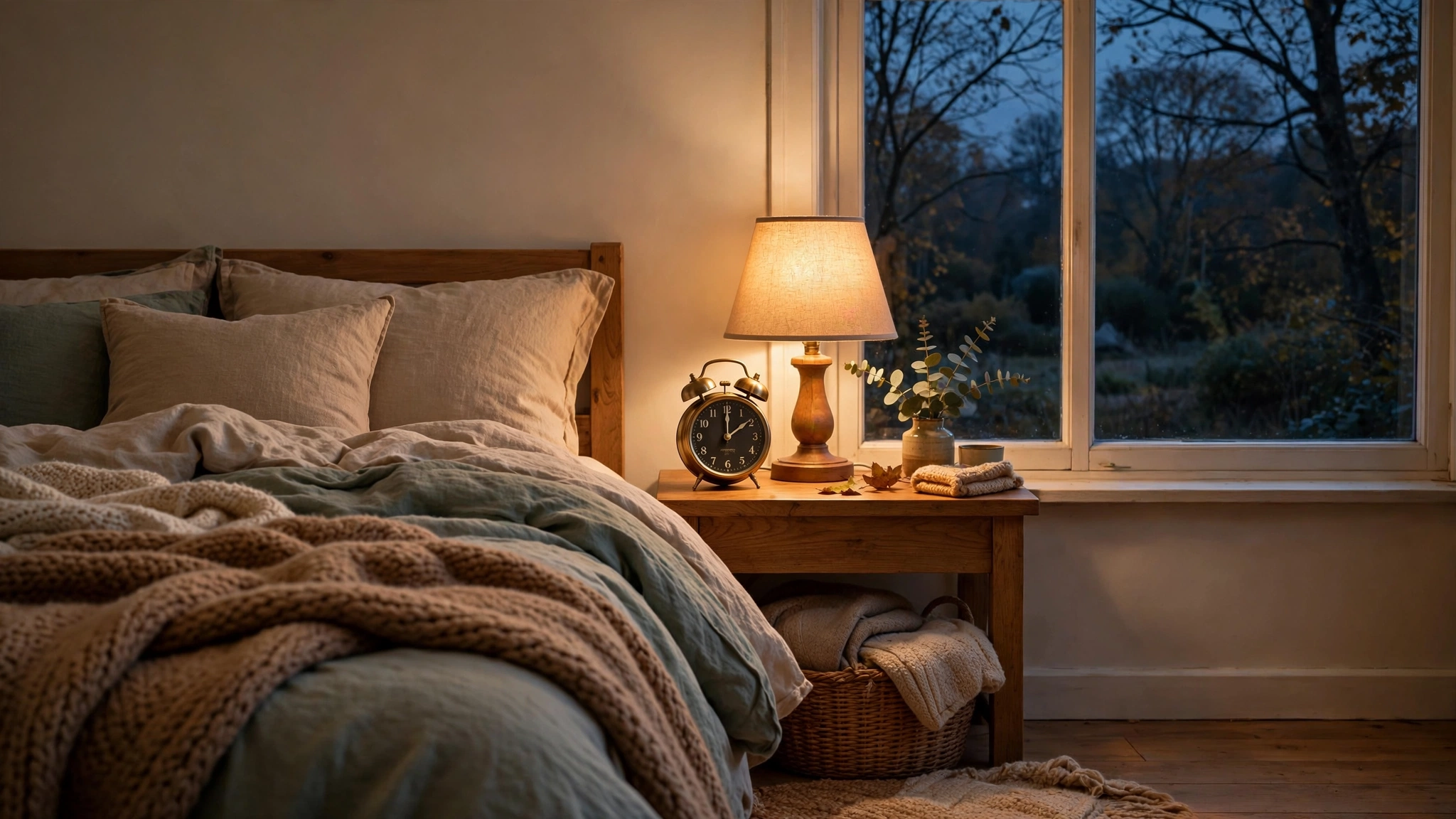
On the night of Sunday, November 1, most of America will "gain" an hour: at 2:00 a.m., clocks fall back to 1:00 a.m.
In practice, the week after the time change feels like mild jet lag — groggy mornings, dark afternoons, restless sleep. Your body doesn't run on your phone's clock; it runs on a biological clock that the shift quietly scrambles. And the disruption isn't just a nuisance: clock changes are linked to spikes in heart attacks, strokes, car crashes, and depression. Here's what the science shows and how to get through it in days instead of weeks.
What actually happens on November 1
Daylight Saving Time ends at 2:00 a.m. local time on Sunday, November 1, 2026. Clocks roll back to 1:00 a.m., giving you a 25-hour day — and one extra hour of sleep.
Not everyone participates. Hawaii and most of Arizona stay on standard time year-round (the Navajo Nation is the exception), along with U.S. territories like Puerto Rico and Guam. Phones adjust automatically; analog clocks, dashboards, and oven timers need a manual turn.
The immediate effect: sunrise and sunset both arrive an hour earlier. In many cities, sunset slides from around 6:00 p.m. to roughly 5:00 p.m. overnight — millions of Americans will suddenly commute home in the dark.
Why one hour is enough to matter
Your body's internal clock — the circadian rhythm — is tuned by light exposure. It times the release of cortisol to wake you up and melatonin to put you to sleep, on a roughly 24-hour cycle.
Shift the social clock by an hour while the sun does its own thing, and that sync breaks. Sleep researchers call the result social jet lag: your body clock says one thing, your schedule says another. An hour is enough to fragment sleep, flatten energy, and blur appetite timing for several days.
What the research actually shows
The evidence base on time changes has grown large enough to be uncomfortable reading:
- Heart attacks. A Michigan study found a 24% increase in heart attacks on the Monday after the spring time change, when Americans lose an hour. The fall shift doesn't show the same spike — but cardiologists still flag the disruption, especially with existing heart disease.
- Irregular heartbeat. A study presented at the American Heart Association found hospital admissions for atrial fibrillation rose from 2.56 to 3.13 per day in the four weekdays after the spring transition.
- Stroke. Finnish researchers found stroke rates 8% higher in the first two days following both time changes, across a decade of hospital data.
- Depression. A Danish study of over 185,000 hospital contacts found the fall transition associated with an 11% increase in depression diagnoses — the spring change showed no such effect. The sudden loss of evening light appears to be the driver.
- Car crashes. A large 2020 registry analysis found fatal crashes rise about 6% in the days after the spring shift; in the fall, the abrupt arrival of dusk during evening commutes creates its own visibility danger.
When you shift the sleep of 300 million people at once, small individual effects add up to a visible national signal.
Why the fall shift hits your mood hardest
Spring forward gets the headlines, but fall back has its own signature problem: darkness.
When sunset jumps an hour earlier, your evening light exposure drops sharply — and light is the single strongest lever on mood-related hormones. The transition into standard time marks the unofficial start of seasonal-affective territory for light-sensitive people, and for the already vulnerable, it can tip a rough week into a rough season.
A 5-day plan to adjust smoothly
Shrink the adjustment from a groggy week to a couple of days. Start before November 1:
1. Shift bedtime 15 minutes earlier each night
Starting around October 28, move bedtime and wake-up 15 minutes earlier nightly. By Saturday you'll have eased into the new schedule instead of absorbing the full hour at once — a lifesaver for young kids.
2. Guard your wake time above all
The wake-up time matters more than bedtime for resetting your clock. Pick your new wake time and hold it, even on the weekend. Sleeping in on Sunday stretches the adjustment across the whole week.
3. Get bright light before noon
Morning sunlight is the strongest reset signal your clock has. Take a 15–20 minute walk before noon around the change. If your November is already gray, a 10,000-lux light therapy lamp for 20–30 minutes each morning works just as well.
4. Dim the evenings
In the hour before bed, turn lights low and put screens down. Your brain reads bright evening light as "stay awake," which fights the earlier bedtime you're building toward.
5. Move your exercise earlier
Favor morning or midday workouts in the transition week — exercise deepens sleep and gently shifts your clock; late-evening sessions push alertness later.
6. Cut caffeine by noon, watch the alcohol
Caffeine's six-hour half-life means an afternoon coffee is still working at bedtime. And alcohol fragments the second half of the night, exactly when you need deep sleep most.
7. Don't blow the "extra" hour
Staying up later Saturday night because "I get the hour back" just shifts you later and makes Monday worse. Go to bed at your adjusted time and let the extra hour do its work.
Who should take extra care
Most people ride out the change with a few groggy days. But be more deliberate if you:
- Have heart disease or high blood pressure — keep medications on schedule; disrupted sleep raises blood pressure.
- Have a history of depression or SAD — line up coping tools now: light lamp, exercise routine, and a check-in with your doctor if November is historically hard.
- Are an older adult — earlier darkness raises fall risk on evening walks; wear reflective gear.
- Work shifts or drive for a living — drowsy-driving risk is real in the transition days; be honest about fatigue.
- Have young kids or pets — shift their feeding, walk, and bedtime routines by 15 minutes a day alongside yours.
The bigger question: why do we still do this?
The American Academy of Sleep Medicine has formally advocated abolishing the seasonal changes in favor of permanent standard time, arguing it's best aligned with human biology. Polls show most Americans want to stop switching — but bills to end the practice keep stalling in Congress. Until that changes, the best defense is a planned one: the time change is one of the few health disruptions with a date you can circle on the calendar.
The bottom line
On November 1, the clocks fall back and the evenings go dark. Shorten the off days with the tools that actually move your body clock: steady wake times, morning light, earlier evenings, and a gradual bedtime shift starting now.
This article is for informational purposes only and is not medical advice. If you have a heart condition, a sleep disorder, or a history of depression, talk to your doctor about managing seasonal transitions.
📚 Keep reading:
Stopping Ozempic? The Rebound Effect, Explained
Most people regain much of the weight they lost on Ozempic within a year of stopping. Here is what the research shows — and how to protect your progress.

How Much Protein Do You Really Need? Science Explains
Most Americans get more protein than the minimum — but less than the optimal amount. Here is what research says you actually need by age and goal.

Can't Stand on One Leg for 10 Seconds? Read This
Adults who can't stand on one leg for 10 seconds face an 84% higher risk of death within a decade. Balance is trainable at any age — here's how.