How Much Protein Do You Really Need? Science Explains
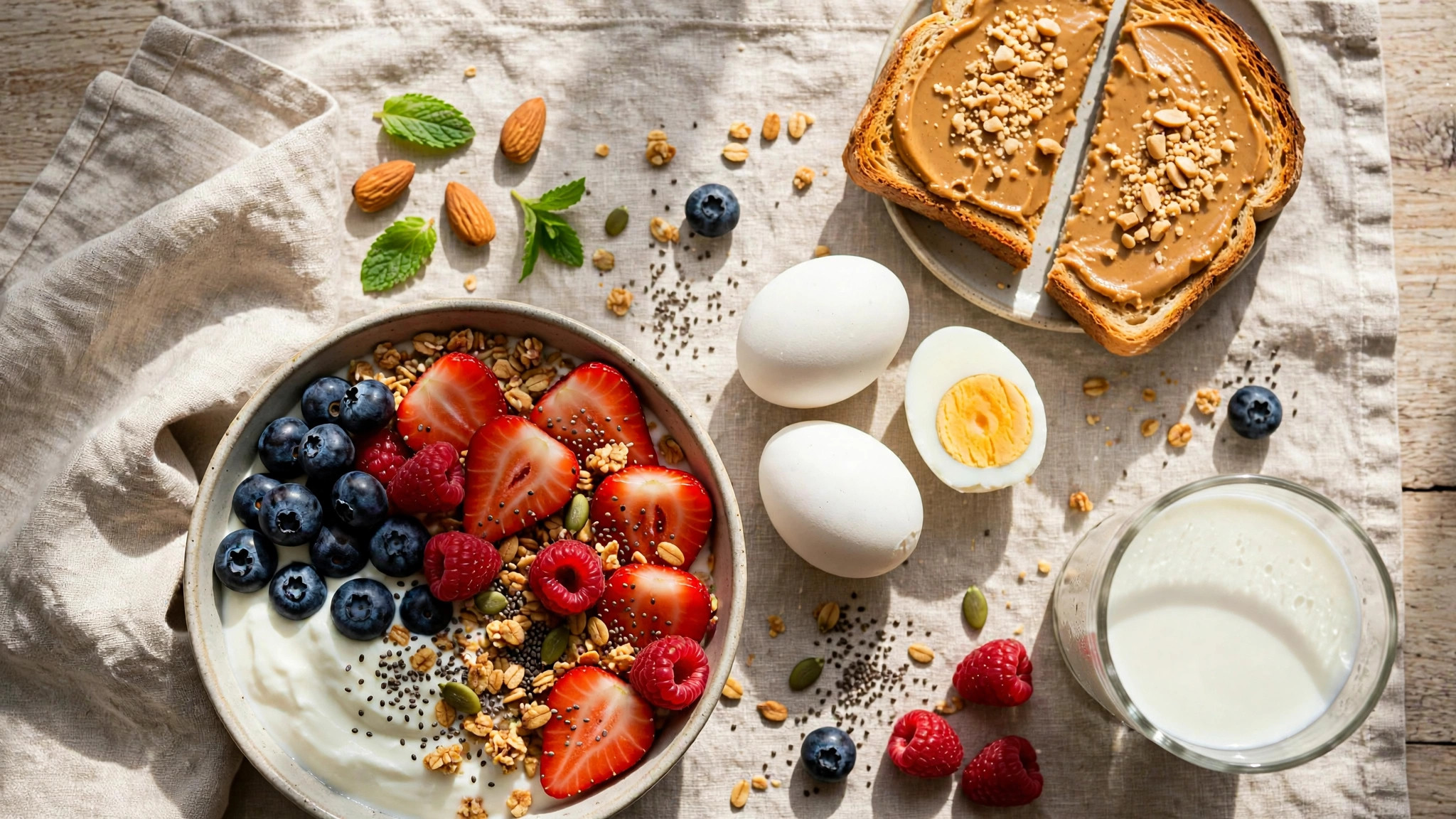
Protein is having a moment. Gym influencers are slamming 200-gram shake days, grocery shelves are stacked with "protein-packed" cereal and ice cream, and somewhere between the hype and the habit, a simple question gets lost: how much protein do you actually need?
The answer is more nuanced than most fitness advice lets on. The official minimum is lower than you think — but the optimal amount, according to a growing body of research, is higher than the government guideline. Here's what the science really says, broken down by age, activity level, and goal.
The official number: 0.8 grams per kilogram
The National Academies' Recommended Dietary Allowance (RDA) — the figure used by the FDA and CDC — is 0.8 grams of protein per kilogram of body weight per day. For a 165-pound adult (75 kg), that's about 60 grams. For a 130-pound adult (59 kg), about 47 grams.
Here's the catch most people miss: the RDA is a minimum, not a target. It was designed to prevent deficiency in sedentary, healthy adults — not to help you keep your muscle at 60, recover from workouts, or lose weight without wasting away. As the National Academies put it, the RDA is the amount that meets the needs of nearly all healthy people — but it says nothing about what's optimal.
The research-backed "optimal" is higher
Over the past decade, protein scientists have pushed back. A consensus statement from the PROT-AGE Study Group — nutrition researchers focused on adults over 50 — recommended 1.0 to 1.2 grams per kilogram daily for healthy older adults, and 1.2 to 1.5 g/kg for those who are ill or frail. Athletes and very active people land in the 1.2 to 2.0 g/kg range, according to the International Society of Sports Nutrition.
Why the upgrade? Several findings:
- Muscle loss starts early. Adults typically lose 3–8% of muscle mass per decade after age 30, accelerating after 60. Higher protein intake, combined with resistance exercise, is the strongest dietary lever we have against this decline.
- Older bodies need more of a nudge. Aging muscle becomes less responsive to protein — a phenomenon called anabolic resistance — which is precisely why older adults need more protein per meal, not less.
- Protein aids fat loss, not just muscle gain. In randomized trials, higher-protein diets consistently preserve lean mass during calorie restriction and reduce appetite more effectively than low-protein diets.
Your target by goal
Translate the research into pounds and ounces, using everyday body weights:
| Your situation | Target (g per lb of body weight) | Daily grams (165-lb adult) |
|---|---|---|
| Sedentary, younger adult | 0.55–0.7 | 90–115 |
| Active adult (regular cardio) | 0.7–0.9 | 115–150 |
| Building muscle / heavy lifting | 0.8–1.0 | 130–165 |
| Adult over 50 | 0.7–0.9 | 115–150 |
| Losing weight (calorie deficit) | 0.9–1.0 | 150–165 |
Notice: even the low end of "optimal" sits well above the RDA of 60 grams for that 165-pound person. And according to CDC dietary surveys, while many Americans overshoot the RDA, a significant share — especially women and adults over 70 — still fall short of the higher, muscle-protecting targets.
Three big protein myths, debunked
Myth 1: "High protein damages healthy kidneys." This is the most persistent myth. Reviews of randomized trials find no evidence that higher protein intake harms kidney function in people with healthy kidneys. The warning applies to people with existing kidney disease — where a doctor will set limits — not to the general population.
Myth 2: "Your body can only use 30 grams per meal." Studies do show that muscle protein synthesis maxes out around 25–40 grams in one sitting. But "used for muscle" isn't the same as "wasted" — the rest still feeds tissues, enzymes, hormones, and the immune system. What matters most is your daily total. That said, spreading intake across 3–4 meals works better for muscle maintenance than one giant dinner, because each meal re-triggers synthesis.
Myth 3: "Plant protein doesn't count." It does — with a small caveat. Plant proteins are often lower in one or two essential amino acids (like leucine in grains), so vegetarians and vegans benefit from variety and slightly higher totals. Combining sources — beans with rice, lentils with quinoa, peanut butter with whole-grain bread — covers the full amino acid spectrum.
What 150 grams actually looks like
Numbers are abstract; plates aren't. Here's one realistic 150-gram day for an active 165-pound adult:
- Breakfast: Greek yogurt (1 cup) + a handful of almonds — ~30g
- Lunch: Grilled chicken breast (4 oz) over a big salad — ~35g
- Snack: Cottage cheese (¾ cup) with berries — ~25g
- Dinner: Salmon fillet (5 oz) + lentils — ~45g
- Evening: Glass of milk or a hard-boiled egg — ~10g
That's a full day of normal food — no powders, no gimmicks. Common American staples and their protein per serving, for reference: chicken breast 26g per 3 oz, a large egg 6g, canned tuna 20g per 3 oz, Greek yogurt 15–17g per cup, black beans 15g per cup, whole milk 8g per cup.
Practical tips to hit your number
- Anchor each meal with a protein source. Build the meal around the protein, not the starch. Most under-eaters get almost all their protein at dinner; aim for at least 25–30 grams at each of three meals.
- Front-load your day. Americans skew protein heavily toward dinner, which wastes a chance to stimulate muscle growth twice earlier in the day. A protein-forward breakfast — Greek yogurt, eggs, cottage cheese — is the single easiest fix.
- Don't fear convenience. Canned tuna, rotisserie chicken, frozen shrimp, cottage cheese, and plain Greek yogurt are some of the cheapest, fastest protein sources in any American grocery store.
- Track for one week. Most people dramatically over- or under-estimate. Log intake for 5–7 days with a free app, hit your target range, then eat on autopilot.
The bottom line
The RDA of 0.8 g/kg keeps you out of deficiency — but if you want to hold onto muscle, manage your weight, and age well, the evidence points higher: roughly 0.7–1.0 grams per pound of body weight daily for active adults, with older adults landing squarely in the upper part of that range. Get it mostly from whole foods, spread it across meals, and let the influencers keep their 200-gram shake days.
This article is for informational purposes only and is not medical advice. If you have kidney disease or another medical condition, talk to your doctor or a registered dietitian before changing your protein intake.
📚 Keep reading:

Can't Stand on One Leg for 10 Seconds? Read This
Adults who can't stand on one leg for 10 seconds face an 84% higher risk of death within a decade. Balance is trainable at any age — here's how.

Late-Night Snacking May Raise Liver Disease Risk 30%
A new study of nearly 200,000 U.S. adults links eating after dinner to a 20 to 30 percent higher risk of fatty liver disease and cirrhosis. Here's what it means.
Lower Cholesterol Naturally: 9 Proven Strategies That Work
Nearly 86 million American adults have high cholesterol. Here's what cardiologists say actually lowers it — no crash diets, no fads, just proven moves.