Pumpkin Seeds: The Tiny Fall Snack Your Heart Will Love
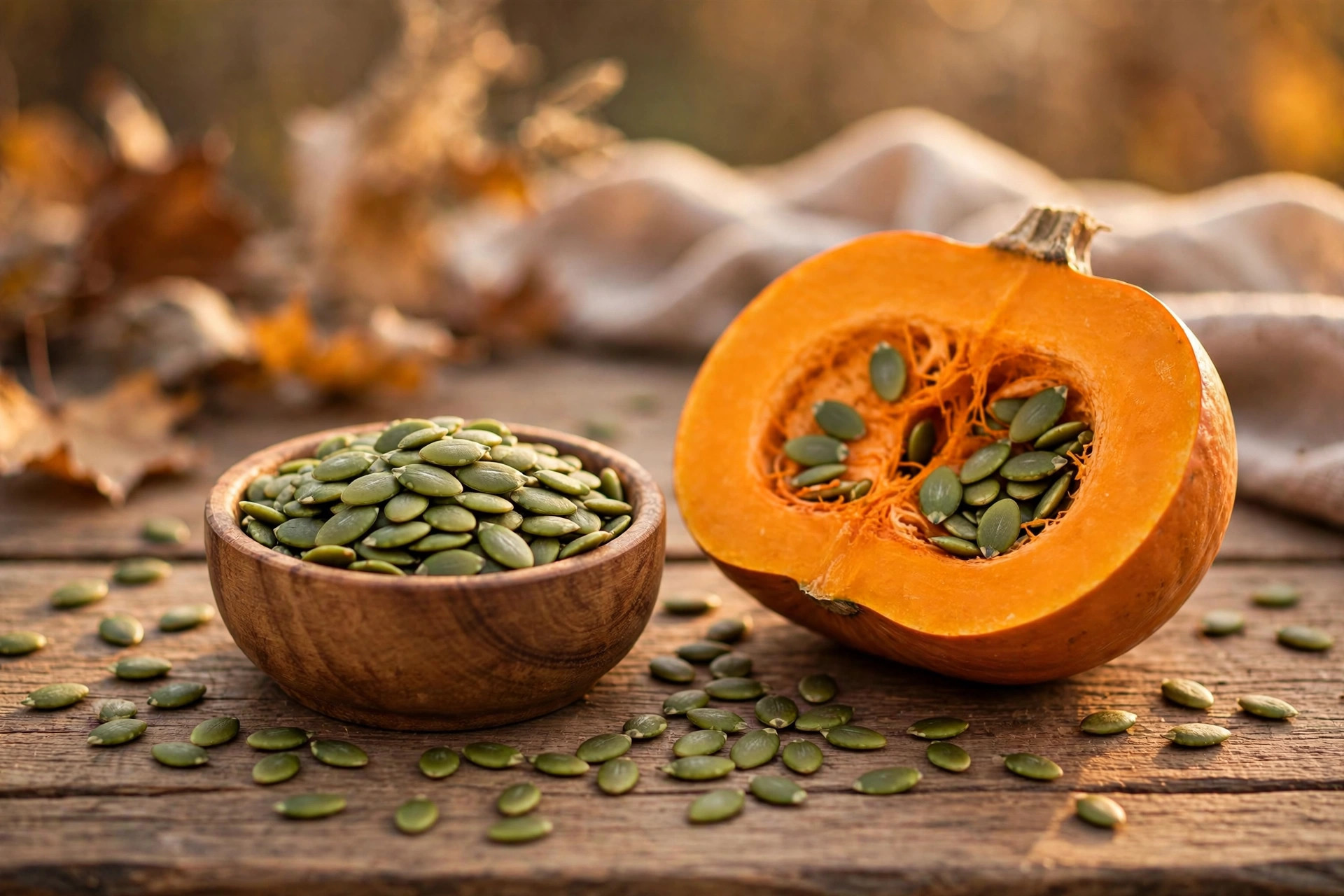
Every October, the same ritual plays out in kitchens across America. The jack-o'-lantern gets carved, the gooey insides get scraped out, and the seeds — millions of them — go straight into the trash. It is one of fall's great nutritional misses, because those flat little green seeds, known as pepitas, are one of the healthiest snacks you can eat.
Pumpkin seeds are not just a seasonal novelty. They pack an unusual combination of minerals, healthy fats, and plant protein into a serving the size of a small handful. Here is what the science actually says about them, and why this Halloween is a good time to start saving the seeds instead of throwing them away.
What is actually in a handful
According to USDA FoodData Central, one ounce of dried pumpkin seeds — about a quarter cup, or roughly a small handful — contains around 151 calories, 7 grams of protein, 13 grams of fat, and 5 grams of carbohydrates. Most of that fat is the unsaturated kind, the same heart-friendlier profile that makes olive oil and almonds staples of healthy diets.
The real story, though, is the minerals. That same ounce delivers about 156 milligrams of magnesium (roughly 37 percent of the daily value), 2.2 milligrams of zinc (about 20 percent), and 2.3 milligrams of iron, plus potassium and a modest amount of fiber. Few snacks cover that much nutritional ground in such a small package.
The magnesium gap most Americans have
Magnesium is the headline nutrient here, and it matters more than most people realize. The mineral helps regulate blood pressure, keeps heart rhythm steady, supports muscle and nerve function, and plays a role in blood sugar control. Yet the National Institutes of Health notes that many Americans fall short: roughly half of U.S. adults do not get enough magnesium from food alone.
That shortfall is not usually dramatic enough to cause obvious symptoms, but over years it is linked to higher risks of high blood pressure, type 2 diabetes, and heart disease. Pumpkin seeds are one of the richest food sources of magnesium available — a single handful closes more than a third of the daily gap. For people who eat few leafy greens, beans, or whole grains, they are an easy fix.
A genuinely heart-friendly snack
Heart disease remains the leading cause of death in the United States, according to the CDC, and diet is one of the few risk factors you can actually control. Pumpkin seeds help on several fronts at once: their unsaturated fats can help lower LDL ("bad") cholesterol when they replace saturated fats in the diet, their magnesium supports healthy blood pressure, and their plant sterols — natural compounds similar to cholesterol — may modestly reduce cholesterol absorption in the gut.
None of this makes pumpkin seeds a medicine. But as a replacement for the usual salty snacks — chips, pretzels, cheese crackers — they are a clear upgrade. You get crunch and satisfaction without the refined flour and with nutrients that actually do something.
Blood sugar, sleep, and mood
Pumpkin seeds also show up in research on blood sugar. Small studies have found that eating pumpkin seeds, or pumpkin seed powder, alongside carbohydrate-rich meals can blunt the rise in blood glucose afterward, likely because their protein, fat, and fiber slow digestion. For the roughly 38 million Americans living with diabetes, and the many more with prediabetes, that is a practical reason to reach for them as a snack rather than something sugary.
Then there is sleep. Pumpkin seeds are a natural source of tryptophan, the amino acid your body converts into serotonin and then melatonin, the hormone that regulates sleep. A handful in the evening will not knock you out like a sleeping pill, but combined with their magnesium — which helps muscles relax — they are a reasonable bedtime snack, especially compared with the sugar-laden Halloween candy sitting on the same counter.
Good news for men over 50
Pumpkin seed oil has been studied for prostate and bladder health, an area of growing interest for American men over 50, many of whom deal with an enlarged prostate (BPH) and nighttime trips to the bathroom. In small clinical trials, pumpkin seed oil supplements modestly improved urinary symptoms and quality of life in men with BPH. The evidence is early and the effect is modest, but it is one more reason the seeds are worth eating rather than discarding.
How to roast your own (and how much to eat)
If you are carving a pumpkin this week, roasting the seeds takes about 10 minutes of active work:
Clean them, but not perfectly. Scoop the seeds into a colander, rinse off most of the stringy pulp, and pat them dry. A little pulp left behind is fine — it crisps up nicely.
Toss with a little oil and salt. One teaspoon of olive oil per cup of seeds is plenty. Go easy on the salt: a heavily salted batch can pack several hundred milligrams of sodium, and the CDC recommends keeping total daily sodium under 2,300 milligrams.
Roast low and slow. Spread them in a single layer on a baking sheet and roast at 300°F for 20 to 30 minutes, stirring once, until golden and crisp. Higher heat burns them fast.
Season to taste. Try chili powder and lime, cinnamon and a pinch of sugar, or garlic and rosemary. Roasted seeds keep for about a week in an airtight container.
A sensible portion is about one ounce — a quarter cup, or what fits in a cupped palm. Seeds are nutrient-dense but also calorie-dense, so eating them by the bowlful while watching TV can quietly add up. Store-bought pepitas are just as nutritious as home-roasted ones; just check the label and pick unsalted or lightly salted varieties when you can.
A few cautions
Pumpkin seed allergy is rare, but it exists — if you have a known seed or nut allergy, check with your doctor first. People with kidney disease should also be mindful: seeds are relatively high in potassium and phosphorus, minerals that some kidney diets limit. And if you buy flavored varieties, watch the sodium and added sugar, which can undo much of the benefit.
The bottom line
Pumpkin seeds will not transform your health overnight, and no single food can. But few snacks deliver this much nutrition per bite: magnesium most Americans lack, zinc for immune function, plant protein, and heart-friendly fats, all in a food that costs almost nothing and is in season right now.
So this Halloween, before you scrape the pumpkin's insides into the trash, fish out the seeds. Roast them, season them, and put them in a jar on the counter. Your heart — and your wallet — will be glad you did.
Rao Sajid is the founder and editor of VitalDaily. He covers everyday health topics — nutrition, sleep, fitness and wellness — turning guidance from public-health sources like the CDC, NIH and FDA into plain, practical advice. More about Rao →
📚 Keep reading:

Why Spicy Food Makes Your Nose Run (And When to Worry)
One bite of buffalo wings or hot ramen and your nose starts dripping within seconds. It is not an allergy. It is your nervous system doing its job.

Why Skipping Meals Gives You a Headache
Skip lunch and a pounding headache often follows by mid-afternoon. Low blood sugar, stress hormones, and dehydration team up to cause it, and it is preventable.
Why Cold Weather Makes You Pee More Often
Stepping into winter cold sends many Americans to the bathroom far more often. It is a real response called cold diuresis, and here is how it works.