Restless Legs at Night: Why They Won't Sit Still
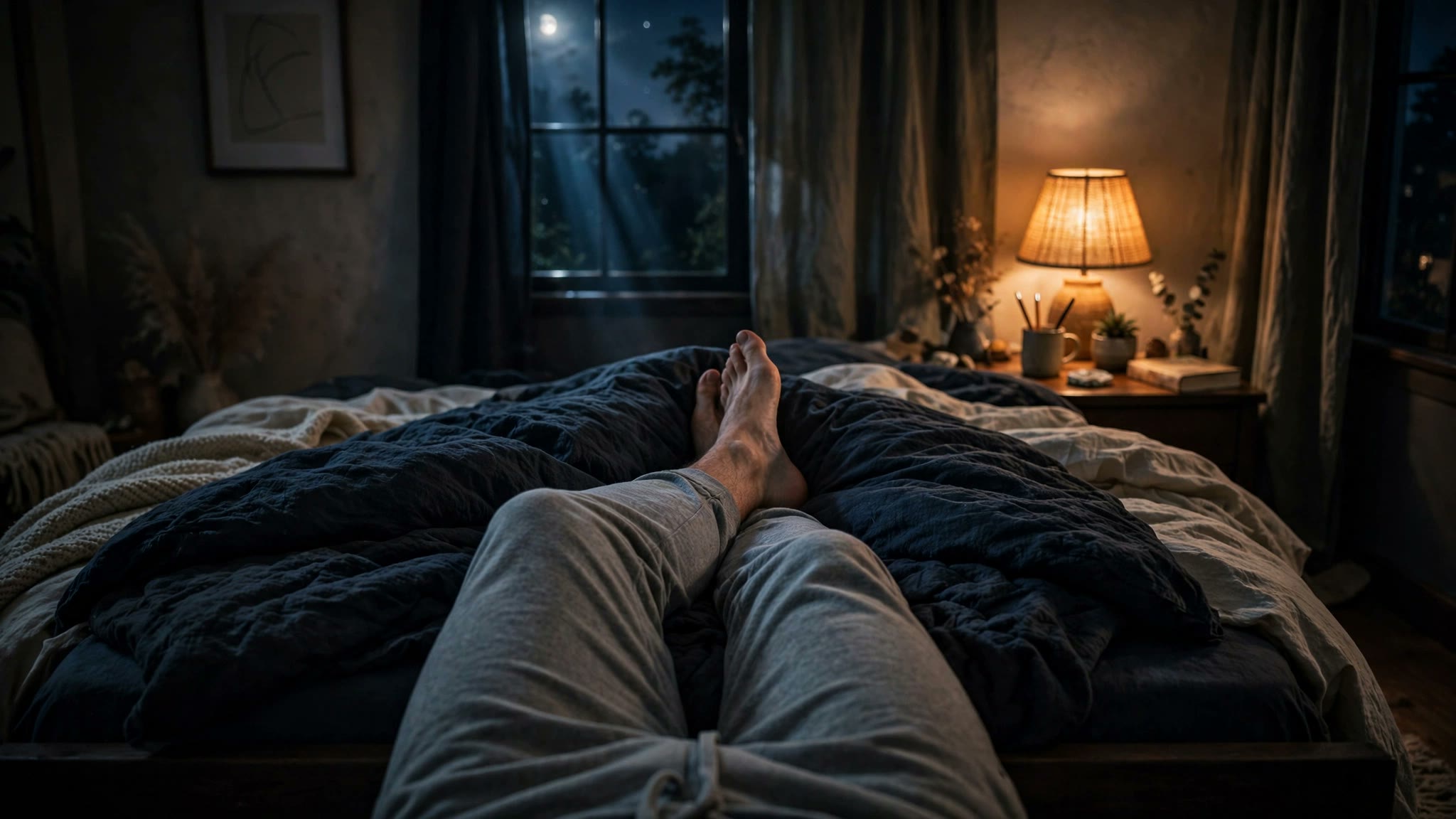
It's 1:47 a.m. You've been lying there for an hour, exhausted, but your legs won't let you sleep. There's a creepy, crawling sensation deep in your calves — like ants marching under the skin — and an overwhelming urge to kick, stretch, and move. The moment you get up and pace the room, it fades. The moment you crawl back under the covers, it's back.
If this sounds familiar, you're not imagining it — and you're far from alone. You're describing restless legs syndrome (RLS), a common neurological condition that affects roughly 8% of U.S. adults at some point, according to population studies. About 3% of Americans have it badly enough — at least twice a week, distressingly — to be considered clinically significant. Among adults over 65, the number climbs to around 1 in 10.
Here's the good news: once you understand what's driving it, RLS is one of the most treatable sleep problems out there.
What Restless Legs Syndrome Actually Is
RLS, also called Willis–Ekbom disease, isn't a muscle cramp, poor circulation, or anxiety — it's a sensorimotor brain disorder. Doctors diagnose it with four hallmarks:
- An irresistible urge to move the legs, usually paired with uncomfortable sensations — crawling, tingling, aching, pulling, or a feeling of fizzing inside the muscle.
- Symptoms start or worsen during rest — sitting on the couch, riding in a car, lying in bed.
- Movement brings relief — walking, stretching, even jiggling the legs quiets things down, at least temporarily.
- It's worse in the evening and at night — the single biggest reason RLS destroys sleep.
Because the sensations only calm with movement, people with RLS often can't fall asleep, or they wake up repeatedly and pace the hallway at 2 a.m. Partners notice it too — the kicking, tossing, and getting up again.
Who Gets It
RLS doesn't discriminate much, but the odds stack up for certain groups:
- Women are affected about twice as often as men.
- Older adults — prevalence reaches roughly 10% after age 65.
- Family history — RLS runs strongly in families; if a parent has it, your risk is several times higher.
- Pregnant women — up to 22% develop RLS in the third trimester (it usually fades within a month after delivery).
RLS also shows up alongside conditions like iron deficiency anemia, kidney disease, diabetes, and Parkinson's disease. But in more than half of cases, there's no underlying disease at all — it's what doctors call primary RLS.
The Surprising Iron Connection
The single most consistent finding in RLS research is this: low iron is the top reversible trigger. Iron deficiency remains the most replicated risk factor across decades of studies — and the catch is that your iron can be low enough to cause RLS even when your blood work looks "normal."
That's because RLS involves iron in the brain, not just iron in the blood. Iron helps the brain produce and use dopamine, the neurotransmitter involved in movement control. When brain iron runs low, dopamine signaling gets glitchy — and the legs start demanding movement. Standard blood panels can show a normal hemoglobin while brain iron stores are depleted, which is why neurologists check ferritin (your iron-storage protein) specifically. If it's at or below 100 ng/mL, iron replacement — pills or, in some cases, an IV infusion — is the first thing guidelines recommend.
This also explains the pregnancy link: the third trimester drains maternal iron stores fast, right when hormonal shifts are also at play.
Everyday Things That Make It Worse
Before trying fixes, it helps to know what's fanning the flames. Several common American habits and medicines worsen RLS:
- The PM sleep aids. Diphenhydramine — the sedating antihistamine in Benadryl, ZzzQuil, Tylenol PM, and most "nighttime" cold medicines — is one of the worst RLS triggers. People take these to sleep, then wonder why their legs got worse.
- SSRIs and some antidepressants. Serotonin-based antidepressants (sertraline, fluoxetine, escitalopram) commonly aggravate RLS; the older tricyclics too.
- Evening caffeine and alcohol. Both are notorious for intensifying nighttime symptoms.
- Intense late-night exercise. Moderate daytime exercise helps, but an exhausting workout within a few hours of bed can backfire.
- Sitting all evening. Long, uninterrupted couch or desk time lets symptoms build.
If you started a new medication and your legs got jumpy within weeks, bring it up with your doctor — an alternative may exist.
7 Science-Backed Ways to Calm Restless Legs
1. Get your ferritin checked — then treat it
Ask your doctor specifically for a ferritin test (plus iron and transferrin saturation), not just a standard CBC. If ferritin is 100 ng/mL or below, iron supplementation is the single highest-yield move. Many people see meaningful improvement within weeks of repletion.
2. Move earlier in the day
Regular moderate exercise — brisk walking, cycling, swimming, 30 minutes most days — is linked to milder RLS symptoms. Just finish vigorous workouts at least a few hours before bed.
3. Stretch and warm up before bed
A short pre-bed routine helps: calf stretches against a wall, ankle rotations, and a warm bath (around 100–104°F) for 15–20 minutes. Heat and stretching both quiet the urge to move for many people.
4. Keep a ruthless sleep schedule
RLS is a circadian condition — symptoms follow the clock. Going to bed and waking up at the same time daily, and keeping the bedroom cool, dark, and screen-free, strengthens the signal. A warm bath followed by a cool room is a particularly effective pairing.
5. Cut evening caffeine and alcohol
Evening coffee, tea, energy drinks, chocolate, and alcohol can all intensify nighttime symptoms. Try a two-week experiment: no caffeine after noon, no alcohol within three hours of bed.
6. Massage, compression, and distraction
Massage, foam rolling the calves, compression socks, and even vibration pads can interrupt the sensations. Mental distraction — a book, puzzle, or conversation — often helps during the evening hours when symptoms peak.
7. See your doctor if it's weekly or worse
If symptoms happen more than once or twice a week, disrupt sleep, or daytime fatigue is piling up, it's time for treatment. Today's first-line prescription options are gabapentinoids (gabapentin, gabapentin enacarbil, pregabalin). Be cautious with older dopamine drugs (pramipexole, ropinirole) — they can initially help but frequently cause augmentation, where symptoms arrive earlier, hit harder, and spread to the arms. Guidelines now reserve them for select cases.
When to Worry
RLS is rarely dangerous on its own, but the lost sleep has real consequences: RLS sufferers have notably higher rates of depression and cardiovascular issues, largely driven by chronic sleep deprivation. See a doctor promptly if your legs are painfully hot or swollen (that's not RLS — it could be a blood clot), if symptoms start suddenly on one side only, or if you have numbness and weakness alongside the urge to move.
The Bottom Line
Restless legs feel mysterious, but the science is refreshingly clear: check your iron, move during the day, protect your evenings from caffeine, alcohol, and sedating antihistamines, and get help if symptoms are weekly or worse. Millions of Americans are pacing their hallways at 2 a.m. — most of them never get a diagnosis that could have been made in a single appointment.
This article is for informational purposes only and is not medical advice. Talk to your doctor about any symptoms you're experiencing.
📚 Keep reading:
Gout: Why America's Most Painful Arthritis Is Surging
Over 9 million Americans have gout — and rates keep climbing. What causes the 'disease of kings,' which foods trigger flares, and how to fight back.

Are Eggs Good for You? What 20 Years of Science Says
Few foods have been demonized and rehabilitated like the egg. Here's what two decades of research — and the latest U.S. dietary guidance — actually say about eggs, cholesterol, and your heart.

The 10,000-Step Rule Is a Myth — Here's Your Real Number
The 10,000-step goal came from a 1965 pedometer ad, not science. Research now shows the real longevity sweet spot is lower — and every extra 500 steps counts.