Swollen Lymph Nodes: When to Worry (and When Not To)
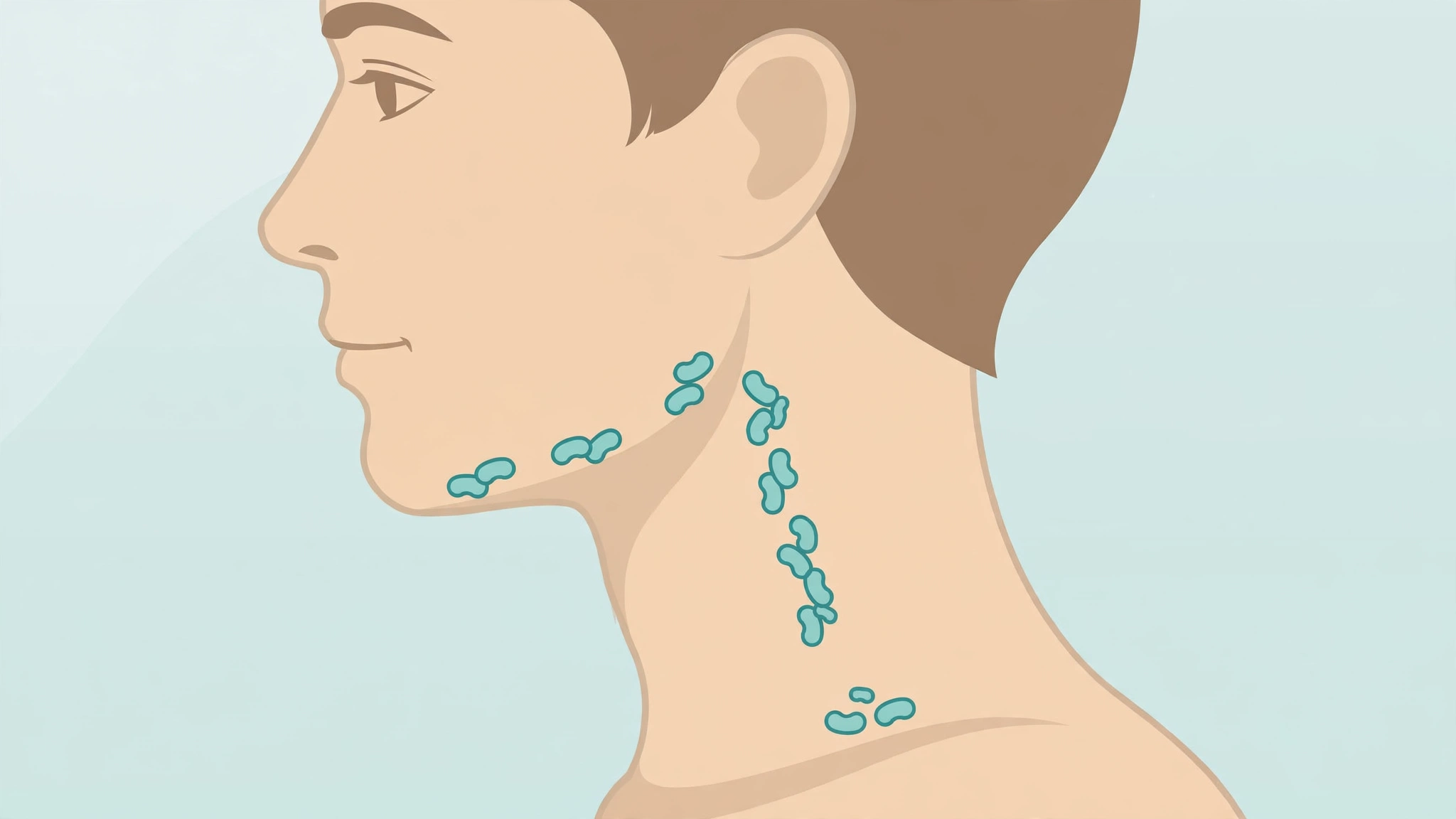
You are in the shower, or shaving, and there it is: a small lump under your jaw that definitely was not there last week. Your mind jumps straight to the worst possibility. Is it cancer? Should you call your doctor right now?
Take a breath. In the overwhelming majority of cases, a swollen lymph node is not dangerous. It is your immune system doing exactly what it is built to do. Still, a small number of swollen nodes do deserve prompt medical attention, and knowing the difference can save you weeks of worry — or catch something serious early.
What lymph nodes actually do
Your body contains roughly 600 lymph nodes, small bean-shaped filters clustered in your neck, armpits, groin, chest, and abdomen. They belong to the lymphatic system, a network of vessels carrying lymph fluid — a clear liquid packed with white blood cells — around the body.
Think of each node as a security checkpoint. Lymph fluid flows in, and immune cells inside inspect it for bacteria, viruses, and abnormal cells. When they find trouble nearby, the node ramps up production of infection-fighting cells and swells. That swelling, called lymphadenopathy, is usually a sign of an active, healthy immune response rather than a disease of the node itself.
The nodes you can feel are the superficial ones: under the jaw, along the neck, behind the ears, above the collarbone, in the armpits, and in the groin — usually under half an inch wide, so you never notice them.
Why lymph nodes swell
The most common cause by far is infection near the node — it swells because it is draining an area under attack:
- Colds, flu, and COVID-19 — the classic cause of tender neck nodes in winter.
- Strep throat and tonsillitis — often swells the nodes under the jaw.
- Ear and sinus infections — swell the nodes behind the ear or along the neck.
- Mononucleosis — the "kissing disease" that causes swollen neck glands and fatigue, most common in teens and young adults.
- Dental problems — a tooth abscess can swell the nodes under the jaw on that side.
- Skin infections — a cut or ingrown hair can swell the nearest nodes, for example in the armpit after a shaving nick.
Rarer causes include immune conditions such as lupus, certain medications, and cancers such as lymphoma — which is why doctors take persistent swelling seriously.
What a normal swollen node feels like
A swollen node from an ordinary infection follows a reassuring pattern. It is usually tender to the touch, soft and rubbery like the tip of your nose, and movable — it shifts slightly under your fingers instead of feeling glued in place. It is smaller than about 1 inch, roughly the size of a pea, and temporary: it peaks within a few days of the illness and shrinks back down within 2 to 3 weeks after you recover.
If your node fits this description and you have an obvious cold or sore throat, treat the infection, rest, and watch the node. It needs no antibiotics of its own and no urgent examination.
Red flags: when to call your doctor
Make an appointment — promptly, not in a panic — if any of these apply:
It is large or growing. A node bigger than 1 inch, or one that keeps growing over days to weeks, deserves evaluation.
It feels hard or fixed. A hard, painless lump that does not move when pressed is more concerning than a soft, tender, mobile one. Painless swelling is a bigger red flag than painful swelling, because infections hurt and cancers usually do not.
It lasts more than 2 to 4 weeks. Most infection-related nodes are back to normal within 3 weeks. One that lingers beyond a month, or never shrinks at all, needs a workup.
It sits above the collarbone. Swollen supraclavicular nodes — just above the collarbone — are uncommon with ordinary infections and are taken more seriously at any age.
You have "B symptoms": unexplained fever, drenching night sweats that soak your sheets, and unintentional weight loss of more than 10 percent of your body weight over 6 months.
You have no infection to explain it, or other unusual symptoms. A swollen node with no cold, sore throat, or cut nearby is worth checking sooner, as is one paired with persistent fatigue, itching all over, shortness of breath, or appearing after a tick bite or international travel.
Age matters too: swollen nodes are almost always benign in children and young adults, but after 40 a persistent, painless node is taken more seriously.
What to do at home — and what not to do
While you wait for an ordinary swollen node to settle, rest and treat the underlying illness: fluids, sleep, and over-the-counter pain relief such as acetaminophen or ibuprofen, used as directed, ease both the infection and the tenderness. A warm washcloth on the area for 10 to 15 minutes a few times a day can ease soreness.
Above all, leave the node alone. Check it once a day at most. Never try to lance or drain it. If it becomes red, hot, and increasingly painful, that may be an abscess forming, and that needs a doctor, not a home procedure.
What your doctor will actually do
A visit is usually straightforward: your doctor will ask how long it has been swollen, whether you have been sick, and whether you have fever, night sweats, or weight loss, then check your throat, ears, mouth, and skin for a source. Blood work, such as a complete blood count and sometimes a mono test, can point to the cause.
If the node looks like a typical infection response, your doctor may simply ask you to return in 2 to 4 weeks to confirm it has shrunk. If more information is needed, a painless neck ultrasound can show whether the node looks reactive (a normal response) or suspicious. Only if a node is large, hard, fixed, or persistent will a small biopsy sample be taken to rule out lymphoma or another condition — the standard way to get a definite answer, and most such biopsies come back benign.
When to seek care the same day
Seek same-day care if a swollen node comes with trouble breathing or swallowing, drooling, rapidly spreading redness across the neck or face, high fever with a stiff neck, or a node that suddenly becomes extremely painful, red, and hot — possible signs of an abscess or deep neck infection.
The bottom line
A swollen lymph node is usually your body working, not failing. Soft, tender, movable, and short-lived means your immune system is handling an infection nearby. Hard, painless, fixed, large, or persistent — especially above the collarbone, or with fever, night sweats, or unexplained weight loss — means it is time to call your doctor.
Most people who find a lump need nothing more than patience and a warm compress. But if your node does not fit the reassuring pattern, or it is still there a month later, a simple appointment trades weeks of quiet worrying for a clear answer.
Rao Sajid is the founder and editor of VitalDaily. He covers everyday health topics — nutrition, sleep, fitness and wellness — turning guidance from public-health sources like the CDC, NIH and FDA into plain, practical advice. More about Rao →
📚 Keep reading:

Tennis Elbow: Why Your Elbow Aches and How to Fix It
Tennis elbow strikes far more desk workers than tennis players. Here is why the outside of your elbow aches, what actually heals it, and when to see a doctor.

Quitting Caffeine? Why Your Head Hurts (And How to Stop)
Quitting coffee cold turkey can trigger headaches, fatigue and brain fog within a day. Here is why withdrawal happens and how to taper off more gently.

Statins and Muscle Pain: What's Really Going On
Muscle aches are the top reason Americans quit statins — yet landmark research shows most of that pain isn't caused by the pill. Here's what to do instead.