Trigger Finger: Why Your Finger Locks Up
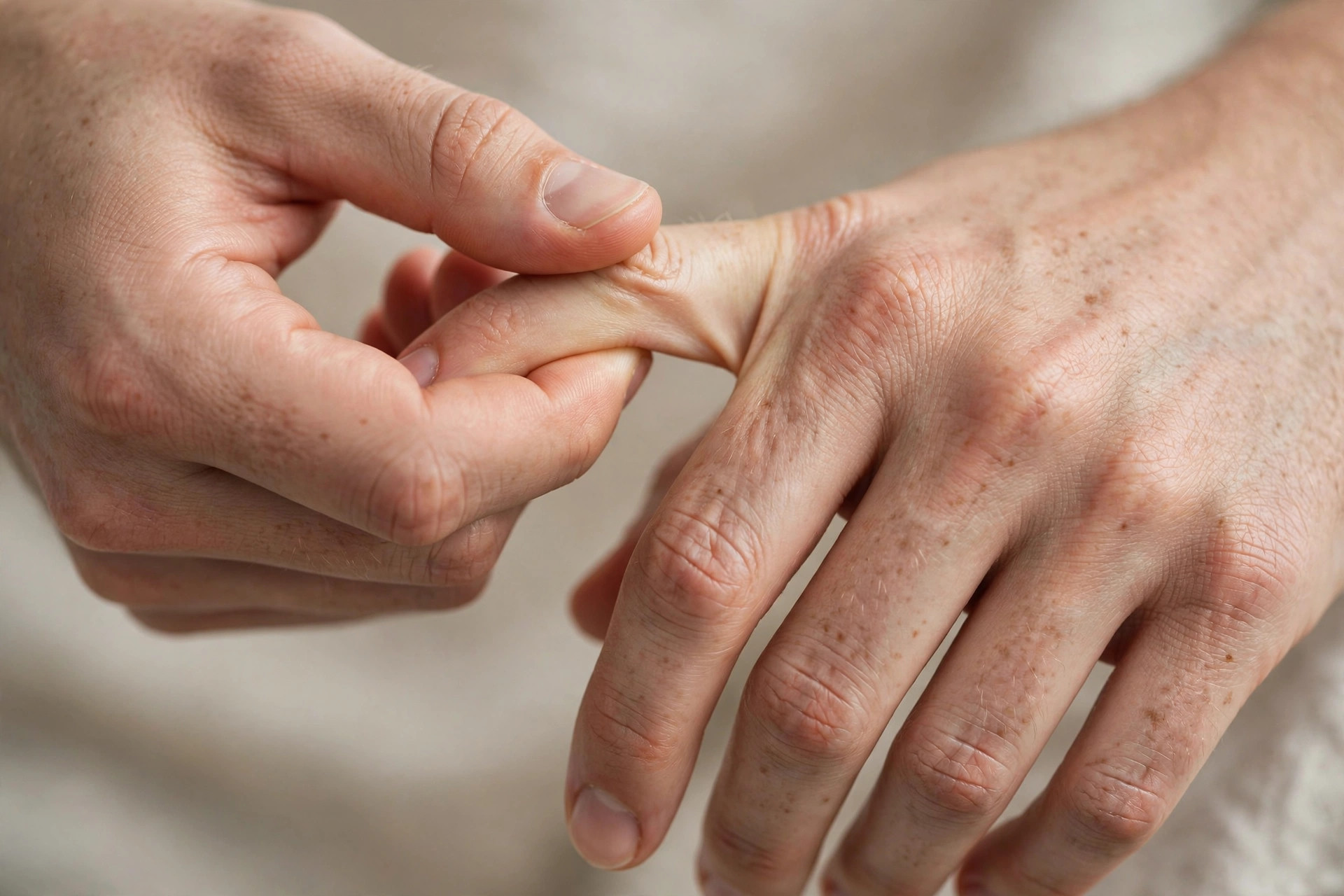
You wake up, reach for your coffee mug, and your ring finger refuses to straighten. It stays bent, then suddenly snaps open with a painful click. It might happen once, or every morning. Either way, it is alarming, and not something you should just live with.
That catching, clicking, or locking is called trigger finger, medically known as stenosing tenosynovitis. It affects an estimated 2 to 3 percent of the general population, and roughly 10 percent of people with diabetes. It most often strikes adults between ages 40 and 60, and women more often than men. The good news: it is one of the most treatable hand problems out there, and most cases improve without surgery.
What is actually happening inside your hand
Each finger has tendons that slide through small tunnels, called pulleys, to bend and straighten it. Think of a tendon as a rope and the pulleys as guides that keep it close to the bone.
In trigger finger, the tendon or its sheath becomes inflamed and swollen, often forming a small nodule. That swollen spot no longer glides smoothly through the pulley, usually the A1 pulley at the base of the finger, where the finger meets the palm. The tendon catches, then forces its way through with a snap. Over time the catching can worsen until the finger locks bent and will not straighten on its own. Ring finger and thumb are most often affected.
Why it happens
Often there is no single dramatic cause. Repetitive gripping is a major contributor, which is why trigger finger shows up in manual workers, gardeners, golfers, climbers, and people who spend hours typing or on a phone. The repeated friction irritates the tendon sheath until it swells.
Certain health conditions raise the risk substantially:
- Diabetes: People with diabetes, especially type 2, develop trigger finger far more often, and it tends to be more stubborn and affect multiple fingers.
- Rheumatoid arthritis and other inflammatory conditions: Chronic inflammation can thicken the tendon sheath.
- Hypothyroidism: An underactive thyroid is linked to tendon problems, including trigger finger.
- Carpal tunnel syndrome: The two frequently appear together, likely because both involve swollen tissue in the same crowded area of the wrist and hand.
Age matters too: tendons lose elasticity over time, making them more vulnerable to irritation.
The symptoms to watch for
Trigger finger usually develops gradually, and early signs are easy to dismiss, which is why many people wait months before getting help:
- Stiffness, especially first thing in the morning, that eases as the day goes on
- A clicking, popping, or catching sensation when you bend or straighten the finger
- A tender lump at the base of the finger, on the palm side
- The finger locking bent, then suddenly popping straight, or needing your other hand to straighten it
In advanced cases, the finger may stay locked bent. That is not an emergency, but see a doctor promptly.
When to see a doctor
See your primary care doctor or a hand specialist if the catching or locking lasts more than a couple of weeks, keeps coming back, or interferes with work, cooking, or dressing. Earlier treatment works better and can prevent permanent locking.
Seek care sooner for swelling, redness, warmth, or fever around the finger, which could signal infection, or numbness, tingling, or weakness in the hand, which could point to a nerve problem such as carpal tunnel syndrome. A locked finger that suddenly becomes very painful, discolored, or swollen after an injury should be checked the same day.
Diagnosis is usually straightforward: the doctor feels for the tender nodule at the base of the finger and watches the finger move. X-rays and blood tests are generally not needed unless another condition is suspected.
What actually helps: treatment options that work
Treatment is step-by-step, starting with the simplest options and moving up only if needed.
Rest and activity changes
The first step is to reduce the irritation: ease off the gripping activity that aggravates it, take frequent breaks, and avoid forceful gripping where possible. Padded tool handles and ergonomic grips help, and ice for 10 to 15 minutes a few times a day can calm soreness, though it will not fix the swelling on its own.
Splinting
A simple splint that holds the joint straight, often worn at night, can be surprisingly effective. It stops the tendon catching repeatedly while you sleep and gives the inflamed sheath time to settle, and many people improve within a few weeks. Have a doctor or hand therapist fit it; one that is too tight can cause its own problems.
Over-the-counter pain relief
Nonsteroidal anti-inflammatory drugs (NSAIDs) such as ibuprofen or naproxen can ease pain and inflammation in the short term, best used for a few days to a couple of weeks rather than long-term. People with stomach ulcers, kidney or heart disease, or those taking blood thinners should check with a doctor or pharmacist first. The U.S. Food and Drug Administration warns NSAIDs carry risks of stomach bleeding and cardiovascular events, so use the lowest effective dose for the shortest time.
Corticosteroid injection
If rest and splinting are not enough, a corticosteroid injection into the tendon sheath is the next step. Studies show a single injection resolves symptoms in roughly 50 to 70 percent of cases. Done in the office in minutes, relief often begins within a few days. People with diabetes should know the steroid can temporarily raise blood sugar, so monitor glucose more closely for a few days afterward.
Minor procedures and surgery
When injections fail or the finger is locked, a hand surgeon can release the tight pulley. A percutaneous release, a quick office procedure done with a needle under local anesthesia, is the most common modern option. Traditional open surgery, a small incision in the palm to cut the pulley, is also highly effective, with success rates above 90 percent. Most people return to light activities within days and full use within a few weeks.
Daily habits that protect your hands
Whether you are recovering from trigger finger or trying to avoid it, a few habits go a long way:
- Take grip breaks. Pause every 30 minutes during repetitive gripping work to stretch your fingers wide and shake out your hands.
- Stretch daily. Gently spread your fingers, then make a fist, and repeat 10 times, holding each stretch for a few seconds rather than forcing it.
- Use the right tools. Padded, larger-diameter grips, plus ergonomic keyboards and gardening tools, reduce the force your tendons must handle.
- Keep blood sugar in check. Good glucose control lowers tendon-problem risk if you have diabetes.
- Do not ignore early stiffness. Morning stiffness that keeps returning is your hand asking for attention; rest, splinting, and a doctor visit now can save you a procedure later.
The bottom line
Trigger finger is painful and sometimes scary the first time a finger locks, but it is common, well understood, and highly treatable. Most people improve with rest, splinting, or a single injection, and even stubborn cases have a reliable surgical fix with a fast recovery. If your finger is catching, clicking, or locking, do not wait for it to sort itself out: the earlier you act, the simpler the treatment.
Rao Sajid is the founder and editor of VitalDaily. He covers everyday health topics — nutrition, sleep, fitness and wellness — turning guidance from public-health sources like the CDC, NIH and FDA into plain, practical advice. More about Rao →
📚 Keep reading:

Silent Reflux: The Reflux Without Heartburn
No heartburn, but a chronic cough, hoarseness, or a lump in your throat? Silent reflux could be the cause, and it is easy to miss.

Are You Measuring Your Blood Pressure Wrong?
Nearly half of US adults have high blood pressure, yet most home readings are wrong. Here is the technique doctors trust.

Ibuprofen vs. Tylenol: Which Pain Reliever Is Safer?
Both ease pain, but they work differently and carry different risks. Here is how ibuprofen and acetaminophen compare, and which one fits your situation.