Vitamin K2: The Nutrient Your Calcium Plan Is Missing
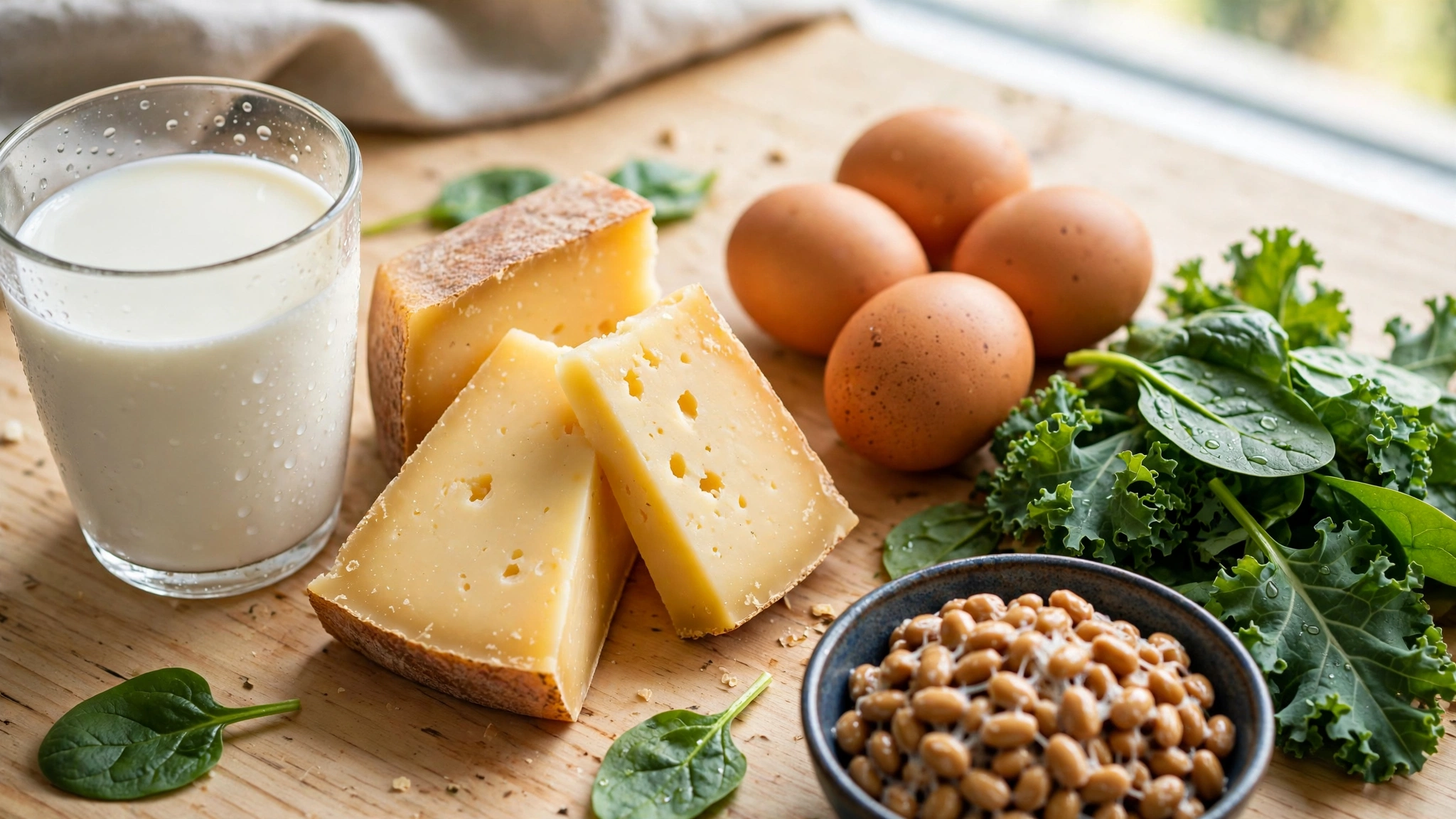
If you take calcium for your bones, vitamin D for absorption, and still worry about bone loss after 50, there's a third player most Americans have never heard of: vitamin K2. It's the nutrient that tells calcium where to go in your body — into your bones and teeth, where it belongs, instead of into your artery walls, where it doesn't.
More than 10 million Americans over age 50 have osteoporosis, and another 43 million have low bone mass, according to the National Osteoporosis Foundation. Many of them are diligently swallowing calcium supplements. But calcium without its delivery system is like mailing a package with no address. Here's how K2 completes the plan.
The traffic cop for calcium
Calcium doesn't just float into your bones on its own. It needs activating instructions, and those come from two vitamin-K-dependent proteins:
- Osteocalcin, produced by bone-building cells, grabs calcium from the blood and locks it into the bone matrix.
- Matrix Gla protein (MGP), found in artery walls, actively blocks calcium from crystallizing where it would stiffen vessels.
Both proteins only switch on when they meet vitamin K2. Without enough of it, calcium can end up in the wrong places: softer bones and progressively calcified arteries — the worst of both worlds. Researchers have linked severe arterial calcification to higher cardiovascular risk, and heart disease remains the number one killer of Americans, per the CDC.
K1 vs. K2: not the same vitamin
Most people know "vitamin K" only as the blood-clotting vitamin. That's K1 (phylloquinone), abundant in leafy greens like spinach and kale, and it mostly serves the liver's clotting machinery. K2 (menaquinone) — found in fermented foods and animal products — travels further through the body and handles the bone-and-artery jobs above.
The NIH's Office of Dietary Supplements sets one combined adequate intake for all vitamin K: 120 micrograms a day for men, 90 for women. There's no separate K2 target, and no standard US blood test for K2 status, which is exactly why it flies under the radar.
What the research actually shows
The landmark study is the Rotterdam Study, which followed about 4,800 Dutch adults aged 55 and older. Those with the highest dietary intake of vitamin K2 had significantly less aortic calcification and a lower risk of dying from heart disease than those with the lowest intake. Vitamin K1 intake showed no such link.
On the bone side, trials in Japan — where K2 as MK-4 has been used for osteoporosis — have found improvements in bone mineral density and reductions in fracture risk, especially when K2 is paired with vitamin D and calcium. K2 doesn't replace calcium or vitamin D; it completes the team.
Fair caveat: much of the strongest evidence comes from observational studies and smaller trials. K2 isn't a proven miracle — but the mechanism is sound and the risk profile of food-based K2 is low.
Why Americans are probably short on it
A generation of low-fat dairy advice quietly gutted K2 from the American diet. The richest K2 sources are:
- Natto (fermented soybeans) — the undisputed champion, packed with the long-lasting MK-7 form. But let's be honest: few Americans eat natto.
- Aged and hard cheeses — Gouda, Edam, and aged cheddar carry meaningful MK-7 and MK-8.
- Egg yolks, especially from pasture-raised hens.
- Grass-fed butter, ghee, and full-fat dairy.
- Dark-meat chicken and fermented foods like sauerkraut and kefir.
If your diet is mostly lean chicken breast, skim milk, and steamed vegetables — a textbook "healthy American" plate — you're getting plenty of K1 but very little K2. That's the gap.
How to close the gap
Start with food. Add real cheese back in reasonable amounts, eat the whole egg, choose grass-fed butter over margarine, and if you're adventurous, try natto — a single small serving delivers more K2 than a week of cheese.
Consider a D3 + K2 supplement. These combo capsules are the most common way Americans get K2, usually as MK-7 (the form that stays in the blood longest). Typical doses range from 100 to 200 micrograms of MK-7 daily. Look for third-party testing (USP or NSF marks) the way you would for any supplement.
Pair it with what you already take. K2 works as a team with calcium and vitamin D3 — the trio covers intake, absorption, and delivery. If you're taking calcium and D3 for bone density after 50, K2 is the missing third leg.
⚠️ The one critical warning: blood thinners
This matters more than anything else in this article. Vitamin K2 can interfere with warfarin (Coumadin) and other vitamin-K-antagonist blood thinners by reducing their effectiveness — raising the risk of dangerous clots. If you take warfarin, do NOT start K2 supplements (or dramatically change your K intake) without talking to the doctor who manages your blood thinner. This is a well-established, serious interaction.
People on newer blood thinners (like apixaban or rivaroxaban) don't have the same direct interaction, but anyone on any prescription blood thinner should still check with their clinician first.
The bottom line
Calcium builds the structure, vitamin D opens the door, and vitamin K2 points calcium to the right address. For Americans over 50 — the group most worried about bones and hearts — K2 may be the most underrated nutrient in the cabinet. Get it from aged cheese, egg yolks, and grass-fed dairy, consider a tested D3+K2 supplement if your diet falls short, and if you're on a blood thinner, loop in your doctor first.
Small nutrient. Big logistics job. Your bones and arteries will notice.
Rao Sajid is the founder and editor of VitalDaily. He covers everyday health topics — nutrition, sleep, fitness and wellness — turning guidance from public-health sources like the CDC, NIH and FDA into plain, practical advice. More about Rao →
📚 Keep reading:

Why You Snore (and 8 Ways to Stop It Tonight)
Nearly half of American adults snore at least occasionally. Here's what's actually making that noise — plus 8 proven fixes and the warning signs of sleep apnea.

Always Cold Hands and Feet? 7 Causes and When to Worry
Hands and feet freezing even indoors? Raynaud's, thyroid, or poor circulation could be behind it. Here are 7 causes and the red flags that need a doctor.
The Sitting-Rising Test: 10 Seconds That Predict Longevity
Researchers found a 10-second floor test predicted longevity in 2,002 adults. Try it safely at home — and learn what your score means.