Why You Snore (and 8 Ways to Stop It Tonight)
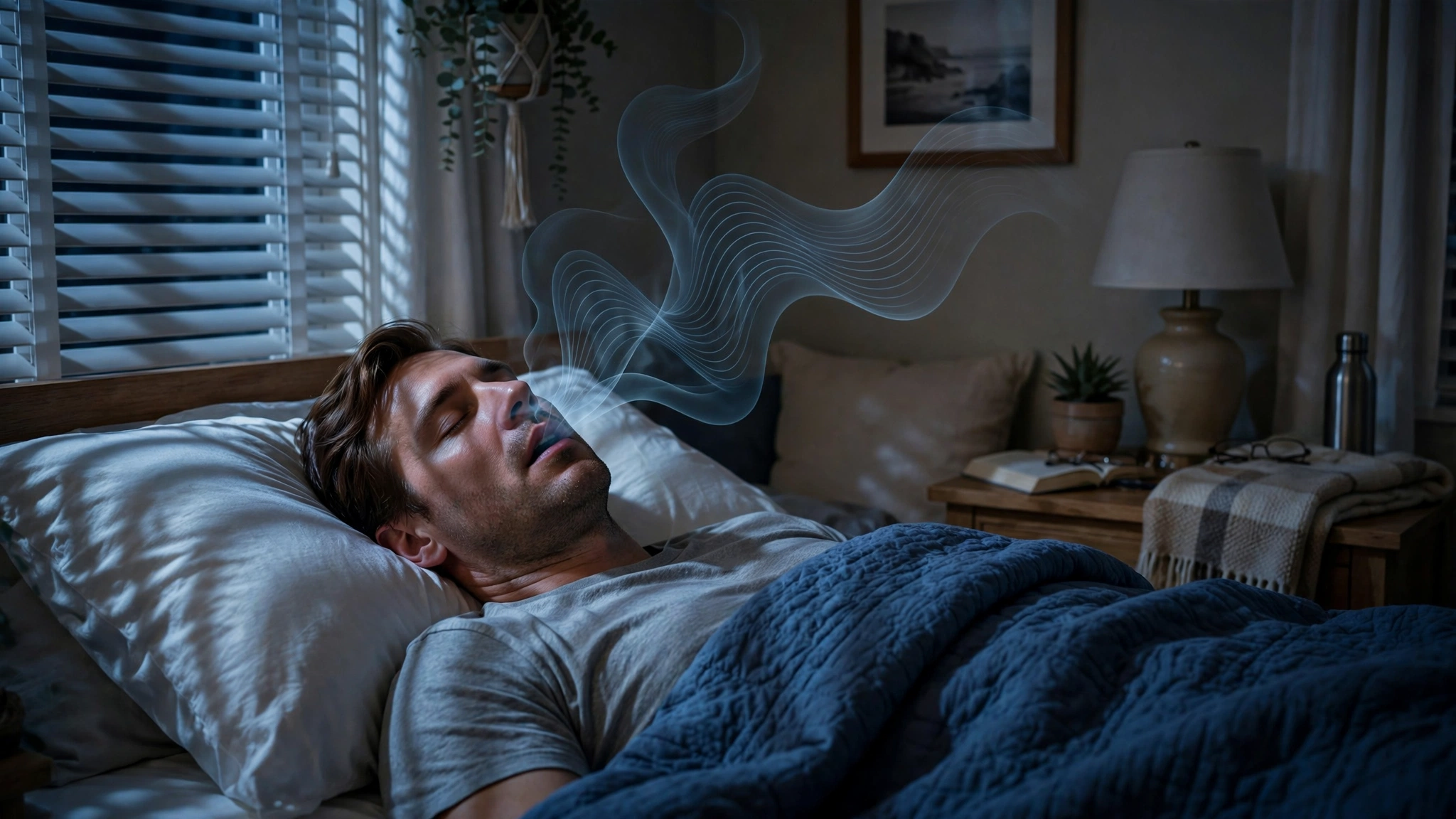
If you've ever been elbowed awake at 2 a.m. by a partner who sounds like a freight train, you know snoring isn't just a punchline. Nearly half of American adults snore at least occasionally, and about one in four does it regularly. Snoring gets worse with age, spikes during cold and allergy season, and — for the person sharing the bed — can shave real hours off sleep. The good news: most snoring has a fixable cause, and many of the fixes work the very first night.
What snoring actually is
Snoring is the sound of air squeezing through a narrowed airway. When you fall asleep, the muscles in the roof of your mouth, tongue, and throat relax. In some people they relax enough that the airway narrows, and each breath makes the surrounding tissue vibrate — that rattling sound can reach 50 to 80 decibels, roughly the volume of a vacuum cleaner running beside the bed.
It's worth understanding this mechanism because it explains every remedy below: wider airway, less vibration, less noise.
Why you snore: the 7 most common causes
1. Sleeping on your back
This is the single most common reason. On your back, gravity pulls your tongue and soft palate backward into the airway. Many people who never snore on their side saw like lumberjacks the moment they roll onto their backs. If your snoring changes with position, position is probably the whole story.
2. Nasal congestion
A stuffy nose forces you to breathe through your mouth, and mouth-breathing is much noisier. Colds, fall allergies, a deviated septum, and dry winter air all narrow the nasal passages. During ragweed and cold season — right now — congestion-driven snoring surges across the country.
3. Alcohol and sedatives before bed
That nightcap is a throat-muscle relaxant. Alcohol, sleep aids, and some allergy medications loosen airway muscles more than normal sleep does, making collapse and vibration far more likely. Drinking within three to four hours of bedtime is one of the strongest modifiable snoring triggers.
4. Extra weight around the neck
Extra tissue around the neck and throat narrows the airway from the outside. Men with a neck circumference over 17 inches and women over 16 inches are at notably higher risk of snoring and sleep apnea. Even modest weight loss can quiet snoring measurably.
5. Your anatomy
Some people are simply built to snore: a thick or long soft palate, a low-hanging uvula, a receding chin, or naturally narrow nasal passages. This kind of snoring tends to run in families — if your parents snored, odds are you will too.
6. Sleep deprivation
Here's an ironic one: being exhausted makes you snore more. Overtired muscles relax deeper and faster, and people who are chronically short on sleep snore louder and more often than when they're rested.
7. Smoking
Cigarette smoke irritates the lining of the airway, causing swelling that narrows the passage. Smokers are roughly twice as likely to snore as nonsmokers, and quitting often reduces snoring within weeks.
8 ways to stop snoring, starting tonight
1. Roll onto your side
The fastest fix. Sew a tennis ball into the back of a T-shirt, use a body pillow, or try a wedge pillow — anything that keeps you off your back. Positional therapy resolves snoring entirely for a large share of back-snorers.
2. Clear your nose before bed
A saline rinse or neti pot clears out pollen and mucus; an external nasal strip can hold nostrils open. In dry heated bedrooms, a cool-mist humidifier keeps nasal passages from swelling shut overnight.
3. Skip the nightcap
Avoid alcohol for at least three to four hours before bed, and talk to your doctor before combining sleep aids or sedating antihistamines with an already-noisy night.
4. Elevate your head
Raising the head of the bed about four inches — with a wedge pillow or bed risers, not just an extra pillow — lets gravity help keep the airway open. Extra pillows that bend the neck forward can actually make snoring worse.
5. Stay hydrated and keep the bedroom humid
Dehydration thickens the secretions in your nose and throat, making them stickier and noisier. A glass of water in the evening and a humidifier in a dry bedroom are simple, cheap wins.
6. Try a nasal dilator
Internal nasal dilators (small silicone cones worn inside the nostrils) mechanically widen the nasal opening. They're inexpensive, reusable, and work well for people whose snoring comes from the nose rather than the throat.
7. Strengthen the airway with mouth exercises
It sounds odd, but it works: a set of daily oropharyngeal exercises — pushing the tongue against the roof of the mouth, sliding it backward, and repeating vowel sounds — strengthens throat muscles and has been shown in clinical trials to cut snoring frequency and loudness significantly after a few months.
8. Lose a few pounds if weight is a factor
You don't need a transformation. Studies show that even a 5 to 10 percent weight loss meaningfully reduces snoring in people carrying extra weight around the neck.
A note on mouth tape: social media loves it, but the evidence is thin — and taping your mouth shut is a bad idea if you have nasal congestion, sleep apnea, or any breathing difficulty. Nasal breathing is the goal; forcing it with tape is not.
When snoring is actually sleep apnea — and why it matters
Most snoring is annoying but harmless. But loud, nightly snoring paired with any of these signs points to obstructive sleep apnea, a condition where breathing repeatedly stops and starts all night:
- Pauses in breathing your partner notices, followed by gasping or choking
- Waking up with a headache or a dry, sore throat
- Falling asleep during the day — at your desk, in traffic, during conversations
- High blood pressure that's hard to control
- Waking up to use the bathroom multiple times a night
Sleep apnea affects an estimated 30 million American adults, and the vast majority are undiagnosed. Untreated, it raises the risk of heart attack, stroke, type 2 diabetes, and car accidents. The diagnosis is simpler than most people think — often a single night with a take-home sleep test — and treatment with a CPAP machine or dental device is highly effective.
The rule of thumb: if the snorer is exhausted despite a full night's sleep, or if breathing visibly pauses, it's time for a sleep study, not just earplugs for the partner.
The bottom line
Snoring is your airway asking for more room. Start with the easy wins — side-sleeping, a clear nose, no late alcohol — and most people hear a difference within days. And if the snoring is loud, nightly, and comes with daytime exhaustion, treat it as a health signal worth investigating, not a joke. The quietest bedrooms, it turns out, are also the healthiest ones.
Rao Sajid is the founder and editor of VitalDaily. He covers everyday health topics — nutrition, sleep, fitness and wellness — turning guidance from public-health sources like the CDC, NIH and FDA into plain, practical advice. More about Rao →
📚 Keep reading:

Always Cold Hands and Feet? 7 Causes and When to Worry
Hands and feet freezing even indoors? Raynaud's, thyroid, or poor circulation could be behind it. Here are 7 causes and the red flags that need a doctor.

The Sitting-Rising Test: 10 Seconds That Predict Longevity
Researchers found a 10-second floor test predicted longevity in 2,002 adults. Try it safely at home — and learn what your score means.
Carbon Monoxide: The Winter Killer Hiding in Your Home
Carbon monoxide kills 400+ Americans a year and sends 100,000 to the ER, peaking every winter. Here's where CO hides in your home and how to stop it.