Why Half of Americans Don't Get Enough Magnesium
Your heart is beating 100,000 times a day. Your muscles are firing with every step. Your brain is burning through energy to read this sentence. And every one of those processes depends on a mineral most Americans barely think about: magnesium.
Magnesium powers more than 300 enzyme reactions in the human body — everything from blood pressure regulation to blood sugar control to bone strength. Yet federal nutrition data shows that roughly half of American adults get less than the recommended amount from their diets. Researchers have started calling it one of the most common quiet shortfalls in the American diet — and most people who have it have no idea.
This isn't a sales pitch for a supplement. It's a look at what magnesium actually does, why the modern American diet comes up short, and how to close the gap with food.
What Magnesium Does in Your Body
Think of magnesium as the body's spark plug. It's involved in:
- Muscle and nerve function — including the steady rhythm of your heart
- Blood pressure and blood sugar regulation — magnesium helps blood vessels relax and supports insulin sensitivity
- Bone health — about 60% of the magnesium in your body lives in your bones, where it works alongside calcium and vitamin D
- Energy production — the ATP your cells run on can't function without magnesium
- Sleep and stress response — magnesium helps regulate melatonin and the stress hormone cortisol
A frank low magnesium level (true deficiency) is rare in healthy people — your kidneys are good at conserving it. What's common is inadequate intake: consistently eating less than your body needs. That won't show up as a dramatic symptom, but it may quietly raise the risk of problems over years.
Why Americans Fall Short
The National Institutes of Health sets the daily target at 420 mg for adult men and 320 mg for adult women. Yet analyses of National Health and Nutrition Examination Survey (NHANES) data have repeatedly found that about half of Americans don't reach even the more modest Estimated Average Requirement — the level below which inadequacy becomes likely.
Three reasons the American diet misses the mark:
1. Magnesium was refined out of our staples. Refined grains lose most of their magnesium in processing. White flour and white rice — cornerstones of the American plate — contain a fraction of what their whole-grain versions do.
2. We're eating fewer magnesium-rich whole foods. The biggest sources are leafy greens, beans, nuts, seeds, and whole grains — exactly the foods surveys show Americans eat the least of. The CDC estimates only about 1 in 10 adults eats enough fruits and vegetables.
3. Certain habits drain it. Heavy alcohol use, some common medications (including certain diuretics and acid-reflux drugs), and chronic stress can all increase magnesium loss or reduce absorption. If you take a water pill for blood pressure, ask your doctor whether your magnesium needs checking.
Signs You Might Be Low
Because symptoms are vague, low magnesium is easy to miss. Commonly reported signs of inadequate intake include:
- Muscle cramps, twitches, or restless legs
- Fatigue that sleep doesn't fix
- Headaches or migraines
- Trouble falling or staying asleep
- Anxiety or feeling "on edge"
- Irregular heartbeat (see a doctor for this — it's not a DIY diagnosis)
None of these prove you're low on magnesium — each has many possible causes. But if several show up together and your diet is light on greens, beans, and nuts, magnesium is worth a look.
The Best Food Sources (Per Serving)
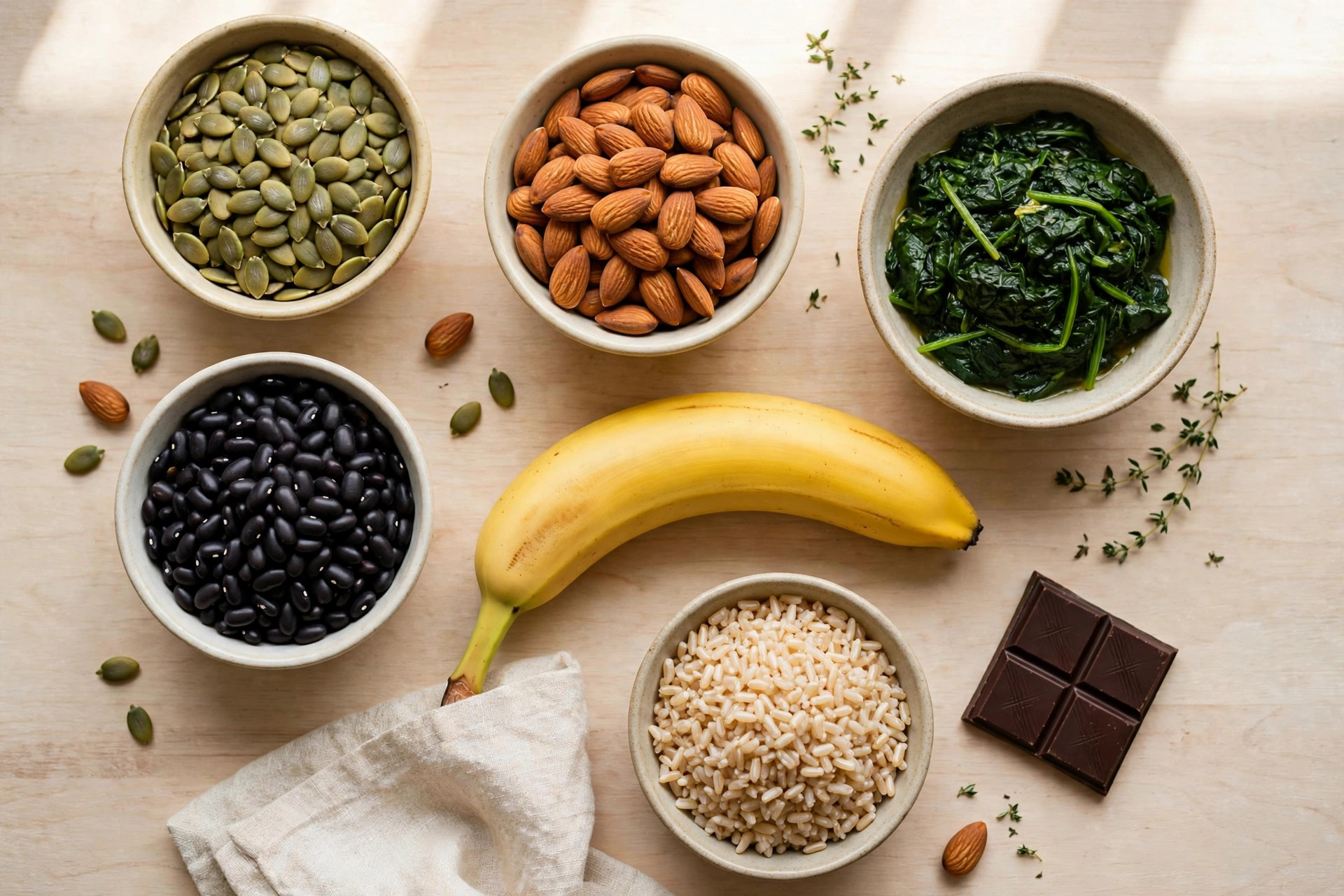
Food first, always. These everyday foods are magnesium powerhouses — with amounts from the USDA and NIH:
- Pumpkin seeds (1 oz): ~156 mg — the single best bang-for-bite snack
- Chia seeds (1 oz): ~95 mg — easy in yogurt or smoothies
- Almonds (1 oz): ~80 mg — a small handful
- Spinach, cooked (½ cup): ~78 mg
- Cashews (1 oz): ~74 mg
- Peanuts (1 oz): ~63 mg
- Black beans, cooked (½ cup): ~60 mg
- Edamame, shelled (½ cup): ~50 mg
- Peanut butter (2 tbsp): ~49 mg
- Brown rice, cooked (½ cup): ~42 mg
- Banana (1 medium): ~32 mg
- Dark chocolate 70–85% (1 oz): ~65 mg
Two handfuls of nuts and a serving of beans or greens a day get most people close to their target — no pills required.
Should You Take a Supplement?
Food is the preferred route, and it's how magnesium is best absorbed alongside fiber and other nutrients. But supplements can make sense for people with consistently low intake, heavy alcohol use, or certain medications.
If you go the supplement route, know this: the NIH sets the tolerable upper limit for magnesium from supplements at 350 mg per day for adults. More isn't better — high-dose magnesium causes diarrhea and cramping, and can be dangerous for people with kidney problems. Magnesium citrate and magnesium glycinate tend to be better absorbed and gentler on the stomach than magnesium oxide.
And skip the TikTok "magnesium spray" miracles. There's no solid evidence that topical magnesium meaningfully raises body levels. A handful of pumpkin seeds beats a spray bottle every time.
5 Simple Ways to Get More This Week
- Swap white rice for brown rice or quinoa at dinner. Instant upgrade, same meal.
- Keep a mixed-nut jar on your desk. A 1-ounce handful is roughly 80 mg — about a fifth of your daily need.
- Add a half-cup of black beans to a salad, burrito, or soup. Cheap, filling, 60 mg of magnesium.
- Toss a handful of spinach into smoothies or eggs. Cooking doubles its magnesium density per bite.
- Finish with dark chocolate. A square or two of 70%+ dark chocolate is dessert and ~65 mg of magnesium. Hard to complain about that prescription.
The Bottom Line
Magnesium won't be the trendiest nutrient on social media — it has no influencer face, no miracle claims. But the federal data is clear: about half of Americans don't get enough, and the fix is refreshingly simple. More beans, more greens, more nuts, more whole grains.
Small changes, compounded daily, are how you close a gap your body has been quietly carrying for years.
This article is for general information only and is not medical advice. If you have kidney disease, heart rhythm problems, or take prescription medications, talk to your doctor before changing your diet significantly or starting supplements.
📚 Keep reading:

7 Ways to Strengthen Immunity Before Flu Season
Flu season hospitalizes 200,000+ Americans yearly. These 7 science-backed habits build your immune defenses before it hits.

6 Science-Backed Ways to Calm Work Anxiety Fast
Sunday-night dread? Racing thoughts at your desk? These 6 research-proven techniques calm work anxiety in minutes.

Why Americans Sleep an Hour Less Than They Need
1 in 3 US adults doesn't get enough sleep — costing $411 billion a year. Here's why we're so tired and how to fix it.