Why Your Joints Ache When It Gets Cold
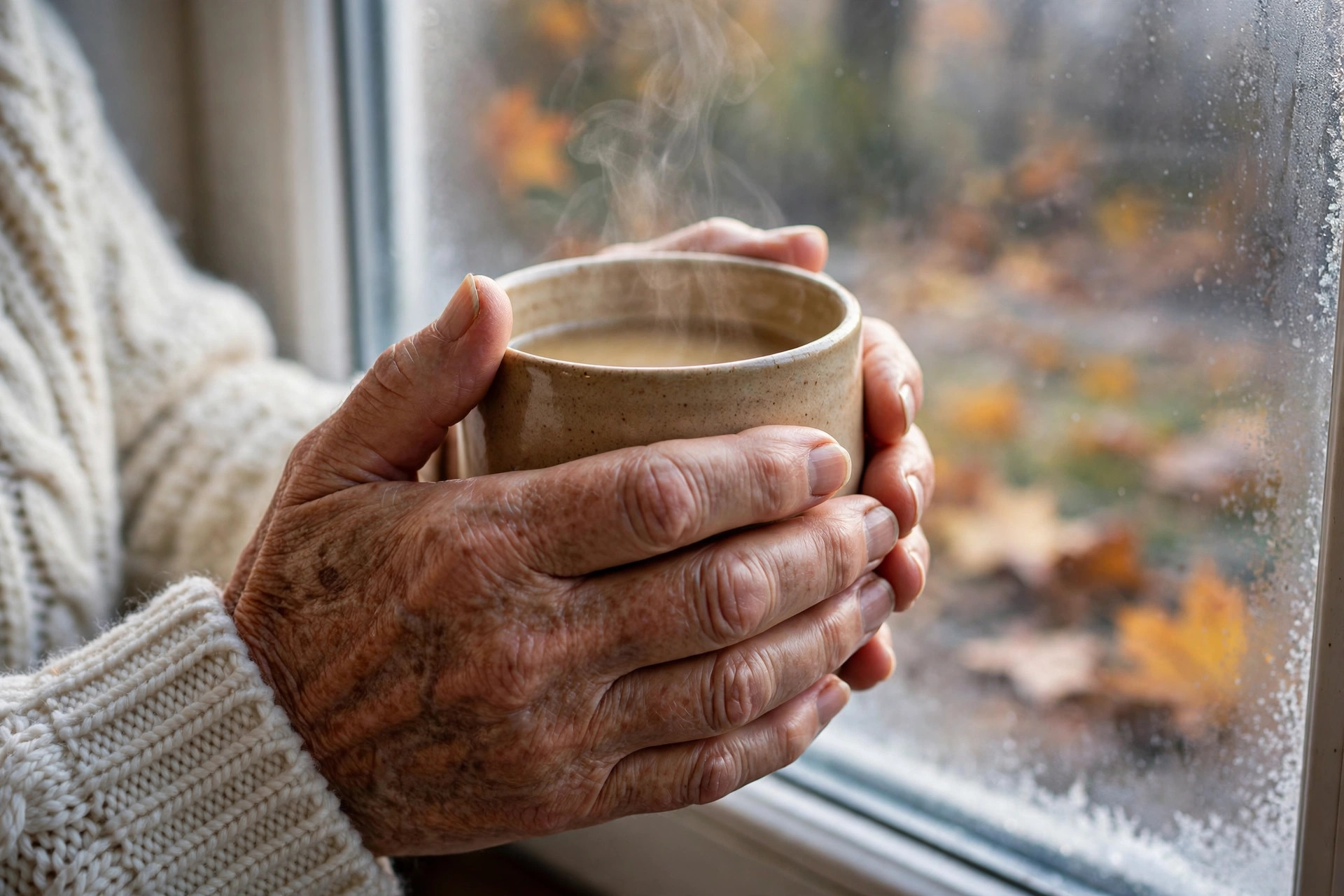
October brings the first real chill to much of the country — and with it, a familiar complaint. Your knuckles stiffen by morning. Your knees creak on the stairs. And your grandmother's old line — "I can feel the weather changing in my bones" — suddenly feels less like folklore and more like a forecast.
She is not imagining it. Ask any rheumatologist, and they will tell you that joint pain really does spike when temperatures fall. With about 58.5 million U.S. adults told by a doctor they have some form of arthritis — roughly one in four — this is one of the most common complaints in American medicine. Here is what the science says about why cold bothers your joints, and what actually helps.
What happens inside a joint when it gets cold
Your joints are enclosed, pressurized capsules. Cartilage cushions the bone ends, synovial fluid lubricates the space between them, and a web of tendons, ligaments, and muscles holds everything together. Cold disrupts that system in several ways:
Barometric pressure drops. This is the leading theory, and the one with the most evidence. When a storm front moves in, atmospheric pressure falls — and with less pressure pushing on your body from the outside, the tissues around your joints can expand ever so slightly. If you already have arthritis, where cartilage is worn and nerves are more exposed, that tiny expansion can irritate sensitive nerve endings and register as pain or stiffness.
Synovial fluid thickens. Think of it like motor oil in winter: the lubricating fluid inside your joints gets more viscous as temperatures drop, so the joint moves less smoothly until it warms up. That is why morning stiffness feels worst on cold days and eases after you get moving.
Muscles tighten. Cold makes muscles contract and tighten reflexively — your body's way of conserving heat. Tighter muscles pull joints into stiffer positions and reduce their comfortable range of motion, which makes everything feel achier.
You move less. This one is behavioral but real. When it is cold and dark, Americans walk less, skip workouts, and spend more hours curled on the couch. Less movement means less synovial fluid circulation and weaker support muscles — a recipe for stiffness that compounds week after week through winter.
The research: it's not just in your head
Skeptics have long dismissed weather-related joint pain as confirmation bias, but a growing body of research says otherwise. A frequently cited 2007 Tufts University study of 200 people with knee osteoarthritis found that every 10-degree drop in temperature was associated with a small but measurable increase in knee pain — and that drops in barometric pressure also predicted more pain.
A 2014 Dutch study of 177 people with hip osteoarthritis found the same pattern: falling barometric pressure and rising humidity predicted slightly more pain. The effects were modest — weather is a contributing factor, not a cause — but they were consistent.
That said, the evidence is not unanimous. Some studies have found weak or no links, and researchers note that mood, sleep quality, and activity levels all shift in winter too, making it hard to isolate weather's exact role. The honest answer: weather matters for many people, modestly, and the reasons are partly physical, partly behavioral.
Cold aches vs. arthritis: how to tell
Occasional weather-related stiffness is normal, especially after 50. But if you have not been diagnosed with arthritis, watch for these signs that it is time to get evaluated:
- Stiffness lasting more than 30 minutes after waking, day after day
- Swelling, redness, or warmth around a joint
- Pain that is symmetrical (both hands, both knees) — a pattern common in rheumatoid arthritis
- Joint pain that limits daily activities — opening jars, climbing stairs, sleeping through the night
- Ache that does not ease with rest and movement
Osteoarthritis — wear-and-tear arthritis — is by far the most common type, affecting an estimated 32.5 million American adults. Rheumatoid arthritis, an autoimmune condition, is less common but more serious. A primary-care doctor can usually distinguish them with an exam and, if needed, imaging or blood work.
What actually helps: a cold-weather joint plan
You cannot change the weather, but you can change how your joints experience it:
1. Keep joints warm — aggressively. This is the simplest and most underrated fix. Wear gloves before you need them, layer with thermals, use heated seats and steering-wheel warmers, and consider thermal knee sleeves or compression gloves. Warm joints are measurably looser joints.
2. Stay active with low-impact exercise. Walking, swimming, cycling, and water aerobics keep synovial fluid flowing and strengthen the muscles that protect your joints — without pounding them. Aim for 150 minutes of moderate activity per week, per CDC guidance, and do a longer warm-up when it is cold.
3. Strengthen the muscles around sore joints. Weak quads make knee arthritis worse; weak forearms make hand arthritis worse. Light resistance training two to three times a week offloads pressure from the joint itself. A physical therapist can design a targeted routine if you are unsure where to start.
4. Watch your weight. The Arthritis Foundation notes that every pound of body weight adds roughly four pounds of pressure on your knees. Losing even 10 pounds removes 40 pounds of load from every step.
5. Use heat strategically. A warm shower, heating pad, or paraffin wax bath for stiff hands loosens joints before the day starts. Save ice for joints that are actively inflamed and swollen after activity.
6. Take NSAIDs as directed, not as a lifestyle. Ibuprofen and naproxen relieve arthritis pain well, but long-term use carries stomach, kidney, and heart risks. Use the lowest effective dose for the shortest time, and talk to your doctor about topical NSAID gels — they work well for knees and hands with fewer systemic effects.
7. Do not let winter shrink your day. Poor sleep amplifies pain perception, and short winter days drag down both sleep and mood. Keep a consistent sleep schedule, get morning daylight exposure, and stay socially active — it all feeds back into how much your joints bother you.
When joint pain is a red flag
Most cold-weather joint aches are annoying, not dangerous. But see a doctor promptly if you notice:
- A joint that is suddenly swollen, hot, and red — possible infection or gout flare
- Fever alongside joint pain
- A joint that locks, buckles, or gives way
- Pain after a fall or injury that does not improve in a few days
- Numbness or tingling in the hands or feet
These can signal conditions that need urgent treatment, including septic arthritis, a fracture, or nerve compression.
The bottom line
Your joints really do notice the cold — falling barometric pressure, thickening joint fluid, tightening muscles, and less movement all conspire against them from October through March. For the 58.5 million Americans with arthritis, that can mean months of extra discomfort.
But it does not have to mean months of suffering. Keep your joints warm, keep moving with low-impact exercise, strengthen the muscles around sore joints, and treat the weight on your knees as a number you can change. Winter will still be cold — your joints just do not have to feel like the thermometer.
📚 Keep reading:

Why You're Constipated — and 9 Fixes That Actually Work
About 16 in 100 American adults deal with constipation, a third of those over 60. Gastroenterologists explain what's slowing things down — and the fixes that work.

That Q-Tip in Your Ear Is Doing More Harm Than Good
About 34 kids a day land in the ER from cotton-swab ear injuries. Ear doctors say the ear canal cleans itself — here's the safe way to deal with earwax.
Appendicitis: 7 Warning Signs Your Belly Pain Is Serious
Lower-right belly pain, fever, nausea, no appetite? Appendicitis moves fast — and a burst appendix can turn deadly. Here's how ER doctors tell it apart from gas or a stomach bug.