Why Your Joints Crack and Pop (and When to Worry)
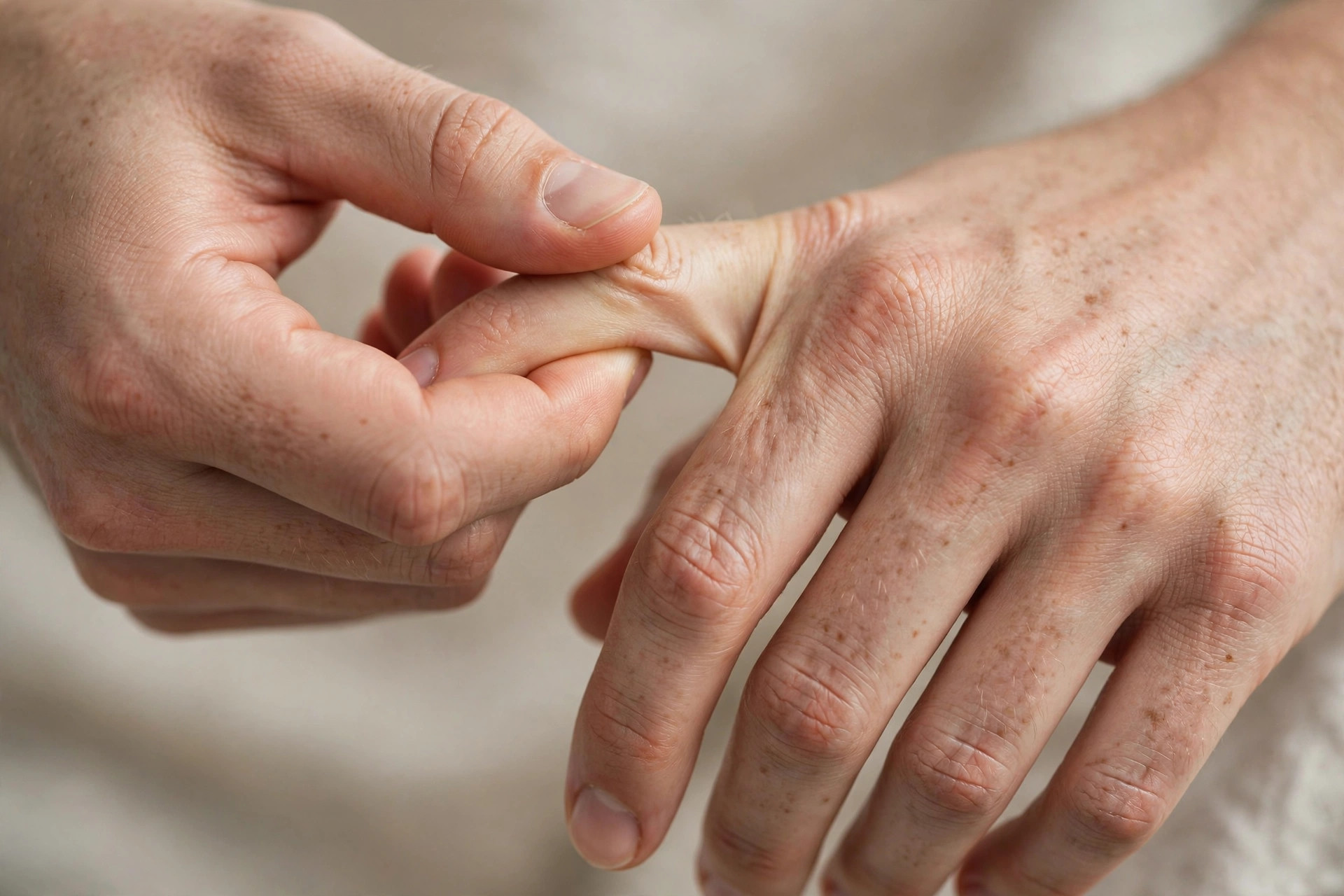
You stand up from the couch and your knee lets out a loud pop. You stretch in the morning and your back cracks like a string of firecrackers. You crack your knuckles and a coworker winces, warning you that you are giving yourself arthritis.
Sound familiar? Noisy joints are a common reason people visit their doctor, and one of the least understood. The good news: most joint sounds are harmless. The trick is knowing which ones to ignore and which deserve a closer look.
What is that sound, exactly?
Doctors call noisy joints crepitus (pronounced KREP-ih-tus): pops, cracks, clicks, snaps, and the finer grinding you might feel under your kneecap when you squat.
Most of the time, the sound comes from one of three sources:
1. Gas bubbles bursting in joint fluid. Your joints are cushioned by synovial fluid, which lubricates the joint and nourishes the cartilage. That fluid contains dissolved gases, mostly nitrogen. When you stretch or bend a joint, pressure inside it drops, and the gases form a tiny bubble that collapses with a pop. Researchers confirmed this mechanism with MRI scans in 2015. It takes about 20 minutes for the gases to dissolve again, which is why you cannot immediately crack the same knuckle twice.
2. Tendons snapping over bone. A tendon connects muscle to bone. As a joint moves, a tendon can snap over a bony bump and spring back, producing a click or snap. This is common in ankles, hips, and shoulders, and it is usually painless.
3. Rough surfaces rubbing together. Healthy cartilage is smooth, like an ice rink. When cartilage wears down, the surfaces get rougher, and movement can produce grinding. This kind of crepitus is more likely to matter, especially with pain.
Does cracking your knuckles cause arthritis?
This question has one of the best answers in medicine. In the 1940s, a doctor named Donald Unger began cracking the knuckles of his left hand — and only his left hand — every day. He kept it up for more than 60 years, cracking them at least twice a day, while leaving his right hand alone as a control. When researchers finally X-rayed both hands, there was no difference in arthritis between them. Unger won an Ig Nobel Prize, and the rest of us got a reassuring answer: habitual knuckle cracking has not been shown to cause arthritis.
That said, aggressive cracking — yanking or twisting a joint hard enough to hurt — is different. It can strain ligaments or, rarely, dislocate a small joint. Gentle cracking is fine. Forcing it is not.
When joint noise is normal
You can usually relax about joint sounds if:
- The sound is painless and the joint moves normally afterward.
- It happens occasionally, such as when you first get up in the morning or after sitting for a long time.
- There is no swelling, redness, or warmth around the joint.
- The joint feels stable, not like it is catching, locking, or giving way.
- The sound has been there for years without getting worse.
When to get it checked
See your primary care doctor — promptly, if any of these apply — when joint noise comes with:
- Pain that lasts more than a few days, or pain that keeps coming back in the same joint.
- Swelling, warmth, or redness around the joint, which can signal inflammation or infection.
- Locking or catching, where the joint gets stuck and you have to wiggle it free.
- A feeling of instability, as if the knee or ankle might give out under you.
- A sudden pop during an injury, followed by swelling within hours. In the knee, this pattern can indicate a torn ligament or meniscus.
- Noise that is new and getting worse, especially in one joint while the others stay quiet.
- Loss of motion, where you can no longer bend or straighten the joint fully.
Seek urgent care the same day if a joint is hot, swollen, and painful with a fever, or if you cannot bear weight on a leg after a pop or twist. A hot, swollen joint can occasionally be infected, which needs fast treatment.
What about arthritis?
Osteoarthritis, the wear-and-tear type that affects more than 32 million American adults according to the Centers for Disease Control and Prevention, is the most common cause of painful, grinding crepitus. It tends to show up in weight-bearing joints — knees, hips, and the lower back — and in the hands. The classic pattern is stiffness worst in the morning or after sitting, easing as you move, and returning after heavy use.
Rheumatoid arthritis, an autoimmune condition, is less common but more aggressive. It usually affects the same joints on both sides of the body, causes morning stiffness lasting over an hour, and often brings fatigue and low-grade fever. If that pattern sounds familiar, do not wait it out — early treatment makes a real difference.
How to keep your joints quieter and healthier
You cannot silence every pop, and you do not need to. But a few habits help joints stay smoother and stronger:
Move every day, but build up gradually
Joints are nourished by movement — synovial fluid circulates when you move. Low-impact exercise such as walking, cycling, swimming, and gentle yoga is ideal. If you are starting a new routine, increase time or intensity by no more than about 10 percent a week. A sudden jump from couch to weekend 10K is a recipe for an angry knee.
Strengthen the muscles around the joint
Strong quadriceps take pressure off the knee, strong glutes stabilize the hip, and a strong core protects the back. Two or three short weekly strength sessions, even with just body weight or resistance bands, pay off more than any supplement.
Watch the load
Every extra pound of body weight adds roughly four pounds of pressure on the knee with each step. Even a modest weight loss, if you carry extra weight, can noticeably ease knee symptoms.
Warm up, and do not chase the crack
Cold, stiff joints are noisier and more injury-prone. Spend five minutes on light movement — marching in place, arm circles, easy squats — before anything intense. And if a joint will not crack, leave it alone: forcing a stiff neck or back to crack risks muscle strain and, rarely, injury to blood vessels in the neck.
The bottom line
Most joint cracking is just physics: gas bubbles popping, tendons snapping over bone, or the normal soundtrack of an aging body. If it does not hurt, swell, lock, or limit what you can do, it is almost certainly nothing to worry about.
But pain changes the equation. A noisy joint that hurts, swells, catches, or feels unstable deserves attention, and the sooner you get it checked, the more options you have. Keep moving, stay strong, and let your knuckles crack in peace.
This article is for general information only and is not medical advice. If you have persistent joint pain, swelling, or instability, talk to your primary care doctor or an orthopedist.
Rao Sajid is the founder and editor of VitalDaily. He covers everyday health topics — nutrition, sleep, fitness and wellness — turning guidance from public-health sources like the CDC, NIH and FDA into plain, practical advice. More about Rao →
📚 Keep reading:

Weather Headaches: Why Storms Make Your Head Ache
A storm rolls in and your head starts pounding before the first raindrop falls. Here is the science behind weather headaches and what actually helps.

Walking Backward: The Workout Your Knees Will Love
Walking backward looks odd, but small studies link it to stronger knees, better balance, and more calories burned. Here is how to try retro walking safely.

Why You Wake Up Stiff Every Morning (and How to Fix It)
Waking up stiff is common after 40, but it is not always just age. Here is what it means, the 30-minute rule doctors use, and simple fixes.