Why You Bruise So Easily — and When It's a Warning Sign
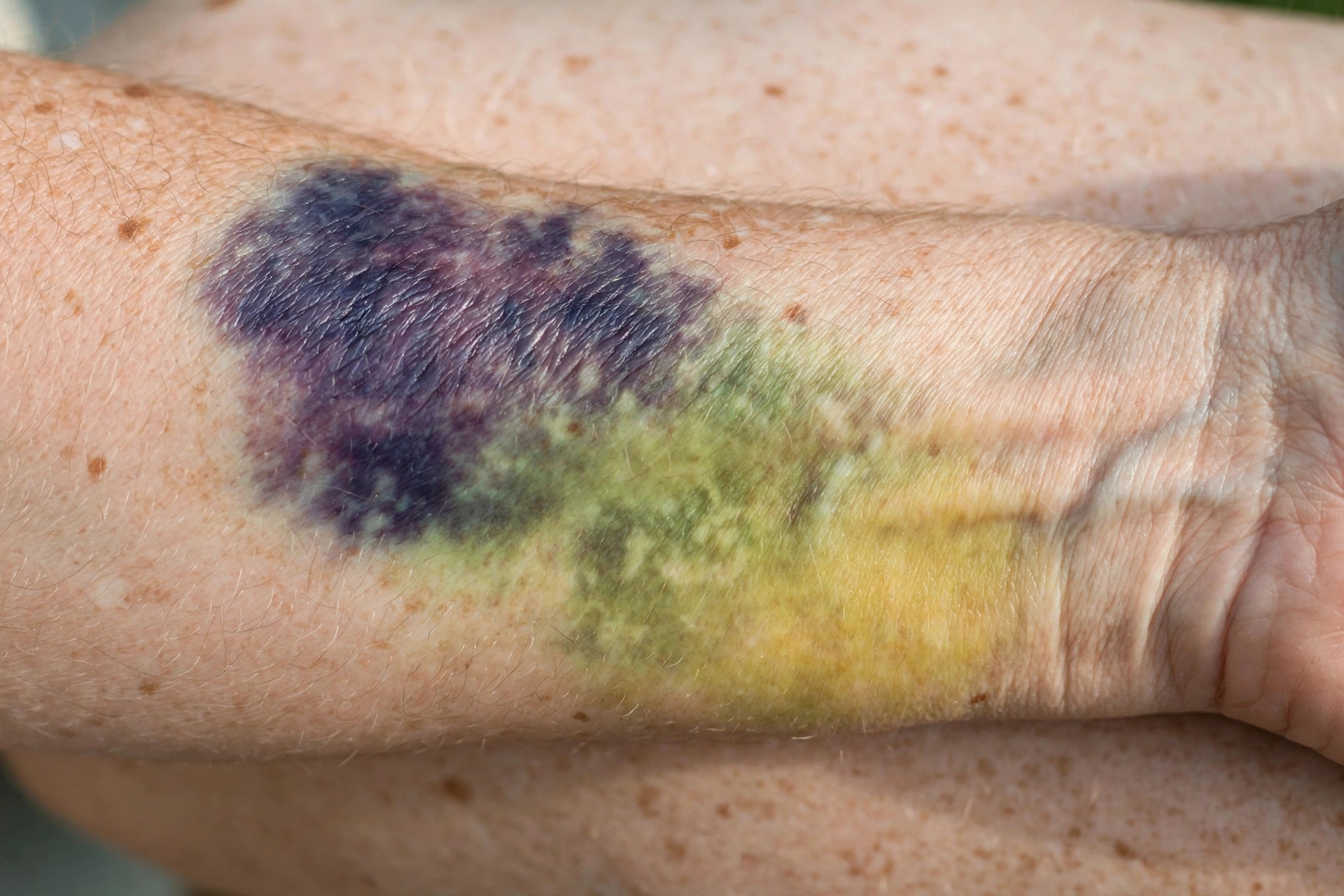
You glance down and spot a purple blotch on your shin — and you have no idea how it got there. If that sounds familiar, you're in good company. Easy bruising is one of the most common skin complaints in American adults, and while it's usually harmless, it can occasionally be the first clue to something your doctor wants to know about.
A bruise is simply blood that has escaped from small broken capillaries and pooled under the skin. What changes from person to person is how easily those tiny vessels break — and how quickly your blood seals the leak.
Why some people bruise more than others
Age is the biggest factor. After about 50, skin thins and produces less collagen, and the fatty layer that cushions blood vessels shrinks. Meanwhile, years of sun exposure weaken vessel walls themselves. The result: a bump that wouldn't have marked you at 30 leaves a spectacular black-and-blue at 60. Dermatologists call the fragile, purple spots that appear on older forearms "actinic purpura" — and they're almost never dangerous, just a sign that the skin's scaffolding has thinned.
Your medicine cabinet matters more than you think. Some of the most widely used drugs in the U.S. make bruising worse:
- Blood thinners and aspirin: Drugs like warfarin, clopidogrel, and even low-dose daily aspirin (still used by millions of older Americans for heart protection) slow clotting, so more blood escapes before the vessel seals.
- NSAIDs: Ibuprofen, naproxen, and other over-the-counter pain relievers thin the blood mildly — take them regularly for arthritis or back pain, and bruises come easier.
- Corticosteroids: Prednisone and prescription-strength steroid creams thin the skin itself with long-term use.
- Some antidepressants and fish oil: SSRIs can slightly impair platelet function; high-dose omega-3 supplements have a mild blood-thinning effect.
Vitamin gaps play a role. Vitamin C is needed to build and maintain collagen in blood vessel walls — severe deficiency (scurvy) caused bleeding gums and bruising in sailors centuries ago, and mild deficiency still shows up today in people who eat almost no fruits or vegetables. Vitamin K helps blood clot properly; too little, and even small leaks linger. The CDC estimates that a meaningful share of American adults fall short on vitamin C and K intake.
Alcohol and liver function. Heavy drinking can suppress platelet production and, over time, damage the liver — the organ that makes most clotting factors. People with long-term heavy alcohol use often bruise dramatically from minor contact.
Genetics. Some families just have stretchier, more fragile capillaries. If your mother bruised easily and so do you, and you've never had a bleeding problem, that's often the whole story.
When bruising is a warning sign
Most easy bruising is benign. But call your doctor promptly if you notice any of these red flags:
- Bruises you can't explain, appearing on your torso, back, or face — places you don't usually bump
- Bruises larger than a quarter from minor contact, or five or more new unexplained bruises at once
- Bruises that don't fade within two to three weeks — a normal bruise cycles through blue-purple to green to yellow and disappears
- Other bleeding symptoms: frequent nosebleeds, bleeding gums, blood in urine or stool, or unusually heavy menstrual periods
- A sudden change — you never bruised before and now you do, especially after starting a new medication
- Family history of a bleeding disorder like hemophilia or von Willebrand disease, the most common inherited bleeding disorder in the U.S.
Rarely, unexplained bruising with fatigue, frequent infections, or swollen lymph nodes can point to blood disorders including leukemia or immune thrombocytopenia (ITP), where the immune system destroys platelets. These are uncommon, but they're exactly why doctors take new-onset easy bruising seriously — a simple complete blood count (CBC) and platelet check is usually the first step, and it rules out most of the scary possibilities in one draw.
One special note: bruises in unusual patterns — on the neck, ears, or inner thighs, or in children too young to be mobile — can indicate abuse. Pediatricians are trained to ask about these, and so are ER doctors. It's an uncomfortable topic, but it's one of the reasons physicians document bruise patterns carefully.
How to heal bruises faster
You can't un-break the capillaries, but you can shrink the damage:
- Ice early. Apply a cold pack (wrapped in a cloth) for 10–15 minutes within the first day. Cold constricts vessels and limits how much blood leaks.
- Elevate and compress. Raising the injured area above heart level for a while reduces pooling.
- Warmth later. After 48 hours, a warm compress boosts circulation and helps the body reabsorb trapped blood faster.
- Arnica and vitamin K creams. Topical arnica has modest evidence for speeding bruise resolution; vitamin K creams may help with the purple stage.
- Bromelain and vitamin C foods. Pineapple-derived bromelain is sometimes used to reduce bruise swelling, and vitamin C-rich foods (bell peppers, citrus, kiwi, broccoli) support the vessel repair you're doing right now.
Avoid taking aspirin or ibuprofen for the pain of the bruise itself — they can make the bleeding underneath worse. Acetaminophen is the better choice.
Simple ways to bruise less
If you're a frequent bruise collector, a few habits make a real difference. Review your medications with your doctor or pharmacist — sometimes a lower dose or a different pain reliever solves the problem. Eat the rainbow: the NIH recommends adults get 75–90 mg of vitamin C daily (one orange covers it) plus leafy greens for vitamin K. Protect your skin from the sun with sleeves and sunscreen, since UV damage is cumulative and irreversible. And if you take blood thinners — which millions of Americans do for atrial fibrillation, stents, or clots — accept that some bruising is the price of protection, and mention any sudden increase to your prescribing doctor.
The bottom line: for most of us, easy bruising is just thinner skin, common medications, or a diet light on produce. But bruises are your blood's way of talking to you — and when they show up without explanation, multiply, or come with other bleeding, a quick blood test can tell you everything. Don't ignore the message.
📚 Keep reading:

Why You're Constipated — and 9 Fixes That Actually Work
About 16 in 100 American adults deal with constipation, a third of those over 60. Gastroenterologists explain what's slowing things down — and the fixes that work.

That Q-Tip in Your Ear Is Doing More Harm Than Good
About 34 kids a day land in the ER from cotton-swab ear injuries. Ear doctors say the ear canal cleans itself — here's the safe way to deal with earwax.
Appendicitis: 7 Warning Signs Your Belly Pain Is Serious
Lower-right belly pain, fever, nausea, no appetite? Appendicitis moves fast — and a burst appendix can turn deadly. Here's how ER doctors tell it apart from gas or a stomach bug.