Cataracts: Why Your Vision Gets Cloudy After 60
It usually starts quietly. Street signs look less sharp. Headlights at night flare and scatter. White walls look faintly yellow, and reading fine print takes brighter light than it used to.
Many Americans chalk it up to "just getting older" and buy stronger reading glasses. But for millions over 60, the culprit is a cataract: a gradual clouding of the eye's natural lens. It is the leading cause of vision loss in the United States, and one of the most treatable. According to the National Eye Institute, about 24 million Americans age 40 and older have cataracts, and by age 80, more than half either have one or have had cataract surgery.
What a cataract actually is
Inside each eye, just behind the colored iris, sits a clear lens about the size of a small pea. It focuses light onto the retina, much like a camera lens focuses light onto film. That lens is mostly water and protein. When we are young, the proteins stay neatly arranged and the lens stays clear. With age, they clump together, scattering light, and the lens gradually turns cloudy, yellow, or brown.
Think of it like looking through a foggy windshield. At first the haze is barely noticeable, then it thickens, and driving, reading, and recognizing faces get harder. Cataracts usually affect both eyes, though one often gets worse first. They are not a growth, and they cannot spread or be caught from someone else.
Why cataracts happen
Aging is by far the most common cause. Most cataracts begin forming after age 40, though symptoms often appear only in the 60s or 70s. These factors speed the process up:
- Ultraviolet light. Years of sun exposure without sunglasses is linked to earlier cataracts.
- Smoking. Smokers develop cataracts earlier and more often, and risk rises with years smoked.
- Diabetes. High blood sugar can change the lens and bring cataracts on sooner. With more than 38 million Americans living with diabetes, per the Centers for Disease Control and Prevention, this is a major driver.
- Eye injury and certain medications. A blow to the eye, even from years ago, can damage the lens, as can long-term corticosteroid drugs such as prednisone.
- Family history and heavy alcohol use. Both raise risk, though age remains dominant.
Early signs most people miss
Cataracts rarely cause pain or redness, so they are easy to overlook. Watch for:
- Cloudy or blurry vision that does not fully clear with new glasses
- Glare and halos around headlights, streetlights, or lamps at night
- Trouble driving after dark, even on familiar roads
- Colors looking faded or yellowed, especially whites and blues
- Needing brighter light to read, cook, or do close work
- Double vision in one eye, or frequent changes in your glasses prescription
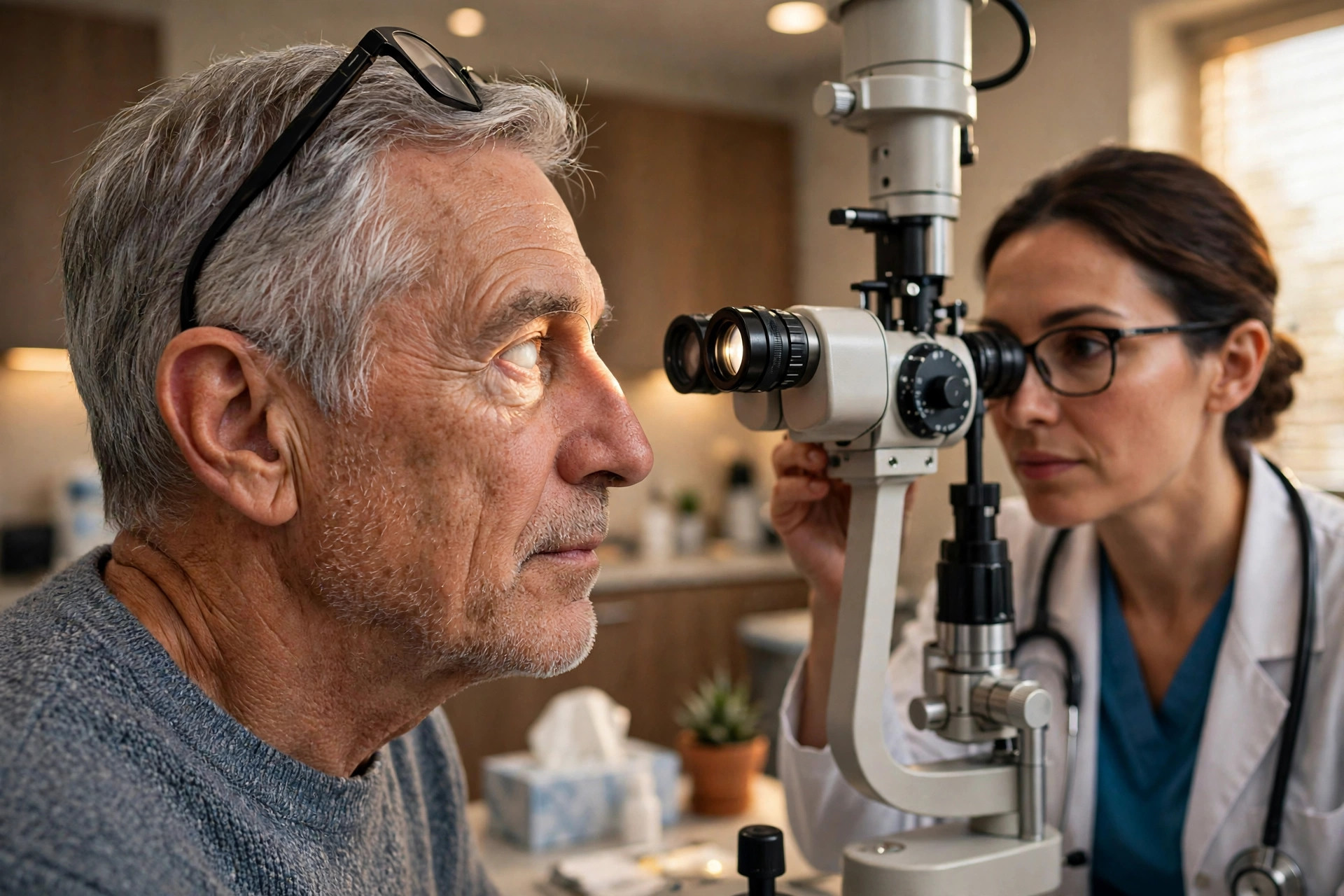
If several sound familiar, book a comprehensive dilated eye exam, not just a quick screening at the DMV or a glasses shop. Drops widen your pupils so the doctor can examine the lens and retina directly. The American Academy of Ophthalmology recommends a baseline exam at 40 and regular exams after 60, more often with diabetes or a family history of eye disease.
Cataracts are not the only cause of vision loss
Blurry vision after 60 has several causes, and treatments differ completely. Glaucoma damages the optic nerve, often without early symptoms. Macular degeneration affects central vision, making straight lines look wavy. A dilated exam can usually tell these apart quickly, and that matters: cataract surgery will not fix glaucoma or macular degeneration, and delaying their treatment can cost vision that cannot be regained.
Can you slow a cataract down?
No eye drop, vitamin, or supplement has been proven to dissolve or reverse a cataract, despite what supplement ads claim.
What can help is slowing the factors that accelerate clouding. Wear sunglasses blocking 100 percent of UVA and UVB rays, plus a wide-brimmed hat, even on cloudy days. Do not smoke; risk begins to fall within a few years of quitting. Keep blood sugar and blood pressure in range, eat plenty of fruits and vegetables, review steroid medications with your doctor (never stop one on your own), and wear safety glasses for yard work. Early on, stronger lighting and anti-glare glasses help, but these are workarounds, not cures.
When surgery makes sense
Cataract surgery is the only effective treatment, and the most commonly performed surgery in the United States, with millions of operations each year. The decision is based on how much the cataract interferes with your life: driving safely, reading, working, or living independently. There is no advantage to waiting until a cataract is "ripe," an outdated idea; very advanced cataracts can actually be harder to remove.
The procedure is outpatient surgery, 15 to 30 minutes per eye, done one eye at a time. You are awake, with numbing drops and light sedation; most people feel pressure, not pain. The surgeon makes a tiny incision, breaks up the cloudy lens with ultrasound, and replaces it with a clear artificial lens called an intraocular lens, or IOL. No stitches are typically needed, and you go home the same day, though you will need a driver.
Most people notice clearer vision within days, often good enough to drive and read with mild glasses for close work. Serious complications such as infection or retinal detachment are uncommon. Months or years later, the membrane holding the new lens can turn cloudy; a painless office laser fixes that in minutes.
What surgery costs, and what Medicare covers
Cost varies by surgeon, facility, and lens choice. In general, Medicare Part B covers cataract surgery when medically necessary, including the standard lens and surgeon and facility fees, after your deductible and coinsurance. Private plans typically follow similar rules.
What is usually not covered is the extra cost of premium lenses that correct astigmatism or reduce dependence on reading glasses. Those upgrades can add thousands of dollars out of pocket per eye, and they are optional: a standard lens restores clear vision for most patients, and glasses can handle the rest. Before agreeing, ask for the total out-of-pocket cost in writing.
Recovery: what to expect
Rest the day of surgery, use the prescribed drops as directed, and avoid rubbing the eye. Most surgeons advise no heavy lifting, swimming, or eye makeup for one to two weeks, and sunglasses outdoors while it heals. Blurry vision for a day is normal. Call your surgeon promptly for severe pain, sudden vision loss, many new floaters or flashes, or a dark curtain across your vision, which can signal a retinal problem needing urgent care.
The bottom line
Cataracts are common, slow, and painless, so they are easy to ignore until night driving feels unsafe. Get a dilated eye exam if you are over 60, or sooner if night glare or blurry vision are creeping in. Wear real UV protection, do not smoke, and keep diabetes under control. If a cataract is limiting your life, a 30-minute outpatient procedure restores vision for the overwhelming majority of patients. Do not wait for it to get worse before asking an eye doctor to take a look.
Rao Sajid is the founder and editor of VitalDaily. He covers everyday health topics — nutrition, sleep, fitness and wellness — turning guidance from public-health sources like the CDC, NIH and FDA into plain, practical advice. More about Rao →
📚 Keep reading:

TMJ Disorder: Why Your Jaw Clicks and Hurts
Jaw clicking, popping, or aching when you chew? TMJ disorders affect millions of Americans. Here is what causes them and the treatments that actually work.
Swollen Lymph Nodes: When to Worry (and When Not To)
Found a lump under your jaw? Most swollen lymph nodes are just your immune system at work. Here is how to tell a harmless gland from one that needs a doctor.

Tennis Elbow: Why Your Elbow Aches and How to Fix It
Tennis elbow strikes far more desk workers than tennis players. Here is why the outside of your elbow aches, what actually heals it, and when to see a doctor.