Why Are My Feet Always Cold? 7 Causes and Fixes
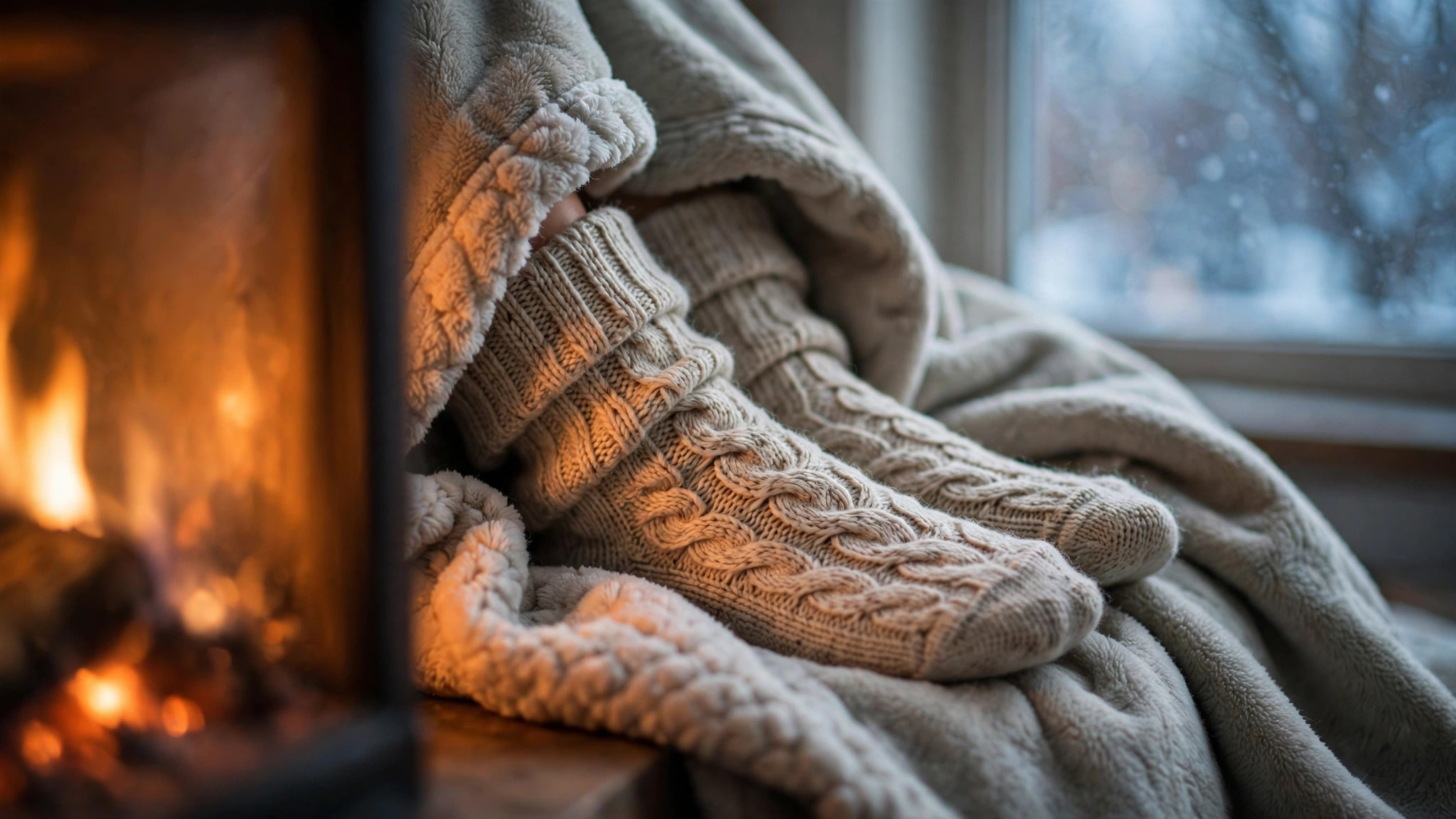
You have been under the blanket for twenty minutes, and your feet are still blocks of ice. Sound familiar? Most Americans shrug off chronically cold feet as a fact of life — especially as fall settles in and thermostats click on. But feet that stay cold, even when the rest of you is warm, are one of your body's quiet warning signals.
Your feet are the farthest outpost of your circulatory system. When blood flow falters, your extremities are the first to feel it. Most of the time, cold feet are harmless. Sometimes, though, they are an early sign of a condition worth catching — from anemia to thyroid trouble to narrowed arteries. Here is how to tell the difference, and what actually warms things up.
1. Poor circulation — the usual suspect
When blood does not reach your feet efficiently, they cool down fast. The biggest culprits are sitting too long and smoking — muscles that do not move do not pump blood, and gravity pools blood in the lower legs instead of cycling it.
Nicotine is worse. It constricts blood vessels within minutes of a cigarette, and chronic smoking damages the vessel walls themselves, narrowing the highways blood travels through. The fix is straightforward: get up and move for a few minutes every hour, and if you smoke, talk to your doctor about quitting resources — the CDC notes circulation begins improving within weeks of quitting.
2. Raynaud's phenomenon — when cold triggers a blood vessel spasm
If your toes turn white or blue in air conditioning or when you grab something cold from the freezer, you may have Raynaud's. In this condition, small blood vessels in the fingers and toes overreact to cold or stress, spasming shut and cutting off blood flow temporarily. Fingers and toes go numb, turn pale or bluish, then throb and flush red as blood returns.
Primary Raynaud's is uncomfortable but harmless; the secondary kind, which appears later in life, can be linked to autoimmune conditions — worth mentioning to your doctor.
3. Anemia — not enough oxygen delivery
Anemia means your blood carries less oxygen than it should, usually because of low iron or vitamin B12. Cold hands and feet are a classic symptom, often paired with fatigue, pale skin, dizziness, and restless legs. The CDC estimates roughly 3 million Americans have anemia, and iron deficiency is one of its most common drivers.
If your feet are cold and you are exhausted despite sleeping well, ask your doctor for a blood test. Iron-rich foods — red meat, lentils, spinach, fortified cereals — help mild cases, but many people need supplements to rebuild their levels.
4. Hypothyroidism — when your thermostat runs slow
Your thyroid gland sets your body's metabolic pace, including how it regulates temperature. An underactive thyroid (hypothyroidism) slows everything down: you feel cold all over, gain weight, feel tired, and — very often — your feet feel perpetually icy. It affects an estimated 4.6% of Americans age 12 and older, and women are far more likely to develop it.
If cold feet come with unexplained fatigue, hair thinning, dry skin, and weight that creeps up despite no diet changes, a simple TSH blood test can confirm whether your thyroid is the problem. Treatment is a daily pill — effective and inexpensive.
5. Peripheral artery disease — the one you should not ignore
This is the serious one. Peripheral artery disease (PAD) happens when plaque builds up in the arteries of the legs and feet, narrowing them and choking off blood flow. The CDC estimates that about 6.5 million Americans age 40 and older have PAD — and most do not know it.
Cold feet are one of its early signals, often alongside leg pain or cramping when walking (which eases with rest), slow-healing sores on the feet, and shiny or pale skin on the legs. PAD is a marker of atherosclerosis — the same disease that causes heart attacks and strokes — so catching it early matters far beyond comfort. Risk factors include smoking, diabetes, high blood pressure, high cholesterol, and age over 50.
6. Diabetes — circulation plus nerve damage
High blood sugar damages blood vessels over time, reducing circulation to the feet. It also damages nerves (diabetic neuropathy), which can distort temperature sensation — your feet may feel cold even when they are not, or feel cold alongside tingling and numbness. More than 38 million Americans have diabetes, and an estimated 1 in 5 do not know it, according to the CDC.
Foot care is a major part of diabetes management precisely because reduced circulation and reduced sensation are a dangerous combination — injuries can go unnoticed. If cold feet come with numbness, burning, or tingling, get your blood sugar checked.
7. Low body fat, dehydration, and B12 deficiency
Some causes are simpler. People with very low body fat — or who have lost a lot of weight quickly — have less insulation around their extremities. Dehydration thickens blood slightly and makes it harder to circulate, and most Americans do not drink enough water. Vitamin B12 deficiency, common in older adults and people on plant-based diets, causes cold hands and feet along with tingling, brain fog, and fatigue.
When cold feet deserve a doctor's visit
See your doctor if your cold feet are:
- New and persistent — happening most days for weeks
- One-sided — only one foot is cold, which suggests a localized blood flow problem
- Changing color — toes turning white, blue, or red
- Paired with other symptoms — fatigue, numbness, sores that will not heal, leg pain when walking, unexplained weight change
- Appearing with chest symptoms — in rare cases, circulation problems signal heart disease
8 things that actually warm your feet up
Move. A brisk 10 to 20-minute walk is the single best foot-warmer — muscle contractions pump blood downward. Calf raises at your desk and ankle circles while sitting help too.
Warm from the core, not just the feet. Thick socks cannot fix cold feet if your core is cold. Dress in layers, keep your midsection warm, and your body will send more blood to your extremities.
Try warm — not hot — foot soaks. Soaking feet in warm water (around 100 to 104°F) for 10 to 15 minutes dilates blood vessels and delivers lasting warmth. Dry thoroughly afterward.
Skip the nicotine. Every cigarette constricts blood vessels. If your feet are cold and you smoke, this is the single highest-impact change you can make.
Wear wool, not cotton. Cotton traps moisture and stays cold; wool wicks sweat and insulates even when damp.
Stay hydrated. Even mild dehydration makes circulation sluggish, and most Americans do not drink enough water.
Exercise most days. Regular cardio — walking, cycling, swimming — is the long-term fix for circulation. The American Heart Association recommends at least 150 minutes of moderate activity per week.
Check your blood pressure and cholesterol. Keep up with routine screenings. Narrowed arteries announce themselves quietly, and cold feet can be one of the first whispers.
The bottom line
Cold feet are normal after a walk in October rain. Cold feet that never warm up, come with other symptoms, or change color deserve your attention — and possibly a doctor's appointment. Your feet are the canary in the coal mine of your circulatory system. Listen to them.
📚 Keep reading:

Holiday Weight Gain: The Real Numbers (Not 10 Lbs)
You probably won't gain 10 pounds this holiday season — but the 1 pound you do gain tends to stick around for years. Here is what the research really says, and 9 practical ways to beat it.

Forever Chemicals in Tap Water: What the EPA Found
PFAS 'forever chemicals' are in the tap water of millions of Americans. Here is what the science says about health risks — and the practical steps to protect your family.

Fall Allergies: Why Ragweed Season Is Worse Than Ever
Ragweed season now stretches weeks longer than it used to. Here's why fall allergies keep getting worse — and the doctor-backed plan to finally get through it.