Frozen Shoulder: Why It Locks Up and How to Thaw It

It starts small. A dull ache in the shoulder when you reach for the top shelf. Then the ache spreads, and one morning you can't lift your arm high enough to wash your hair. Within weeks, your shoulder feels like it's encased in concrete — and doctors call it frozen shoulder, one of the most frustrating joint conditions in America.
Frozen shoulder (medically known as adhesive capsulitis) strikes roughly 200,000 Americans each year and affects an estimated 2 to 5 percent of the general population. It overwhelmingly targets adults between 40 and 60, and women make up 60 to 70 percent of cases. Worst of all, it can linger for 1 to 4 years — and about 40 percent of people still report symptoms four years after onset.
Here's what's actually happening inside that locked joint, and how to get it moving again.
What frozen shoulder really is
Your shoulder is the most mobile joint in your body, wrapped in a flexible capsule of connective tissue. In frozen shoulder, that capsule thickens, tightens, and becomes inflamed — like a sleeve shrinking around the joint. Sticky bands of scar-like tissue (adhesions) form, the space inside the capsule shrinks, and the shoulder's range of motion collapses.
There are two broad types:
- Primary (idiopathic) — develops gradually with no clear trigger. This is the most common type.
- Secondary — follows a trigger such as a shoulder injury, surgery, or a period of immobilization (in a sling, or during a long recovery from illness). If you don't move the joint after an injury, the risk climbs.
The hallmark signs: aching pain that worsens at night, trouble sleeping on the affected side, progressive stiffness, difficulty lifting the arm overhead or reaching behind the back, and real trouble with daily tasks like dressing, grooming, or driving.
The three stages: freezing, frozen, thawing
Frozen shoulder runs a predictable course, though the timeline varies widely from person to person:
1. Freezing (painful stage) — 2 to 9 months. Pain builds steadily and the shoulder moves less and less. Daily activities get harder. Night pain is the rule, not the exception.
2. Frozen (stiff stage) — 4 to 12 months. Pain may actually ease up a bit, but stiffness now dominates. The joint is at its most locked — raising your arm past a certain point is simply impossible.
3. Thawing (recovery stage) — 5 to 24 months. Movement gradually returns, sometimes fully, sometimes not completely.
This phased course is why patience is part of the treatment. The condition is generally self-limiting, but "self-limiting" can still mean years — which is why treatment focuses on speeding the thaw and keeping the shoulder usable in the meantime.
Who's most at risk
Frozen shoulder can hit anyone, but the risk clusters tightly:
- Age and sex: Adults 40 to 60, disproportionately women. The average age of onset is about 56.
- Diabetes: The single strongest risk factor. 10 to 20 percent of people with diabetes develop frozen shoulder — rates roughly three times higher than the general population — and both type 1 and type 2 count. A 2026 Keele University analysis pooling eight studies found diabetes nearly quadruples the risk. Diabetic cases also tend to be stiffer, more painful, slower to improve, and harder to treat. Researchers now recommend diabetes screening for anyone diagnosed with frozen shoulder.
- Thyroid disorders: Two to three times more common in people with underactive or overactive thyroid.
- Other conditions: Stroke, heart disease, Parkinson's disease, high cholesterol, obesity, and prior shoulder surgery all raise the odds.
- Immobilization: Any period where the arm doesn't move — a fracture recovery, surgery, a long hospital stay — is an invitation for the capsule to tighten.
Notably, it tends to strike active, working people — teachers, doctors, laborers — not the sedentary. And once you've had it, the opposite shoulder can develop it within five years.
What actually fixes it
The good news: the vast majority of cases resolve with nonoperative treatment. The plan depends on which stage you're in.
During the freezing (painful) stage, the priority is pain control so you can keep moving:
- Anti-inflammatory medications (NSAIDs) and icing to calm pain
- A corticosteroid injection into the joint — often the single most effective tool in this phase. It can significantly reduce pain and improve range of motion, especially when combined with exercise
- Gentle range-of-motion work, not aggressive stretching (forcing a painful, inflamed shoulder can backfire)
During the frozen stage, stiffness is the enemy:
- Physical therapy is the backbone of treatment — supervised stretching and mobility work to gradually restore the capsule's flexibility, like slowly stretching out a too-tight pair of pants
- A structured home program matters as much as clinic visits: pendulum swings, wall crawls, cross-body stretches, and towel stretches, done daily
- Some doctors use hydrodilatation (expanding the joint with saline, often with steroid) to loosen the capsule
During the thawing stage, progressive strengthening reintroduces normal use as motion returns.
When conservative treatment stalls — roughly the minority of cases — options include manipulation under anesthesia (the doctor gently moves the arm through its range while you're sedated to break up adhesions) and arthroscopic capsular release (surgically cutting the tightened portions of the capsule). Both have strong evidence behind them for stubborn cases, though recovery takes weeks of rehab.
What you can do at home right now
Whether you're waiting on a specialist appointment or working through rehab, these basics help:
- Don't stop moving. Complete immobilization is the fastest way to make it worse. Gentle daily motion keeps the joint fed with blood flow and slows the stiffening.
- Heat before, ice after. Warmth loosens tissue before stretching; ice calms it afterward.
- Do the pendulum swing. Lean forward, let the sore arm hang, and gently swing it in small circles. It's the one exercise nearly every shoulder specialist prescribes from day one.
- Control your blood sugar. If you have diabetes, tight glucose management isn't just about your eyes and kidneys — it directly affects how frozen shoulder progresses and responds to treatment.
- Sleep smart. The worst pain often hits at night. Try sleeping on the unaffected side with a pillow tucked under the sore arm, or propped slightly upright.
- See a doctor early, not late. Many people mistake the early phase for a simple strain and delay care for months. Early diagnosis means earlier steroid injections and PT — and a measurably faster thaw.
When to get checked urgently
Frozen shoulder itself is rarely dangerous, but its lookalikes are. See a doctor promptly if shoulder pain follows trauma, if you notice sudden swelling or bruising, if the arm is numb or discolored, or if pain is accompanied by chest pressure — shoulder pain can occasionally signal cardiac trouble. And don't self-diagnose a locked shoulder as frozen without an exam: rotator cuff tears and arthritis need very different treatment, and imaging can tell them apart.
Frozen shoulder is one of those conditions where knowing the enemy changes everything. It's slow, it's stubborn, and it picks a fight with one of the busiest joints in your body — but it almost always ends. Get moving early, get treated early, and give it time to thaw.
📚 Keep reading:
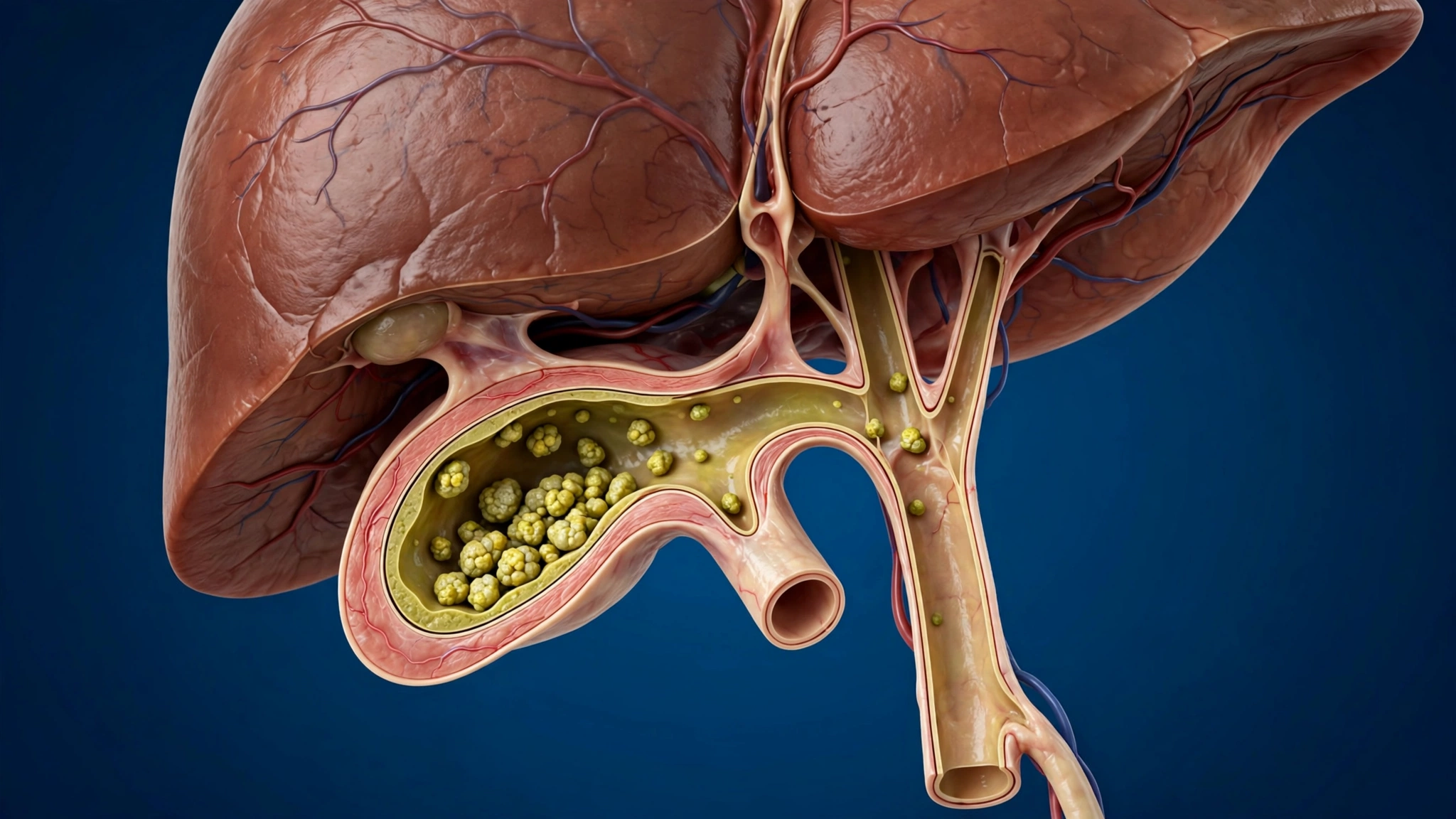
Gallstones: The Belly Pain Millions of Americans Ignore
Upper-belly pain after a greasy meal, nausea, aching shoulder — gallstones send over a million Americans to surgery every year. Here are the signs, the risk factors, and what actually prevents them.

Numb or Tingling Feet? Signs of Peripheral Neuropathy
Tingling feet, burning pain at night, losing your balance — millions of Americans brush off these signs of peripheral neuropathy. Here is what it is, why it happens, and what helps.

Walking Pneumonia: The 'Mild' Infection Hitting U.S. Kids
It feels like a stubborn cold but it is in your lungs. Walking pneumonia is surging again among American kids — here is how to spot it, treat it, and stop it.