Walking Pneumonia: The 'Mild' Infection Hitting U.S. Kids
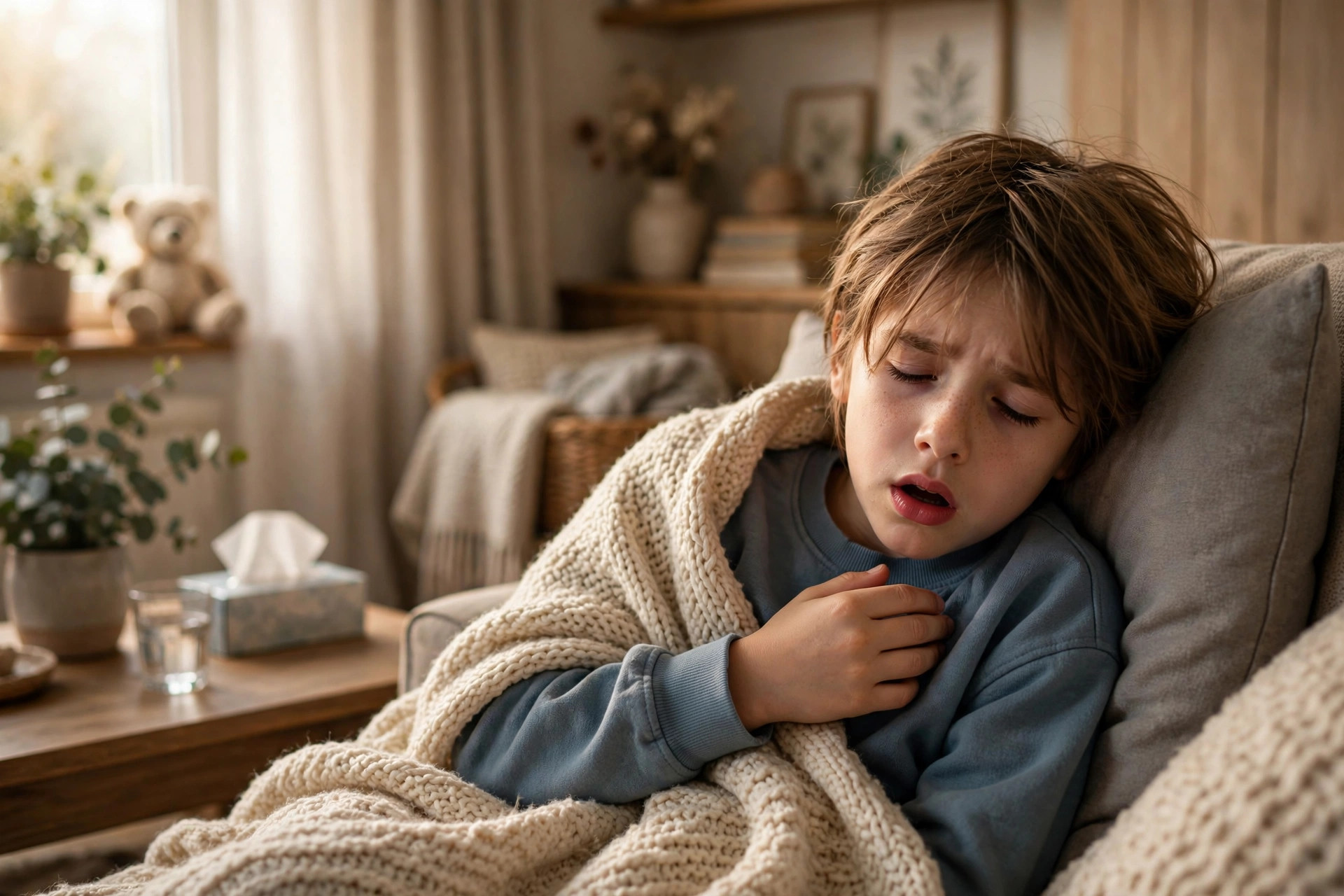
Your child catches what seems like an ordinary cold. The sniffles fade, the fever never really spikes — but three weeks later, that dry cough is still there. Hacking through the night. Ruining sleep. Wearing everyone out.
That stubborn cough is the calling card of walking pneumonia, a lung infection milder than classic pneumonia but far harder to shake. After nearly vanishing during the pandemic years, it roared back: the CDC reported that in 2024, emergency-room visits for this infection rose roughly sevenfold among children ages 2 to 4 and doubled among kids 5 to 17. Activity has eased since the 2024 peak, but the CDC says levels remain elevated in parts of the United States — and this is exactly the season it spreads.
What walking pneumonia actually is
Walking pneumonia is an informal name for pneumonia caused most often by a bacterium called Mycoplasma pneumoniae — so small it lacks a cell wall, which is exactly why the usual antibiotics (amoxicillin, penicillin) do not kill it.
It earned its name because patients often look surprisingly fine. Unlike classic bacterial pneumonia, which can flatten you with a 103°F fever and gasping breaths, many people with walking pneumonia feel well enough for school, work, and soccer practice — "walking" around with infected lungs. Doctors call it atypical pneumonia because it does not follow the typical script.
The CDC estimates roughly 2 million Americans get sick with it each year. It travels like a cold — through coughs, sneezes, and close contact — and sweeps through classrooms, daycares, dorms, and offices. The pandemic years broke its usual three-to-seven-year cycle: masking and distancing nearly wiped it out from 2020 through 2023, leaving a large pool of children who had never encountered it. When it returned, it hit younger children than usual — a shift that surprised even the CDC.
The symptoms: a cold that refuses to leave
Walking pneumonia creeps in gradually, which is why families mistake it for a cold that will not quit. Watch for:
- A dry, nagging cough — the hallmark. A hacking, persistent cough that lingers four to six weeks, sometimes longer, after everything else improves.
- Sore throat, headache, and fatigue creeping in over days, not hours.
- Low-grade fever and chills — usually mild, sometimes absent entirely.
- Runny or stuffy nose early on.
- Chest discomfort and shortness of breath with exertion — the tell. A cold stays in your nose and throat. If the illness has moved into the chest, it is no longer "just a cold."
Symptoms typically appear one to four weeks after exposure — a long incubation that makes it hard to trace where it came from. People are contagious for up to two to four weeks, and can spread the bacteria before they feel sick and for a day or two after starting antibiotics.
In some children, the infection shows up differently: ear pain, wheezing, rashes, or stomach upset. Most cases stay mild. But in older adults and people with asthma, COPD, or weakened immune systems, it can escalate into full pneumonia — sometimes requiring hospitalization.
Why the usual antibiotics fail
This is the detail that matters most. Because Mycoplasma pneumoniae has no cell wall, beta-lactam antibiotics — amoxicillin, penicillin, cephalosporins — simply do not work. The CDC has warned doctors that the first-line drugs they reach for in kids will fail here.
Instead, doctors prescribe macrolide antibiotics, most commonly azithromycin, usually a five-day course. Most patients start feeling noticeably better within two to three days of starting the right drug. But the cough has its own schedule: even with successful treatment, plan on four to six weeks before you feel truly back to baseline. A small number of people cough for two to three months — a post-infectious cough from airways that are healing but still twitchy.
A note of caution: macrolide-resistant Mycoplasma is documented in Asia, and resistance can grow wherever these drugs are overused — one more reason a correct diagnosis matters before taking antibiotics.
How it is diagnosed
Your doctor will usually start with a physical exam and a chest X-ray, which can show the hazy pattern typical of Mycoplasma infection — even when you look fine on the outside. Mild cases do not always show up on imaging, so doctors often diagnose from the symptom pattern: a weeks-long dry cough that outlasts everything else. Testing for flu and COVID first helps rule out other causes.
Treating it and recovering at home
If you or your child is diagnosed, the plan has two halves: the antibiotic and supportive care.
- Rest beats every remedy. Fatigue after Mycoplasma outlasts the fever — do not push through, especially with exercise.
- Stay hydrated, use a cool-mist humidifier or steamy shower for the nighttime cough, and try honey for coughing (children over 1 year only — never for infants under 12 months).
- Fever reducers like acetaminophen or ibuprofen, used per package directions, handle aches and low fevers.
- Skip the cough syrups — not recommended for young children, and evidence they help adults is weak.
- Do not smoke or vape during recovery. It slows airway healing and drags the cough out longer.
You can return to school or work once the fever has been gone for 24 hours without fever-reducing medicine and the person feels up to it — the lingering cough alone does not need to keep anyone home, though covering coughs and hand-washing protects everyone else.
When to call the doctor — fast
Walking pneumonia is usually mild, but it is not always harmless. Seek care promptly if:
- Symptoms worsen instead of improving after 3 to 5 days
- There is shortness of breath, wheezing, or chest pain
- Fever is high or will not break
- A child is breathing rapidly, struggling to breathe, or unusually drowsy
The biggest risk, doctors say, is not the infection itself — it is not knowing when to get help. If a "cold" has a cough that is still going strong after three weeks, stop assuming it is a cold.
Stopping the spread
There is no vaccine for Mycoplasma pneumoniae, so prevention is old-school but effective:
- Wash hands frequently with soap and water, especially after school, daycare, or the office.
- Cover coughs and sneezes with a tissue or your elbow — every time.
- Avoid close contact with people who are actively sick when possible.
- Keep the immune system strong: adequate sleep, regular exercise, and a diet rich in fruits and vegetables — the boring basics that actually work.
- People with chronic lung disease should be extra cautious during respiratory season and keep rescue inhalers current.
The bottom line
Walking pneumonia is the infection that fools everyone — mild enough to walk around with, stubborn enough to cough for a month, and common enough that roughly 2 million Americans meet it every year. The good news: it responds well to the right antibiotic, most people recover fully, and complications are rare.
The trick is recognizing it. If a cold's cough is still hanging around weeks after everything else cleared up, do not wait it out — get it checked. The right diagnosis is the difference between a cough that lingers for months and one that finally lets you sleep.
📚 Keep reading:
Numb or Tingling Feet? Signs of Peripheral Neuropathy
Tingling feet, burning pain at night, losing your balance — millions of Americans brush off these signs of peripheral neuropathy. Here is what it is, why it happens, and what helps.
Why Your Legs Cramp at Night (And How to Stop Them)
That searing calf cramp that jolts you awake at 2 AM is called a nocturnal leg cramp. Here is what causes them, why they strike at night, and the stretches that stop them fast.

Migraine vs. Headache: How to Tell the Difference
Throbbing pain, light sensitivity, nausea — or just a tight band around your skull? Here is how neurologists tell migraines apart from ordinary headaches, and what actually helps.