Migraine vs. Headache: How to Tell the Difference

If you have ever sat in a dark, silent room with one hand pressed to your temple, waiting for the pounding to stop, you already know: a migraine is not just a bad headache. It is a full-body event — nausea, dizziness, sound and light becoming unbearable — that can steal an entire day.
And yet most Americans misidentify what is happening in their own head. The American Migraine Foundation estimates that more than 39 million people in the United States live with migraine, but studies suggest nearly half of people who experience migraine attacks are never properly diagnosed. One reason: the symptoms get blamed on stress, "sinus trouble," or a regular tension headache — and treated with an aspirin instead of the right therapy.
Here is how neurologists actually tell the difference, and what to do once you know which one you are dealing with.
Migraine is a neurological event, not just head pain
A tension headache — the most common type — is essentially muscle and stress physiology. It feels like a tight band squeezing both sides of the head, usually mild to moderate, and rarely comes with anything beyond the ache itself. You can typically keep working, talking, and moving through it.
Migraine is different biology. It is a cascade in the brain's pain-processing networks, involving blood vessel signaling and a protein called CGRP. That is why migraine almost always brings companions a tension headache never has:
- Pulsating or throbbing pain, often on one side of the head
- Nausea or vomiting
- Sensitivity to light (photophobia) and sound (phonophobia) — sometimes to smells too
- Pain that gets worse with normal physical activity — climbing stairs, bending over
Neurologists use a formal checklist called the ICHD-3 criteria: an attack lasting 4 to 72 hours, moderate-to-severe pulsating pain, aggravation by routine activity, and nausea or light/sound sensitivity. Checking enough of those boxes points to migraine, not a tension headache.
The four phases most people never notice
Migraine does not start when the pain starts. Research describes up to four distinct phases, and recognizing them gives you a head start on treatment:
- Prodrome (premonitory): hours to a day before the pain, many people notice yawning, food cravings, neck stiffness, mood changes, or unusual fatigue. This is your early-warning window.
- Aura: about one in four people with migraine experience aura — visual shimmers, zigzag lines, blind spots, or tingling in the hands and face, typically building over 5 to 60 minutes.
- Headache phase: the attack itself, 4 to 72 hours of pain plus nausea and sensory sensitivity.
- Postdrome: the "migraine hangover" — a drained, foggy day afterward that many people mistake for a separate problem.
The practical payoff: treatments like triptans work best when taken early, at the first sign of the attack. Waiting until the pain is at its worst gives the medication a much harder job.
The "sinus headache" that is usually a migraine
If you regularly self-diagnose sinus headaches — pressure around the forehead, cheeks, and eyes — there is a good chance you are wrong. The American Migraine Foundation notes that the overwhelming majority of people who believe they have chronic sinus headaches actually meet the diagnostic criteria for migraine. Nasal congestion and sinus pressure can genuinely occur during a migraine attack because the same nerve network is involved.
The tell: a true sinus infection causes fever, thick discolored nasal discharge, and symptoms that worsen over days. Migraine-driven "sinus pressure" comes and goes in hours-long episodes, often with light sensitivity, nausea, or visual symptoms that no sinus infection produces.
When a headache is an emergency
Most headaches and migraines are not dangerous, but a few patterns demand immediate care. Go to the ER or call 911 for:
- A sudden "thunderclap" headache — the worst pain of your life, peaking within seconds or a minute (a possible stroke or aneurysm symptom)
- New, severe headaches after age 50
- Headache with fever and a stiff neck (possible meningitis)
- Headache after a head injury
- Weakness, confusion, slurred speech, vision loss, or fainting alongside the pain
- A headache that is dramatically different from your usual pattern
Headaches account for roughly 3 million U.S. emergency department visits a year, and doctors take a new pattern seriously. Trust the change, not your pain tolerance.
What actually helps: a tiered approach
1. Track the attacks
A headache diary — paper or one of the free migraine apps — is the single most useful step. Log timing, duration, possible triggers, and what you took. After a few weeks, patterns appear: the skipped-lunch attacks, the menstrual-cycle attacks, the red-wine attacks. Roughly half of migraine triggers are identifiable and avoidable once you have data. Common ones: stress (and the letdown after stress), hormonal shifts, weather changes, caffeine withdrawal, alcohol, skipped meals, dehydration, and bright or flickering lights.
2. Treat attacks early and specifically
Over-the-counter options work best at the first sign. Ibuprofen (Advil/Motrin) or naproxen (Aleve) beat acetaminophen for most attacks. Excedrin Migraine — a caffeine-acetaminophen-aspirin combination — is specifically FDA-approved for migraine pain. Follow label limits: using pain relievers more than 2–3 days per week can cause medication-overuse rebound headaches.
If OTC drugs fail, prescription triptans (like sumatriptan) have been the migraine-specific standard for decades and work by constricting the over-dilated vessels involved in attacks. Newer gepants (like ubrogepant and rimegepant) block the CGRP protein directly and are an option for people who cannot take triptans.
3. Consider prevention if attacks are frequent
Migraine costs the U.S. economy an estimated $13 billion a year in lost workdays — and the American Academy of Neurology notes that people with 15 or more headache days a month qualify for chronic-migraine prevention. Options include daily medications, CGRP monoclonal-antibody injections, and Botox injections every 12 weeks (FDA-approved for chronic migraine). Even lifestyle prevention has solid evidence: regular sleep schedules, consistent meals, hydration, and 30 minutes of moderate exercise most days.
What helps for plain tension headaches
If your headaches are the band-around-the-head type with no nausea or light sensitivity, the fix is usually simpler: manage stress and posture. Regular breaks from screens, stretching tight neck and shoulder muscles, staying hydrated, and limiting caffeine often resolve them. If they are happening 15 or more days a month, see your doctor — that frequency warrants a neurological evaluation regardless of type.
The bottom line
Stop guessing at your headache. A tension headache is a tight, both-sided ache you can push through. Migraine is a pulsating, nausea-and-light-sensitivity event — often with warning phases you can learn to spot — and it responds to different, specific treatments. Track your attacks for a month, treat them early with the right medication, and bring that diary to your doctor if attacks are frequent, changing, or stealing your days. The difference between the two diagnoses is not academic — it is the difference between suffering through and getting your life back.
📚 Keep reading:

Why You Grind Your Teeth at Night — and How to Stop It
Up to 1 in 3 Americans grind their teeth at night — often without knowing it. Here is how to spot the damage, what causes bruxism, and the fixes that actually work.
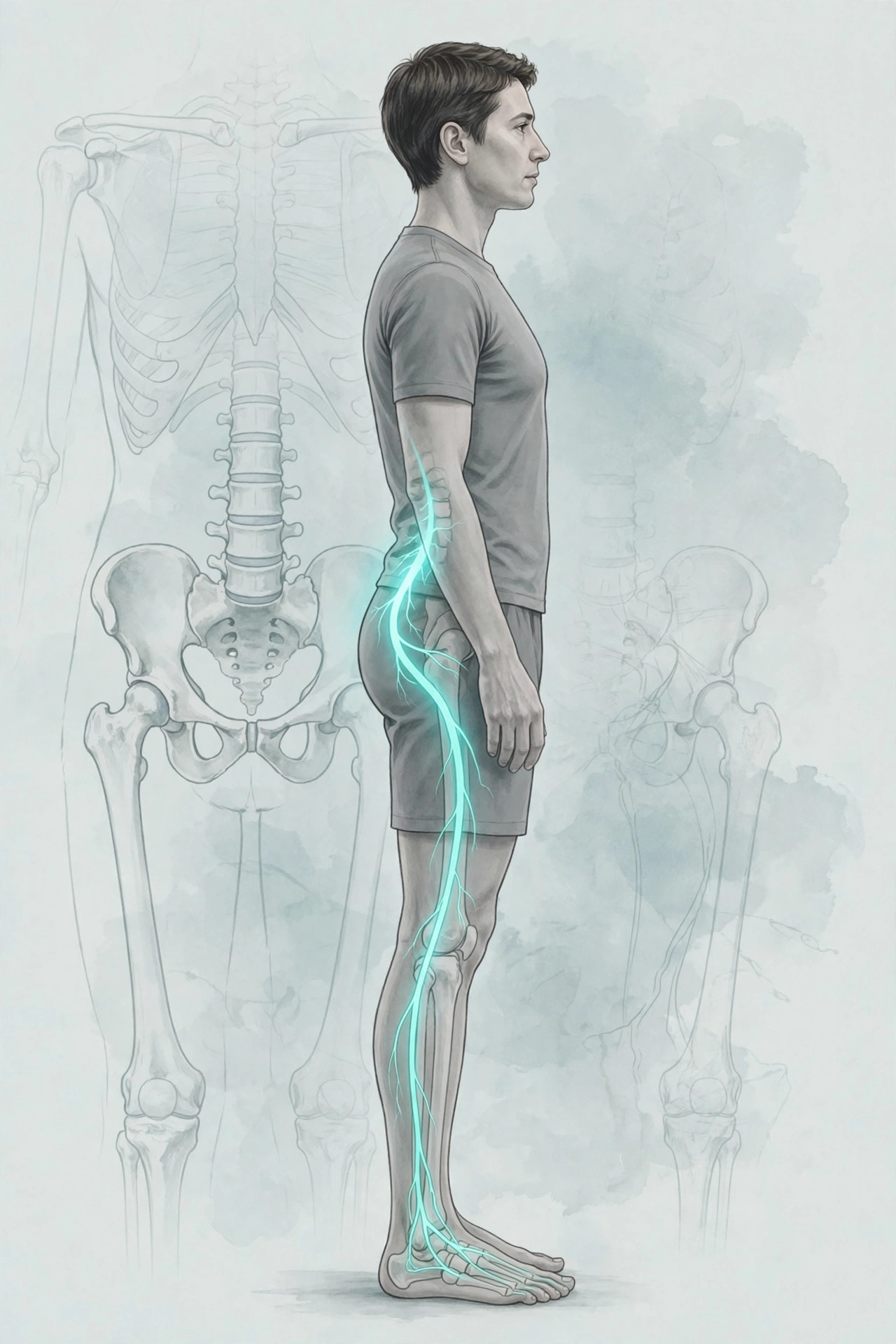
Sciatica: Why Your Leg Hurts and What Really Helps
Up to 40% of American adults get sciatica at some point. Here is what is actually pinching your nerve, which fixes work, and the red flags you should never ignore.

RSV Isn't Just a Kids' Virus: What Adults 50+ Must Know
RSV hospitalizes up to 160,000 older Americans yearly — yet most adults 50+ have never heard of it. Here is who needs the vaccine and how to stay safe this season.