Why You Grind Your Teeth at Night — and How to Stop It
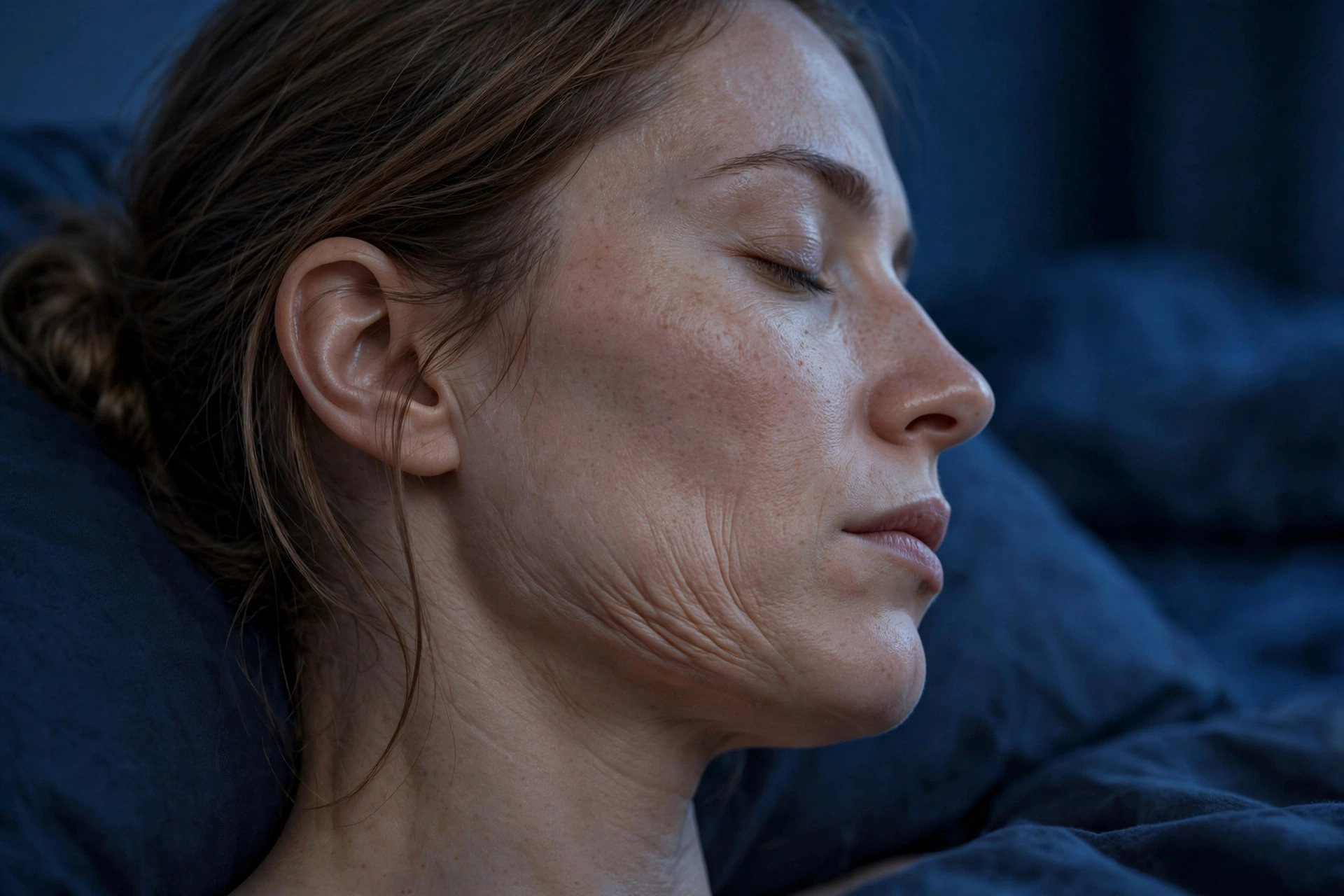
You wake up with a dull ache along your jawline, or a headache that wraps around your temples before your alarm even goes off. Your partner swears they heard grinding in the night. Your dentist points to flattened teeth and asks, gently, whether you are stressed.
That is bruxism — the medical term for grinding or clenching your teeth, most often while you sleep. Estimates suggest that up to one in three American adults grind their teeth at night, and the vast majority have no idea it is happening. You cannot hear yourself doing it. But your teeth, jaw, and sleep quality feel the full force of it — night after night.
The force is no joke. Normal chewing exerts around 70 pounds of pressure per square inch. Sleep bruxism can slam teeth together with 200 to 300 pounds of force — enough to crack fillings, fracture crowns, and wear enamel down to the dentin beneath.
Here is how to recognize the signs, what is driving it, and the fixes that actually work.
How to tell if you are grinding at night
Because sleep bruxism happens unconsciously, the clues usually show up in the morning — or in the dentist's chair:
- Jaw soreness or tightness on waking, sometimes with a dull ache that eases by midday
- Morning headaches, especially around the temples
- Flat, chipped, or cracked teeth — dentists often spot this before you do
- Teeth sensitivity to hot, cold, or sweets as enamel wears thin
- Earaches or ringing ears with no infection (the jaw joint sits inches from the ear canal)
- Worn or thinning dental fillings and crowns that keep breaking
- A bed partner who hears grinding — one of the most common reasons people get diagnosed
If several of these sound familiar, your next dental checkup is the place to confirm it. Dentists can see wear patterns in minutes.
What actually causes teeth grinding
Sleep bruxism is not fully understood, but research points to a mix of drivers rather than a single cause:
Stress and anxiety. This is the heavyweight. Clenching is a physical outlet for psychological tension — the jaw is where many people "store" stress. Surveys after the pandemic years found dentists reporting a clear rise in cracked teeth and jaw pain linked to heightened stress and disrupted sleep.
Sleep disorders. Bruxism clusters with conditions that fragment sleep, especially obstructive sleep apnea. When breathing pauses briefly during the night, the body often responds with a burst of muscle activity — including a jaw clench. If you snore loudly, gasp awake, or wake unrefreshed, a sleep evaluation is worth considering.
Your bite and jaw alignment. A misaligned bite (malocclusion), missing teeth, or recent dental work can change how your jaw rests and moves, which may trigger grinding in some people — though this matters less than stress and sleep in most cases.
Caffeine, alcohol, and nicotine. Stimulants and depressants both alter sleep architecture. Heavy evening caffeine and regular alcohol use are consistently associated with worse bruxism. Smoking roughly doubles the risk compared with nonsmokers.
Certain medications. Some antidepressants — particularly SSRIs — list bruxism as a side effect. Never stop or adjust medication on your own, but do tell both your prescribing doctor and your dentist if grinding started after a prescription change.
Why it is worth fixing (not just enduring)
Mild, occasional grinding is common and harmless. But nightly, forceful bruxism can cause real damage over months and years:
- Worn-down enamel that cannot regrow, exposing teeth to sensitivity, decay, and fractures
- Cracked teeth that need crowns or root canals — expensive repairs that grinding can then damage again
- TMJ disorders: jaw joint pain, clicking or locking, and pain while chewing
- Worsened sleep quality for you and anyone sharing your bed
Dentists sometimes spot the damage before you feel any symptoms, which is why regular cleanings double as early-warning checks.
What actually stops teeth grinding
There is no single cure, but a combination of protection and cause-fixing works for most people:
Protect the teeth first
A night guard (occlusal splint) is the gold standard for protecting teeth while you address the cause. Custom guards fitted by a dentist cost roughly $300 to $500 in the United States and typically last years; they distribute grinding force evenly and keep enamel safe. Over-the-counter boil-and-bite guards ($20–$40 at drugstores) offer decent short-term protection but fit poorly and can irritate the jaw if used long-term — fine as a bridge, not a permanent plan.
Calm the jaw
- Warm compresses on the jaw before bed loosen tight masseter muscles
- Jaw stretches: slowly open wide, hold 5 seconds, close, repeat 5–10 times
- Keep the lips together and teeth apart during the day — a simple awareness habit that retrains clenching
- Massage the jaw muscles with your fingertips in small circles, especially the big muscle at the angle of the jaw
Fix the sleep and stress behind it
- Wind down properly: grinding spikes when the nervous system stays wired. Thirty screen-free minutes, dim lights, and a consistent bedtime help more than people expect
- Cut evening caffeine — nothing caffeinated after midday if you are a grinder
- Limit alcohol close to bedtime; it may feel relaxing but fragments sleep and worsens bruxism
- Treat suspected sleep apnea: if you snore, talk to your doctor. Treating apnea often reduces grinding dramatically
- For persistent stress-driven clenching, cognitive behavioral therapy and daytime relaxation techniques have solid evidence behind them
When to see a professional
Book a dental visit soon if you have morning jaw pain, headaches, or visible tooth wear. See a doctor — and consider a sleep study — if you snore, wake gasping, or feel exhausted despite full nights in bed. And mention new grinding to your prescribing physician if it started with a medication.
The bottom line
Teeth grinding is one of the most common — and most fixable — reasons Americans wake up in pain. You do not have to accept the sore jaw, the headaches, or the slow destruction of your enamel. A night guard protects the teeth starting tonight, and addressing the stress and sleep behind the grinding is what makes the problem shrink for good.
Your jaw works hard enough during the day. Give it the night off.
📚 Keep reading:

Migraine vs. Headache: How to Tell the Difference
Throbbing pain, light sensitivity, nausea — or just a tight band around your skull? Here is how neurologists tell migraines apart from ordinary headaches, and what actually helps.
Sciatica: Why Your Leg Hurts and What Really Helps
Up to 40% of American adults get sciatica at some point. Here is what is actually pinching your nerve, which fixes work, and the red flags you should never ignore.

RSV Isn't Just a Kids' Virus: What Adults 50+ Must Know
RSV hospitalizes up to 160,000 older Americans yearly — yet most adults 50+ have never heard of it. Here is who needs the vaccine and how to stay safe this season.