Gallstones: The Belly Pain Millions of Americans Ignore
It usually starts with a meal you regret. A loaded burger, a slice of extra-cheese pizza, Thanksgiving dinner — and about an hour later, a deep ache grips the upper right side of your belly, just under the ribs. It builds. It can radiate to your right shoulder or your back. You feel nauseated, maybe bloated. After a few hours it fades, and you tell yourself it was just "something I ate."
For a huge share of Americans, it wasn't. It was a gallstone attack — and it will probably come back.
Gallstone disease affects roughly 20 million adults in the United States, making it one of the most common digestive disorders in the country. Every year, more than a million Americans have their gallbladder removed because of it — one of the most frequently performed surgeries in the nation. Yet most people can't name a single symptom until the pain lands them in the emergency room.
Here is what gallstones are, why they hit Americans so hard, and how to lower your odds.
What gallstones actually are
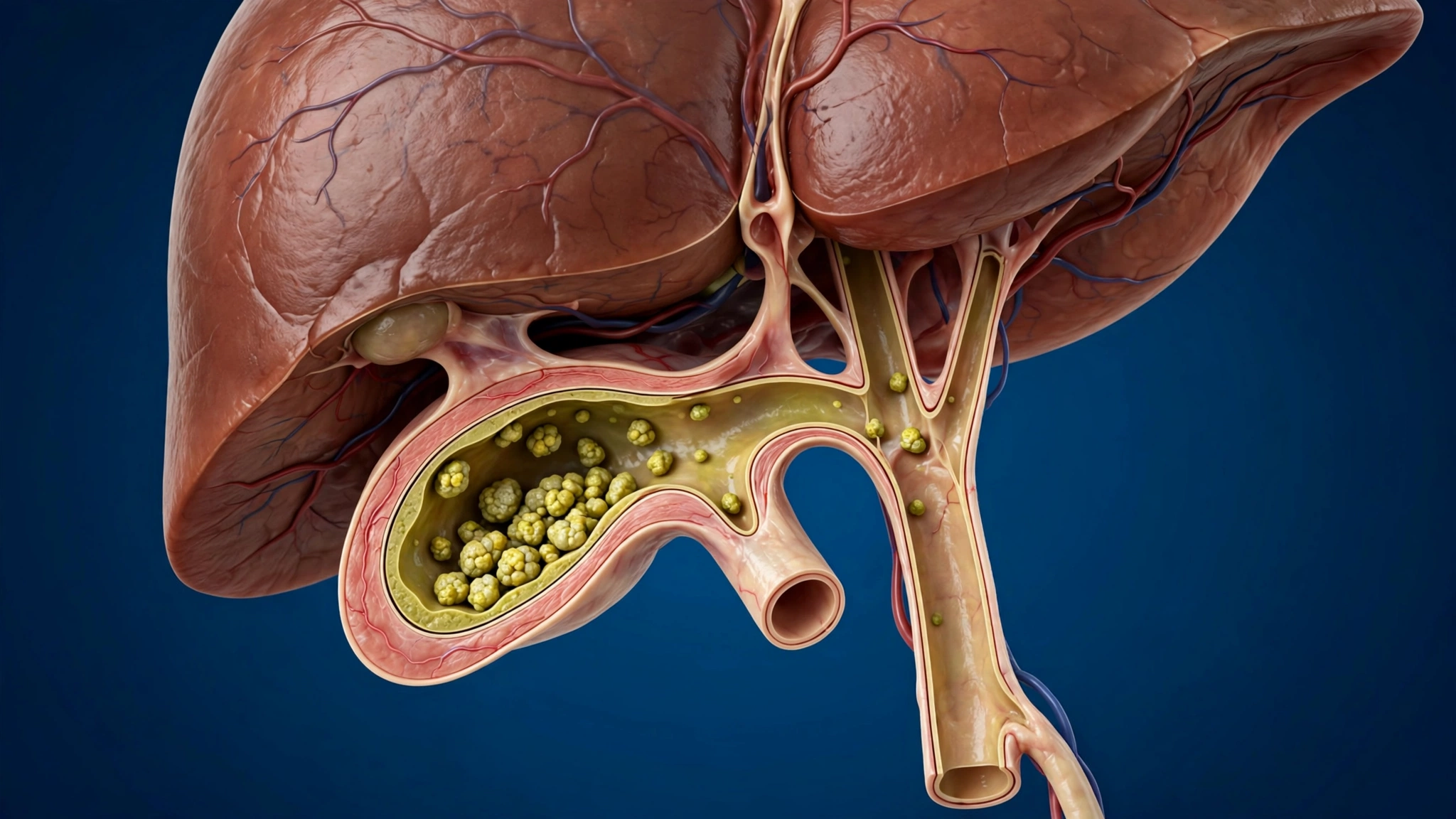
Your gallbladder is a small pear-shaped pouch tucked under your liver. Its job is simple: store bile — the yellowish-green digestive fluid your liver makes — and release it into your small intestine when you eat fat. Bile breaks fat down so your body can absorb it.
Gallstones form when that bile gets out of balance — usually too much cholesterol, too much bilirubin, or a gallbladder that doesn't empty properly. The excess crystallizes into hardened deposits, ranging from grains of sand to golf-ball size. Most are cholesterol stones (about 80% in Western countries); the rest are pigment stones made mostly of bilirubin.
Crucially, most gallstones are silent. They can sit in your gallbladder for years without causing a problem. Trouble starts only when a stone blocks the narrow duct the gallbladder squeezes bile through. When that happens, pressure builds — and so does pain.
Why Americans are prime targets
Gallstones follow a classic risk pattern doctors still teach with the "four Fs" — and each one maps closely onto American life:
- Fair. People of Northern European descent have higher rates, though Native American and Mexican American populations actually carry the highest risk of any group in the U.S.
- Fat. Obesity is one of the strongest risk factors — the more excess weight, the more cholesterol the liver pumps into bile. Rates of gallstones in severely obese teens have climbed alongside the childhood obesity epidemic.
- Forty. Risk rises with age, climbing steeply after 40.
- Fertile. Estrogen increases cholesterol in bile and slows gallbladder emptying. Women develop gallstones roughly twice as often as men, and pregnancy, birth-control pills, and hormone-replacement therapy all raise the odds.
Other risk factors read like a snapshot of the American lifestyle: crash diets and very rapid weight loss (which is why gallstones surge after bariatric surgery), skipping meals, diets high in refined carbs and low in fiber, diabetes, and a family history. Even yo-yo dieting — losing and regaining repeatedly — stresses the system.
The signs most people misread
A gallstone attack (doctors call it biliary colic) has a distinctive signature, but most people mistake it for something else:
- Sudden pain in the upper right abdomen, just below the rib cage — the most classic sign. It often starts 30 to 60 minutes after a fatty meal.
- Pain that radiates to the right shoulder blade or between the shoulder blades. This confuses people into thinking it's a muscle problem.
- Nausea and vomiting, sometimes intense.
- Bloating, gas, and indigestion — which is why gallstones get mislabeled as heartburn or IBS for months.
- Pain lasting 30 minutes to several hours, then fading as if nothing happened. The coming-and-going pattern is the hallmark; constant steady pain points elsewhere.
The trap: because attacks resolve, people postpone care — but each blockage can inflame the gallbladder a little more, and stones rarely shrink away on their own.
When it's an emergency, not a bad meal
Most attacks pass. But a stone that stays stuck can cause acute cholecystitis — a full-blown gallbladder infection — or pancreatitis if it lodges in the shared bile duct. Get emergency care immediately for:
- Abdominal pain that lasts more than five or six hours without easing
- Fever or chills along with belly pain
- Yellowing of the skin or eyes (jaundice), dark urine, or pale stools — signs a stone is blocking the bile duct
- Vomiting that won't stop, or pain so severe you can't sit still
Gallbladder inflammation can turn dangerous fast, and about 200,000 Americans a year are hospitalized with acute cholecystitis. Don't try to sleep it off.
How doctors actually find them
Diagnosis is refreshingly simple: an abdominal ultrasound. It's painless, takes about 15 minutes, and spots gallstones with high accuracy. If the ultrasound is unclear, doctors may order an MRI or a specialized scan that tracks how the gallbladder empties.
Silent stones found incidentally usually get watchful waiting — no treatment needed.
What actually helps (and what doesn't)
There is no supplement that reliably dissolves cholesterol stones — products claiming to "flush" gallstones are not supported by evidence, and some (like olive-oil "cleanses") can actually trigger an attack. What the science supports:
Keep weight steady and lose it slowly. Rapid weight loss is a major gallstone trigger. If you're shedding pounds, aim for the CDC's recommended 1 to 2 pounds per week, and keep eating regular meals — fasting and skipping meals let bile concentrate into stone-forming sludge.
Eat fiber like you mean it. Fruits, vegetables, beans, and whole grains are consistently linked to lower gallstone risk — fiber keeps bile moving and cholesterol from crystallizing. Include small amounts of healthy fat (olive oil, nuts, avocado) at regular meals too, since very low-fat diets can stall gallbladder emptying.
Stay active. Regular moderate exercise is associated with lower risk of symptomatic gallstones, likely through its effects on weight and cholesterol.
Coffee drinkers get a bonus. Several large U.S. cohort studies link a few daily cups of coffee to lower gallstone risk — an association, not a prescription, but good news for the morning-cup crowd.
The treatment that fixes it for good
For silent stones: nothing. For recurring attacks or complications, the standard treatment is cholecystectomy — surgical removal of the gallbladder. It's usually done laparoscopically through four tiny incisions, most patients go home the same day, and the body adjusts to life without a gallbladder (bile simply drips from the liver continuously instead of being stored).
The bile-acid drug ursodiol can dissolve small cholesterol stones over months, but stones often return after stopping — it's reserved for people who can't have surgery.
When to see a doctor
Book an appointment if you recognize this pattern:
- Repeated upper-right belly pain after fatty meals, especially with nausea
- Pain that radiates to your right shoulder or back
- Indigestion-like symptoms that keep recurring despite antacids or diet changes
Go to the emergency room for pain lasting more than a few hours, fever with belly pain, jaundice, or unrelenting vomiting.
That "something I ate" pain might be your gallbladder waving a flag. With gallstones, the difference between a rough evening and an emergency room visit is often just how long you wait — listen to the pattern, and get it checked while the fix is still simple.
📚 Keep reading:
Numb or Tingling Feet? Signs of Peripheral Neuropathy
Tingling feet, burning pain at night, losing your balance — millions of Americans brush off these signs of peripheral neuropathy. Here is what it is, why it happens, and what helps.

Walking Pneumonia: The 'Mild' Infection Hitting U.S. Kids
It feels like a stubborn cold but it is in your lungs. Walking pneumonia is surging again among American kids — here is how to spot it, treat it, and stop it.

Why Your Legs Cramp at Night (And How to Stop Them)
That searing calf cramp that jolts you awake at 2 AM is called a nocturnal leg cramp. Here is what causes them, why they strike at night, and the stretches that stop them fast.