Halloween Candy Survival Guide: Outsmart the Sugar Crash
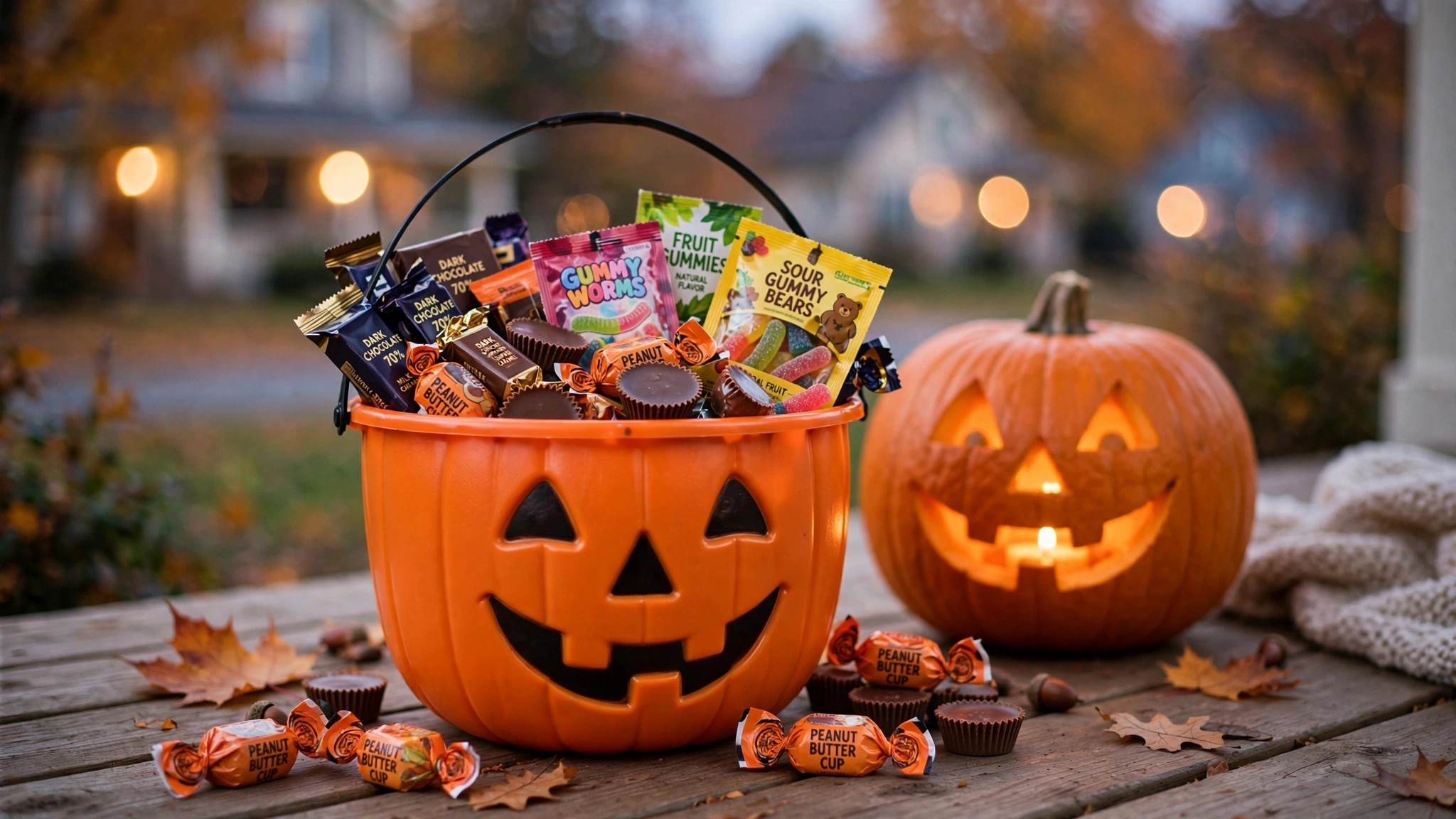
Halloween is eleven days away, and America's candy supply chain is in overdrive. Bags of fun-size chocolate are stacked like sandbags at Costco, and somewhere in your kitchen, a bowl labeled "for trick-or-treaters" is already half-empty.
Here's the scale of it: Americans are expected to spend $4.1 billion on Halloween candy this year, according to the National Retail Federation's annual survey released in September 2026 — with 96% of Halloween shoppers planning to buy sweets. Candy prices themselves are up 8.1% from last August, per the Bureau of Labor Statistics. We're paying more per bag and buying more bags than ever.
The candy isn't the problem, exactly. The haul is. Estimates put the average American's Halloween candy consumption around 3.4 pounds over the holiday — and a trick-or-treating kid's bag can hold an estimated 3,500 to 7,000 calories, roughly three cups of pure sugar. And if you're a parent reading this with a hand in your kid's pumpkin bucket: the National Confectioners Association says 90% of parents admit to raiding their children's stash.
You don't have to cancel Halloween to survive it. You just need a strategy — one that works with the candy, not against it.
What a "sugar rush" actually does to your body
Let's start with the science, because Halloween night is the perfect laboratory. Eat a fistful of Skittles and your blood sugar spikes fast — candy is nearly pure sugar with nothing (no fiber, no protein, no fat) to slow absorption. Your pancreas answers with a surge of insulin, which clears that glucose into your cells. When the insulin overshoots, blood sugar dips below where it started, and the crash hits: shakiness, irritability, a foggy head, and a strange hunger that feels like you haven't eaten at all.
Here's what most parents get wrong: the "sugar rush" hyperactivity probably isn't real — at least not the way we imagine it. Researchers have tested the sugar-hyperactivity link for decades, including controlled trials where kids got sugar or a placebo without parents knowing which. The consistent finding: sugar doesn't reliably make kids hyperactive. What makes kids bounce off the walls on Halloween is the costume, the dark, the candy-gathering mission, and being up past bedtime. The sugar is just along for the ride. The crash, though — that one is physiologically real, and it arrives right on schedule, usually an hour or two after the binge.
Your teeth are the real Halloween victims
Dentists don't fear the one-night candy binge. They fear the aftermath — the two weeks of grazing, when a desk drawer or kitchen counter becomes a 24-hour candy dispenser. That's the pattern that drives cavities, because what matters for tooth decay is frequency and stickiness, not just quantity.
The American Dental Association's guidance ranks the danger clearly:
- Worst offenders: sticky and chewy candy — gummies, caramels, taffy, Starburst, Sour Patch Kids. They glue themselves to teeth and dissolve slowly, feeding the acid-producing bacteria that eat enamel for hours.
- Sour candy is double trouble. That mouth-puckering tang is acid — often citric acid — and it erodes enamel directly, before the sugar even gets involved.
- Chocolate is the least bad option. It melts, washes away faster, and doesn't cling. A fun-size Snickers does measurably less dental damage than an equal-weight serving of gummy bears.
The dental playbook for Halloween: eat candy with or right after a meal (saliva production is already up), drink water between pieces, and don't graze all evening. One brushing session can't undo a day of continuous snacking — but stopping the grazing does most of the work.
The Halloween survival playbook
You can't out-willpower a 3.4-pound candy supply. But these strategies work, because they change the environment instead of demanding discipline:
Eat dinner before trick-or-treating. A full kid is a slower candy eater. A protein-rich dinner — chicken, beans, eggs — blunts the blood-sugar roller coaster later.
Run the sort-and-pick rule. Dump the haul on the table and sort: keep the favorites, toss the duds. Every family has candy nobody actually likes (candy corn loyalists excepted). Pick the top ten pieces and donate or toss the rest — the "Switch Witch" tradition, where kids trade excess candy for a small toy, makes this painless.
Freeze it. Chocolate freezes beautifully. Bag it in portions, freeze it, and candy becomes a deliberate dessert again instead of ambient grazing. A frozen Reese's cup eaten on a Friday night is a treat; the same cup eaten absent-mindedly on a Tuesday is just sugar.
One sitting, not all day. This is the single most effective rule: pick a time — after dinner works — and eat the candy then. Twenty pieces eaten at 7 p.m. do less damage (metabolically and dentally) than the same twenty stretched across twelve hours of grazing.
Trade sticky for chocolate. Favor chocolate over chewy, sticky, or sour varieties — for your teeth and for portion control. You can stop at two fun-size bars. Nobody stops at two gummy bears.
Move the candy out of sight. The research on this is consistent: food you can see gets eaten. Put the bowl in a cabinet, not on the counter. The leftover half-bag from the trick-or-treater bowl is the most dangerous candy in America — the candy nobody planned to eat.
Smarter treats to hand out
If you're handing out candy this year — 61% of Americans say they'll hand out treats, per the NRF survey — you get to set the tone for your block:
- Go small. Fun-size and mini bars give kids the ritual without the payload. A kid visiting 40 houses doesn't need king-size anything.
- Consider non-candy options. Glow sticks, stickers, temporary tattoos, and bouncy balls are cheap in bulk, allergen-free, and genuinely exciting to a 7-year-old. A teal pumpkin on the porch signals non-food treats for kids with allergies.
- Dark chocolate minis are a nice middle ground: smaller sugar load, and the slight bitterness naturally slows kids down.
When candy stops being fun
A stomachache on November 1st is practically a rite of passage. But a few situations deserve more than ginger ale:
- Kids with diabetes need a Halloween plan, not a Halloween surprise. Carb-count the haul together (most candy labels list carbs clearly), pre-decide the allowance, and keep fast-acting glucose on hand for trick-or-treat night.
- Nut allergies make the sorting step non-negotiable. Dump the bag, check every wrapper, toss anything unlabeled or homemade. Reese's may be America's favorite candy, but peanut butter cups are the trick-or-treat landmine for allergic kids — which is one more reason the teal-pumpkin movement keeps growing.
- Persistent symptoms aren't "just candy." If anyone in the family regularly feels wiped out, shaky, or sick after sweets, that's worth a conversation with a pediatrician. Heavy sugar loads can unmask blood-sugar problems that were quietly building for months.
Halloween is supposed to be fun, and candy is part of the fun. The trick isn't eating less candy on Halloween night. It's making sure Halloween night ends on November 1st, instead of stretching into a three-week graze. Sort the haul, pick your favorites, freeze the rest, and eat it like dessert — with dinner, with water, and done by dessert's end. Your teeth, your blood sugar, and your 3 a.m. self will all thank you.
Rao Sajid is the founder and editor of VitalDaily. He covers everyday health topics — nutrition, sleep, fitness and wellness — turning guidance from public-health sources like the CDC, NIH and FDA into plain, practical advice. More about Rao →
📚 Keep reading:
Does Turkey Really Make You Sleepy? The Tryptophan Truth
Every Thanksgiving, someone falls asleep on the couch and blames the turkey. Science says the bird is innocent — here's what actually knocks you out.

Hair Loss in Your 30s: Causes and What Works
Shedding more than usual? The American Academy of Dermatology says 80 million Americans have hereditary hair loss. Here's what causes thinning — and what actually works.
Red Dye No. 3 Is Being Banned: What It Means for You
The FDA is pulling Red No. 3 from American food by January 2027. Here is why the cherry-red dye got banned, where it still hides, and how to spot it on labels.