Red Dye No. 3 Is Being Banned: What It Means for You
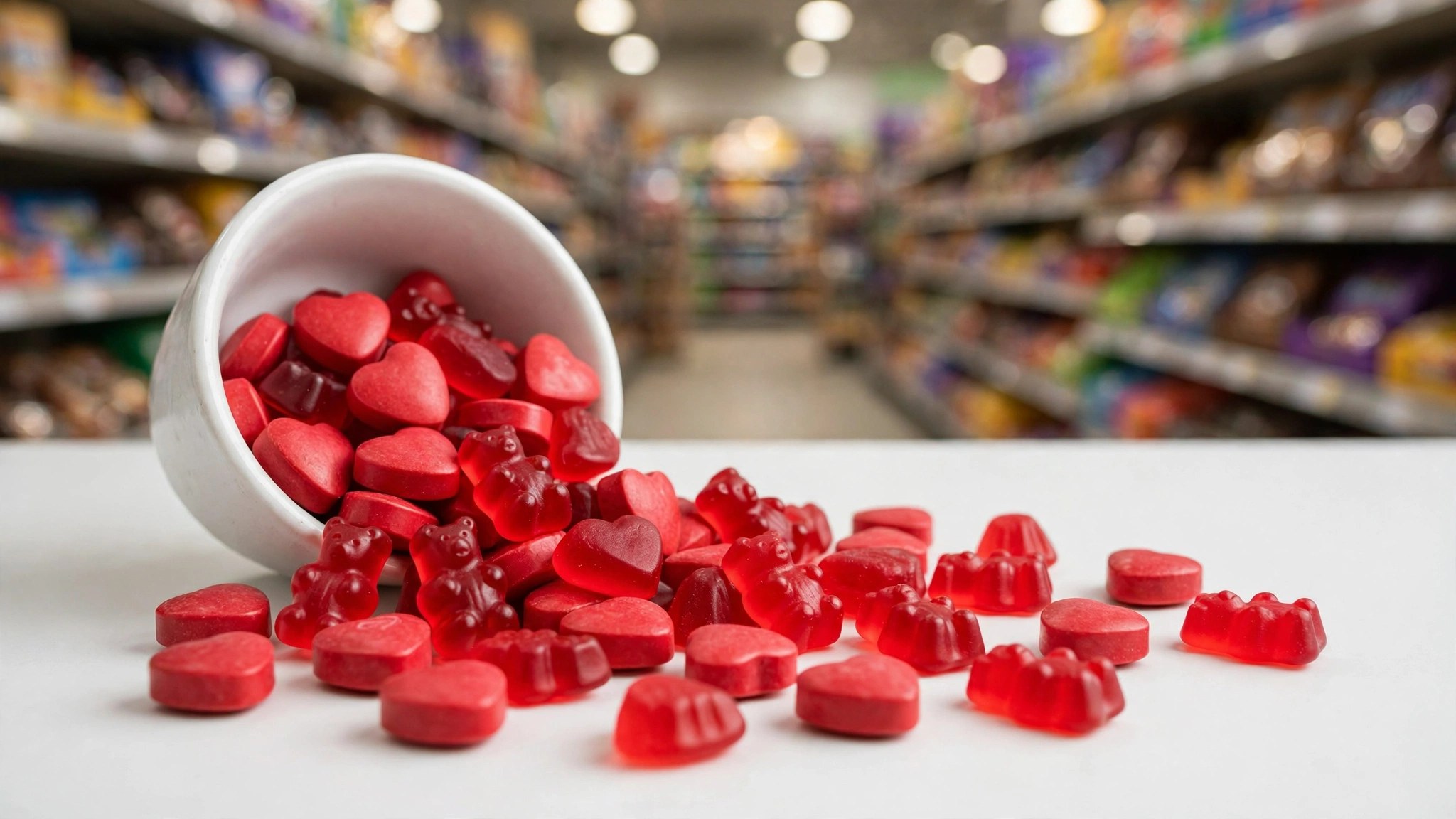
It is the electric cherry-red in conversation hearts, the unnatural ruby in maraschino cherries, the blazing pink in that frosting on a grocery-store birthday cake. And starting soon, it is on its way out of the American food supply for good.
In January 2025, the FDA formally revoked its authorization for FD&C Red No. 3 — the synthetic red dye also known as erythrosine — in food and ingested drugs. Food manufacturers have until January 15, 2027 to reformulate. It is one of the biggest changes to the American ingredient list in decades, and it raises an obvious question: what was this stuff doing in your food in the first place?
What Red No. 3 actually is
Red No. 3 is a petroleum-derived synthetic color additive, used since the early 1900s to give foods a bright, cherry-red hue. It does not add flavor, nutrition, or shelf life — its entire job is to make food look more appealing. Manufacturers love it because it is cheap, stable, and produces an eye-popping red that natural colorants struggle to match.
Here is a twist most people do not know: the FDA banned Red No. 3 from cosmetics and externally applied drugs back in 1990 — but left it legal in food for another 35 years. That split decision is part of why consumer groups spent years pushing for a full ban.
Why the FDA finally banned it
The ban was triggered by a 2022 petition from advocacy groups including the Center for Science in the Public Interest. It rests on a law called the Delaney Clause, part of the 1960 Color Additives Amendment to the Federal Food, Drug, and Cosmetic Act. The clause is strict: the FDA cannot authorize a food or color additive that has been shown to cause cancer in humans or animals — no exceptions, no risk assessment, no "the dose makes the poison" debate.
Two studies found that male laboratory rats exposed to high levels of Red No. 3 developed thyroid cancer. Here is the nuance, and it matters: the FDA itself says the cancer appears to come from a hormonal mechanism specific to male rats, and that studies in other animals and in humans did not show the same effect. The agency states plainly that there is no evidence Red No. 3 causes cancer in humans.
So the ban is a legal technicality as much as a health emergency: the Delaney Clause does not care about mechanisms or doses. Once cancer showed up in animals, the authorization had to go.
The timeline: what happens when
- Now through January 14, 2027 — foods containing Red No. 3 are still legal to make and sell, so you will keep seeing it on shelves.
- January 15, 2027 — the food deadline. After this date, any food containing Red No. 3 is considered adulterated under federal law, which can trigger recalls and enforcement actions.
- January 18, 2028 — the deadline for ingested drugs (prescription and over-the-counter medicines).
- Products manufactured before their deadline can still legally sell through, so expect a gradual fade-out rather than an overnight disappearance.
California already passed its own ban (the California Food Safety Act) with the same January 2027 timeline, and roughly ten other states have similar bills in motion. And in April 2025, HHS and the FDA announced a broader push to phase out the six remaining petroleum-based dyes — Red 40, Yellow 5, Yellow 6, Blue 1, Blue 2, and Green 3 — by the end of 2027, though that effort is voluntary rather than legally binding.
Where Red No. 3 still hides
Red No. 3 was never as widespread as its cousin Red 40, but it shows up in more places than you might guess. Watch for it in:
- Candy — conversation hearts, candy corn, Pez, gummy candies, sour belts, ring pops
- Baking and decorations — red cake icing, sprinkles, decorator gels, food coloring kits
- Frozen treats — ice pops, frozen fruit bars, some ice cream toppings
- Maraschino cherries — the classic cocktail cherry gets its glow from red dye
- Supplements — gummy vitamins and chewable tablets with a red or pink shell
- Baked goods — red velvet items, heart-shaped cookies, strawberry-flavored fillings
On the ingredient list, look for "FD&C Red No. 3," "Red 3," or "Erythrosine" (its European name is E127, though it is restricted in the EU and banned or limited in countries like Australia and Japan).
Does swapping it out matter for your health?
Honestly? For most people, removing Red No. 3 is less of a health intervention and more of a signal. The dye itself was never a major, proven human health threat — remember, the ban rests on a legal clause, not on evidence of human harm.
But here is what the ban does tell you: if a product needed Red No. 3, it is almost certainly an ultra-processed food — candy, frosting, artificially flavored snacks — the category genuinely linked to higher risks of obesity, heart disease, and type 2 diabetes in study after study. The dye was a marker of the foods worth eating less of anyway.
Some researchers have also raised concerns about synthetic dyes and children's behavior, particularly hyperactivity in sensitive kids. The evidence there is mixed and mostly concerns other dyes (like Red 40 and Yellow 5), but many parents prefer to limit them regardless.
How to read labels like a pro
You do not need to wait for 2027 to cut back. A few practical habits:
- Scan the ingredient list, not the front of the package. "Natural flavors," fruit pictures, and "made with real fruit" claims mean nothing about dyes. The ingredient list is the only place that tells the truth.
- Learn the dye names. Red No. 3, Red 40, Yellow 5, Yellow 6, Blue 1, Blue 2, Green 3 — if any appear, the color came from a lab.
- Beware "naturally colored" imposters. Some products already switched to beet juice, carmine (from insects), annatto, or fruit and vegetable juices. Those are generally considered safer and are not part of the ban.
- Check your supplements too. Gummy vitamins are a sneaky source of dyes. Unflavored or naturally colored options exist for nearly every supplement.
- At the bakery, ask. Decorated cakes and cookies from in-store bakeries still use dye-heavy icings. Asking what colors they use is perfectly reasonable.
What manufacturers will use instead
Food companies are already reformulating. The replacements are familiar natural colorants: beetroot red, carmine/cochineal, anthocyanins from purple sweet potato and black carrot, and fruit and vegetable juices. They cost more and can fade faster or taste slightly different at high doses, but the technology has improved enormously — many "naturally colored" products on shelves today are already using them.
Expect some products to look slightly less neon than you remember. That is a feature, not a bug.
The bottom line
Red No. 3's ban is not proof the dye was poisoning you — it is proof that a 1960s zero-tolerance law finally caught up with a 1900s-era additive. The practical takeaway is simpler than the legal one: bright, artificially colored foods are ultra-processed foods, and eating less of them was good advice before the ban and remains good advice after it.
Between now and January 2027, the smartest move is not panic — it is literacy. Flip the package over, read the ingredient list, and know what "Red 3" means when you see it. Your grocery cart is about to get a little less red. That is probably fine.
Rao Sajid is the founder and editor of VitalDaily. He covers everyday health topics — nutrition, sleep, fitness and wellness — turning guidance from public-health sources like the CDC, NIH and FDA into plain, practical advice. More about Rao →
📚 Keep reading:
Nasal Spray Rebound: Why Your Stuffy Nose Won't Quit
That decongestant spray clears your nose in minutes — but use it more than 3 days and it can trap you in a cycle of rebound congestion. Here's how to quit.
Vaping and Your Lungs: What Science Says in 2026
Nearly 18 million American adults now vape, and use among young adults has exploded. Here is what the science says it does to your lungs — and how to quit.

Zinc for Colds: Does It Actually Shorten Them?
Zinc lozenges are the most-studied cold remedy on the drugstore shelf. Here's what research shows — the timing, dosage, and risks that matter.