Vaping and Your Lungs: What Science Says in 2026
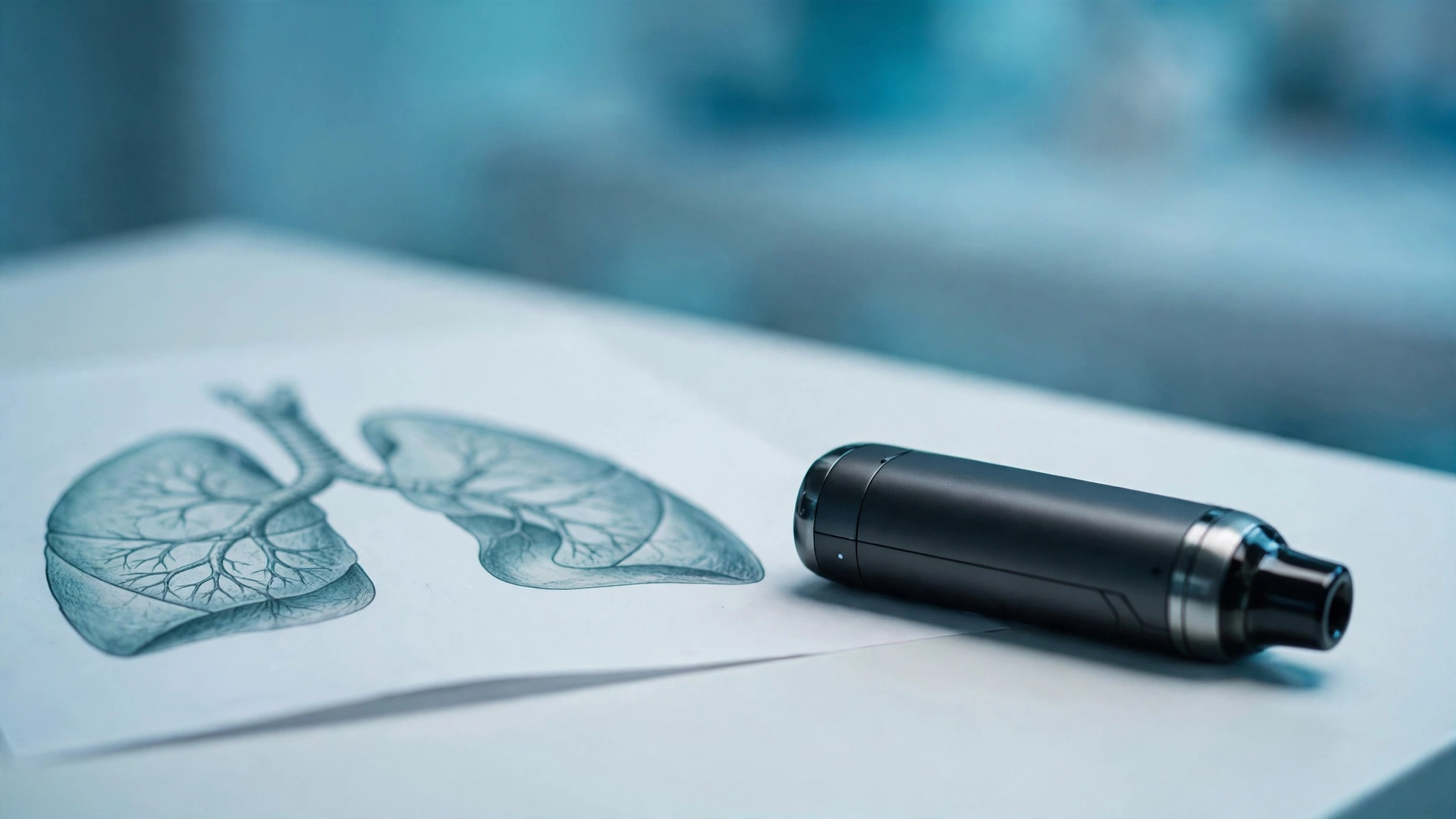
A decade ago, vaping was sold as America's clean exit from cigarettes — no smoke, no smell, no ash. Just flavored vapor. Today, nearly 18 million American adults vape regularly, and among young adults ages 18 to 24, vaping has now overtaken cigarette smoking by more than four to one.
So what has a decade of real-world use actually taught us about what vaping does to human lungs? Here is the state of the science in 2026.
Vaping in America, by the numbers
According to the National Health Interview Survey, the share of U.S. adults who vape nearly doubled from 3.7 percent in 2020 to 7.0 percent in 2024. Meanwhile, cigarette smoking fell to a record low of 9.9 percent.
The shift is sharpest among the young:
- Among adults 18 to 24, e-cigarette use (14.8 percent) now dwarfs cigarette smoking (3.4 percent).
- Among middle and high schoolers, 5.9 percent vaped in the past 30 days in 2024 — a decade low, down from 7.7 percent in 2023.
That means a whole generation is growing up with nicotine in its lungs but almost no personal memory of cigarettes — and no long-term safety data on the devices themselves.
What you are actually inhaling
The first myth to clear up: it is not "just water vapor." E-cigarettes heat a liquid (e-liquid) into an aerosol that you draw deep into your lungs. That aerosol typically contains:
- Nicotine, the same addictive compound in cigarettes. One JUUL-style pod delivers roughly the nicotine of a full pack of 20 cigarettes.
- Propylene glycol and vegetable glycerin, the base liquids that create the visible cloud.
- Flavoring chemicals, some of which — like diacetyl, a buttery flavoring linked to a severe airway disease called bronchiolitis obliterans ("popcorn lung") — are safe to eat but not to inhale.
- Heating byproducts such as formaldehyde, acetaldehyde, and acrolein, which form when the liquid gets very hot.
- Trace metals like nickel, lead, and chromium, which can shed from the device's heating coil.
Nicotine itself does damage beyond addiction: it raises heart rate and blood pressure, narrows blood vessels, and can interfere with attention, learning, and impulse control in young users, whose brains are still developing until about age 25.
The EVALI lesson America already learned
The darkest chapter of the vaping story arrived in 2019, when a mysterious wave of severe lung injuries swept the country. Patients — many of them young — arrived at emergency departments coughing, gasping, nauseated, and with lungs that looked ravaged on scans.
The CDC tracked 2,807 hospitalizations and 68 deaths from what it named EVALI (e-cigarette, or vaping, product use-associated lung injury). The median patient age was just 24. Investigators found that 82 percent of patients had used THC-containing vapes, mostly bought from informal sources, and laboratory testing pinned the blame on vitamin E acetate, a thickening additive in illicit THC cartridges that was found in the lung fluid of EVALI patients but not in healthy controls.
The takeaway was sobering on two fronts. First, unregulated additives can turn a vape device into a medical emergency. Second, the legal market is not a tightly guarded one: the FDA has authorized only a few dozen tobacco- and menthol-flavored e-cigarette products, yet thousands of unauthorized — especially flavored — products remain easy to buy.
What the research says about lungs
Outside of the EVALI outbreak, what does everyday nicotine vaping do to lungs? The picture is emerging, and it is not reassuring:
- Respiratory symptoms. Large survey analyses link e-cigarette use with increased odds of coughing, wheezing, and shortness of breath — even in people who never smoked cigarettes.
- Airway inflammation. Laboratory and clinical studies find signs of airway irritation and reduced lung function in regular vapers, though the effects appear smaller than those seen in smokers.
- Dual use is the worst of both worlds. Many adults both vape and smoke cigarettes. Research consistently finds dual users carry the highest respiratory risk — so vaping only helps lungs when it replaces smoking, not when it adds to it.
- The long-term data simply do not exist yet. Cigarettes needed decades of use before their full toll on lungs became undeniable. E-cigarettes have been mainstream in the U.S. for roughly 15 years. Scientists are blunt about this: the long game is unknown.
- A gateway effect. Multiple studies have found that teens who vape nicotine are significantly more likely to go on to smoke cigarettes — running the addiction pipeline in reverse.
"But isn't vaping safer than smoking?"
Here is the honest, nuanced answer. For a current adult cigarette smoker, switching completely to vaping likely reduces exposure to the thousands of combustion chemicals in cigarette smoke — the source of most smoking-related disease. Health agencies in the United Kingdom, where smoking-cessation strategy embraces vaping, frame e-cigarettes as far less harmful than cigarettes.
But "less harmful" is not "harmless." U.S. agencies, including the CDC, urge caution: the long-term health effects remain unclear, and the aerosol contains toxic and carcinogenic compounds. And for anyone who does not already smoke — especially teenagers and young adults — vaping offers no health upside at all, only new risks to lungs, heart, and a developing brain.
The fairest summary: vaping may be a step off cigarettes, but it was never meant to be a destination — and it is a terrible starting point.
How to quit vaping: 6 steps that work
The good news is that the body begins to recover quickly, and the playbook for quitting vapes borrows from decades of stop-smoking science:
- Set a quit date and say it out loud. Telling a friend, partner, or coworker turns a vague intention into a commitment.
- Map your triggers. Morning coffee? Driving? The after-dinner unwind? Name the moments, then plan a replacement — a walk, water, chewing gum.
- Use proven tools, not willpower alone. The free national quitline 1-800-QUIT-NOW (1-800-784-8669) and smokefree.gov offer coaching and text programs. Nicotine replacement therapy (patches, gum, lozenges) can ease withdrawal — ask your doctor or pharmacist which option fits.
- Remove the hardware. Toss the devices, chargers, pods, and spare coils. Keeping one "just in case" is how most quit attempts die.
- Expect the hard part early. Cravings usually peak in the first 2 to 3 days, fade substantially within a few weeks, and last only a few minutes each.
- Get a quit buddy. Whether it is a friend, a support group, or a free text program like the Truth Initiative's This Is Quitting, people who get support quit at higher rates than those who go it alone.
The bottom line
Vaping exploded in the United States on the promise of being the safe alternative. A decade later, the science says something more complicated: it is almost certainly less dangerous than smoking cigarettes — and still a genuine, poorly understood risk to lungs, especially for the millions of young Americans who never smoked at all.
Your lungs are remarkably forgiving organs. Heart rate and blood pressure begin dropping within 20 minutes of your last puff; circulation and lung function start improving within weeks. Whatever your reason for vaping, the best day to quit is today — the second-best is the day you finish reading this article.
Rao Sajid is the founder and editor of VitalDaily. He covers everyday health topics — nutrition, sleep, fitness and wellness — turning guidance from public-health sources like the CDC, NIH and FDA into plain, practical advice. More about Rao →
📚 Keep reading:

Zinc for Colds: Does It Actually Shorten Them?
Zinc lozenges are the most-studied cold remedy on the drugstore shelf. Here's what research shows — the timing, dosage, and risks that matter.

Snow Shoveling Sends Thousands to the ER Every Winter
Every winter, snow shoveling triggers thousands of heart attacks across the U.S. — most in men over 45. Here's why this chore is so dangerous and how to clear your driveway without risking your life.
Lyme Disease Signs Most People Miss (Not Just the Rash)
Fall is peak season for adult deer ticks — and the famous bullseye rash appears in only some cases. Here are the Lyme signs most people miss.