Why 2 Tablespoons of Olive Oil Daily Protects Your Heart
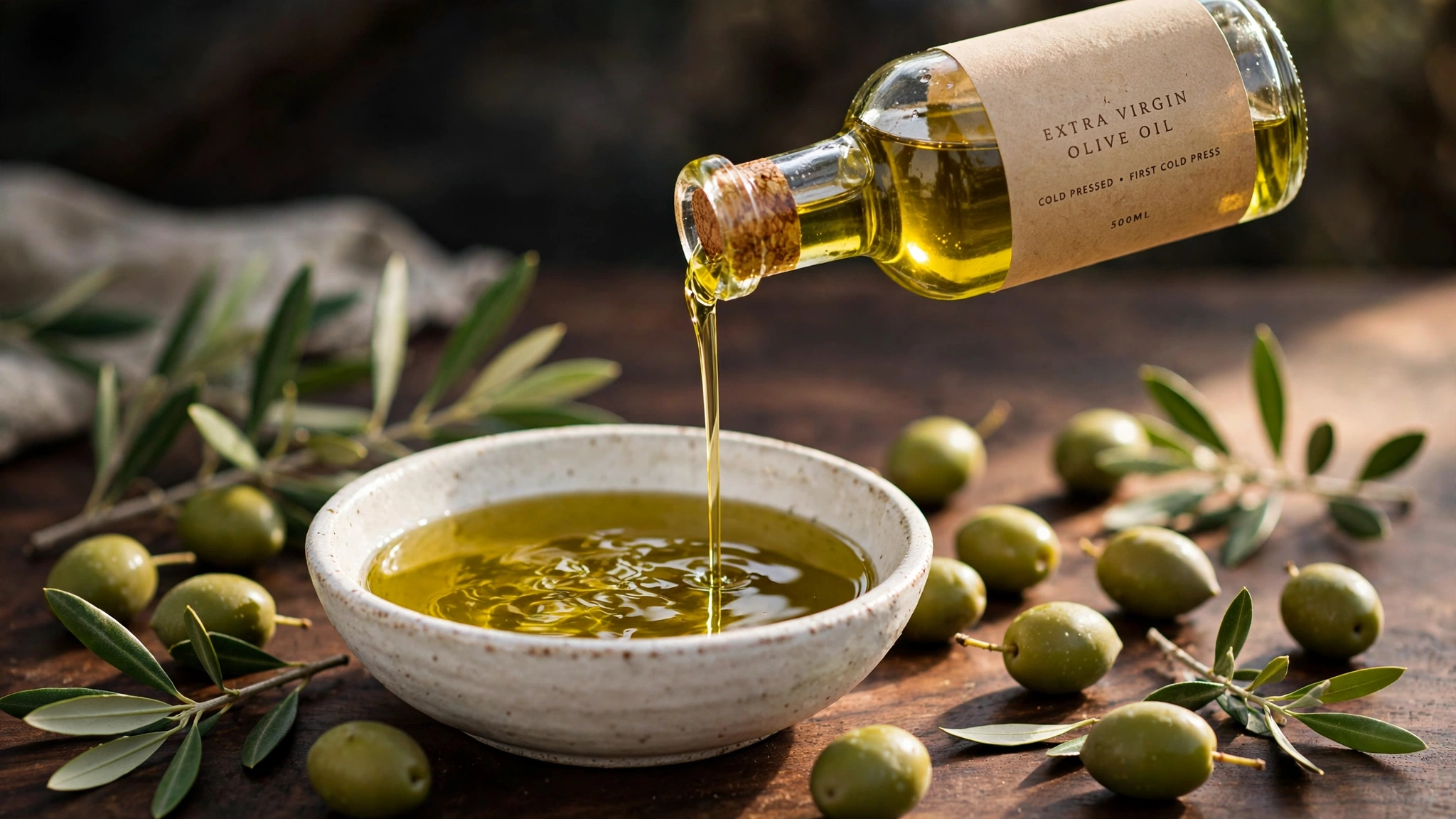
If there's one pantry swap with more science behind it than almost anything else in your kitchen, it's this: replacing butter and margarine with olive oil. Heart disease remains the number one killer in the United States — claiming roughly one out of every three deaths, according to the CDC — and decades of research point to olive oil as one of the simplest dietary tools for pushing your odds in the right direction.
This isn't wellness-blog hype. The FDA itself issued a qualified health claim back in 2004 stating that about 2 tablespoons (23 grams) of olive oil daily may reduce the risk of coronary heart disease when it replaces an equal amount of saturated fat. Two tablespoons. That's the amount you'd drizzle over a salad.
What the big studies found
The landmark PREDIMED trial — one of the largest diet studies ever run — followed more than 7,000 adults at high cardiovascular risk. Participants assigned to a Mediterranean diet supplemented with extra virgin olive oil experienced roughly 30% fewer major cardiovascular events (heart attacks, strokes, and cardiovascular deaths) compared to the control group.
American data backs it up. In a 2022 analysis published in the Journal of the American College of Cardiology, Harvard researchers pooled data from the Nurses' Health Study and the Health Professionals Follow-Up Study — hundreds of thousands of person-years. People who consumed more than about half a tablespoon of olive oil per day had a 19% lower risk of cardiovascular mortality than those who rarely used it. They also saw lower risks of dying from neurodegenerative disease.
Why it works: it's not just the fat
Olive oil's main fat is oleic acid, a monounsaturated fat that helps lower LDL ("bad") cholesterol without dragging down HDL ("good") cholesterol the way some other fats do. But the fat profile is only half the story.
Extra virgin olive oil — the unrefined, cold-pressed kind — is packed with polyphenols, plant compounds that act as antioxidants. One of them, oleocanthal, is the compound responsible for the peppery burn in the back of your throat when you taste a good extra virgin olive oil. That burn is a sign of real anti-inflammatory activity: oleocanthal inhibits some of the same inflammatory pathways as ibuprofen. Chronic inflammation is a major driver of arterial plaque, so this matters more than most people realize.
Regular "light" or "pure" olive oil is refined, which strips out most of these polyphenols. You still get the healthy fat profile, but you lose the anti-inflammatory payload. If you want the full benefit shown in the studies, extra virgin is the version the research supports.
The smoke point myth, debunked
"But you can't cook with extra virgin olive oil — it has a low smoke point." You've probably heard this. It's mostly wrong.
A 2018 study published in Acta Scientific Nutritional Health tested common cooking oils under real cooking conditions and found that extra virgin olive oil was one of the most stable oils when heated, producing fewer harmful compounds than canola, sunflower, and other seed oils despite its moderate smoke point (around 405°F). The polyphenols that make EVOO healthy also act as a shield during heating. So yes — cook with it, sauté with it, roast vegetables with it. The one thing to avoid is long deep-frying at very high heat, where any oil degrades.
How to actually get the 2-tablespoon habit
Hitting 2 tablespoons (about 1 ounce) a day is easier than it sounds:
- Swap your spread. Use olive oil instead of butter or margarine on bread and vegetables — a straight swap is exactly what the FDA claim is based on.
- Dress salads properly. A dressing of 1–2 tablespoons of olive oil with vinegar or lemon juice covers your full dose in one salad.
- Finish cooked food with it. Drizzle over grilled vegetables, soups, or beans after cooking to preserve the polyphenols.
- Sauté and roast with it. It's stable at normal cooking temperatures, so don't relegate it to salads only.
- Snack smart. Whole-grain bread dipped in olive oil with a pinch of salt beats most processed snacks.
One honest caveat: olive oil is still calorie-dense — about 120 calories per tablespoon. The benefits show up when it replaces saturated fats, not when it's poured on top of an already high-fat diet. Swap, don't stack.
Buying a bottle that isn't lying to you
Olive oil fraud is a real and well-documented problem, and studies have repeatedly found that a large share of "extra virgin" bottles on U.S. shelves don't meet the standard. Here's how to buy smart:
- Look for a harvest date, not just a "best by" date. Fresher is better — aim for oil less than a year from harvest.
- Choose a dark bottle or tin. Light destroys polyphenols, so clear bottles are a red flag.
- Check for certification seals like the California Olive Oil Council (COOC) mark or the USDA Quality Monitoring Program logo.
- Taste it. Real extra virgin should smell fresh and grassy or fruity, and leave a peppery tickle in your throat. Flat, greasy, or waxy means it's stale or refined.
- Don't overpay for "light." "Light" refers to flavor and color, not calories — and it's refined, so it lacks the polyphenols.
The bottom line
Olive oil isn't magic. The PREDIMED results came from an overall Mediterranean-style eating pattern — vegetables, legumes, whole grains, nuts, fish — not from chugging oil. But within that pattern, olive oil was one of the most powerful single ingredients, with effects strong enough to show up in hard outcomes like heart attacks and strokes.
Two tablespoons a day. Swap it for butter. Buy the real, peppery, extra virgin kind. It's one of the cheapest, best-studied heart-health moves in the entire grocery store — and unlike most "superfoods," the evidence actually holds up.
📚 Keep reading:

Pickleball: America's Boom Sport and How to Play It Safely
24.3 million Americans now play pickleball — but emergency room visits are climbing too. Here's what the boom sport does for your health, and how to enjoy it without getting hurt.

Rucking: Turn Your Walk Into a Full-Body Workout
Rucking is walking with a weighted backpack — and research suggests it burns more calories, builds leg strength, and supports bone density. Here's how to start safely.

Climbing 5 Flights of Stairs Daily Cuts Heart Disease Risk
A Tulane study of 458,000 adults found climbing 5+ flights of stairs a day was linked to ~20% lower heart disease risk. No gym needed — here's the science.