Radon: The Silent Killer Hiding in American Homes
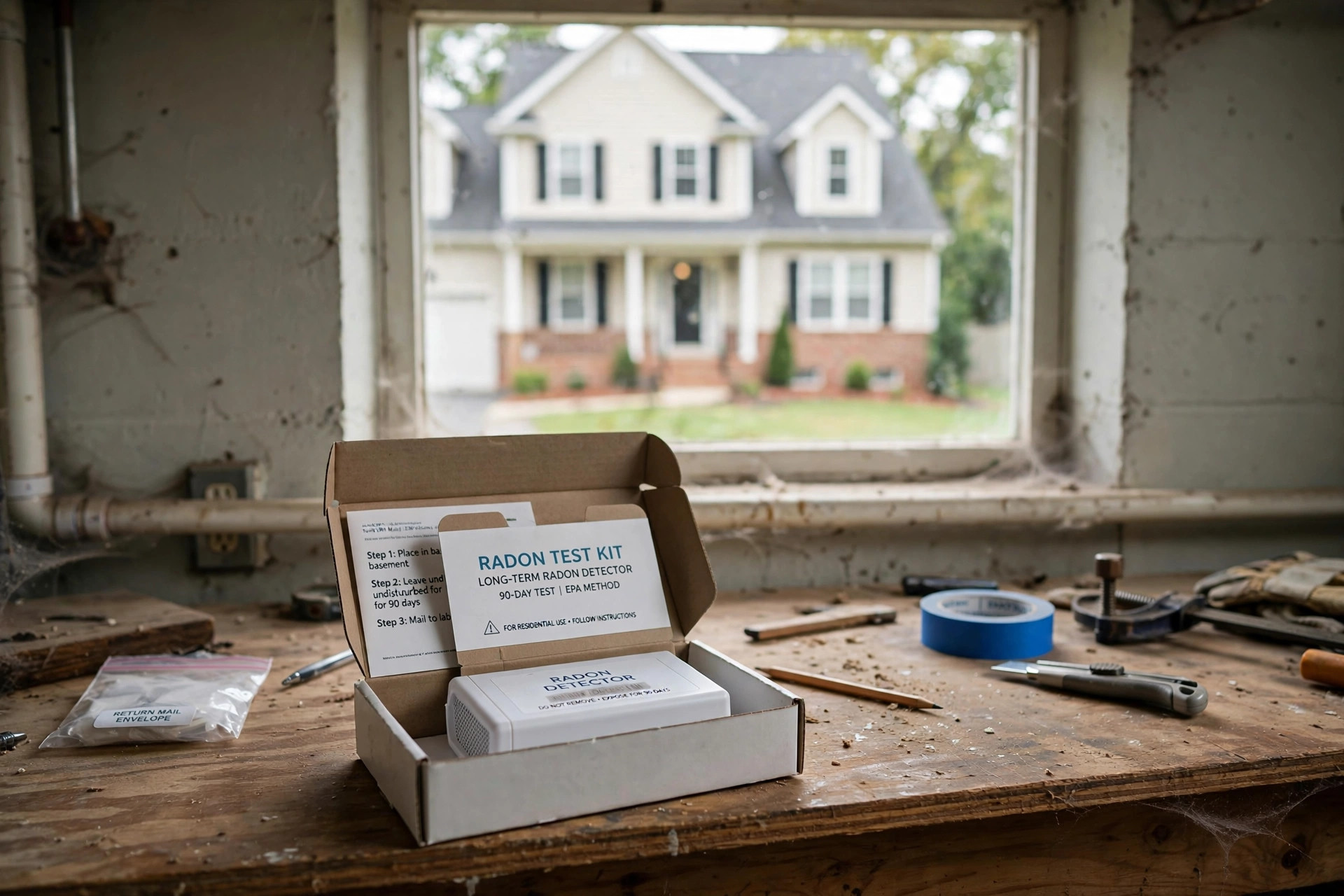
You cannot see it, smell it, or taste it. It seeps up through the ground and into your home every day, silently — and it is the second leading cause of lung cancer in America, responsible for roughly 21,000 deaths a year, according to the Environmental Protection Agency (EPA).
It is called radon. And the only way to know whether it is in your house is to test for it.
Most Americans have never tested their homes. The EPA estimates that about 1 in 15 U.S. homes has radon at or above its action level. You could live in a brand-new house or a century-old one, in the Midwest or the coast, with a basement or without — radon does not care. What follows is what radon is, why it is dangerous, how to test, and what to do if your levels are high.
What radon actually is
Radon is a naturally occurring radioactive gas produced when uranium in soil and rock breaks down. It is everywhere in the ground. Outdoors, it dilutes into the air and is harmless. But homes act like traps: radon seeps in through cracks in the foundation, gaps around pipes, sump pits, and even the well water supply, then accumulates to dangerous concentrations in the lowest, least-ventilated parts of the house.
The danger is not the gas itself but what it becomes. Radon decays into radioactive particles that lodge in the lining of your lungs when you breathe them in. Over years, that chronic low-level radiation damages lung tissue and can trigger cancer. There is no threshold scientists consider safe — risk rises with both concentration and time exposed.
Why smokers and never-smokers alike should care
Smoking gets all the attention, but among people who have never smoked, radon is the leading cause of lung cancer. The American Lung Association puts it bluntly: if you smoke and your home has high radon levels, your risk is dramatically higher — smoking and radon multiply each other's damage.
Here is the number that stops people cold: radon kills more Americans every year than drunk driving, more than house fires, and more than falls in the home. Yet unlike those risks, radon testing takes about two minutes of your time and costs less than a pizza.
Where radon is worst — and why your zip code is not enough
The EPA classifies counties into three radon zones. Zone 1 — the highest potential — blankets much of the upper Midwest, the Appalachian Mountains, and parts of the Rocky Mountain states. Places like Iowa, the Dakotas, and central Pennsylvania have some of the highest average indoor levels in the country; Iowa is frequently called the nation's radon capital.
But "my state is low-risk" is a dangerous excuse. Radon varies house to house on the same street. Your neighbor can test low while your home tests high, because it depends on the soil beneath your specific lot, how your foundation is sealed, and how airtight your house is. The EPA's position is unambiguous: test every home, regardless of zone. The only homes that don't need testing are the ones already tested.
How to test: it's absurdly simple
There are two ways, and both are cheap.
Short-term DIY kits ($15–$25): Available at hardware stores, big-box retailers, and from state radon programs — some states give them away free or nearly free. You leave the test in the lowest lived-in level of your home for 2 to 7 days, mail it to a lab, and get results by email in about a week.
Continuous digital monitors ($130–$200): Devices like the Airthings View Radon sit on a shelf and give you a running average updated hourly. They are the best choice if you want ongoing peace of mind, since radon levels fluctuate with weather, season, and how often windows are open.
For the most accurate picture, test in winter with the house closed up as usual — cold months tend to show the highest readings. If a short-term test comes back at or above 4 picocuries per liter (pCi/L), the EPA's action level, the next step is either a second short-term test or one long-term test (90 days) to confirm. Readings between 2 and 4 pCi/L still carry elevated risk, and the EPA recommends considering fixes at that range too.
If your levels are high, fixing it is routine — not a disaster
A high radon reading feels scary, but radon mitigation is one of the most well-established home fixes in the country. The standard solution is a sub-slab depressurization system: a licensed contractor installs a pipe through the foundation and a quiet fan that draws radon from beneath the house and vents it safely above the roofline.
Typical cost: $800 to $2,500, depending on the house — about the price of a water heater. Most systems drop radon levels by up to 99 percent, and a post-install test confirms it worked. If you are buying a home, make radon testing part of the inspection; sellers in most states must disclose known radon results, and fixing it can be written into the deal.
What does not work: sealing cracks alone (helpful as a supplement, never a cure), air purifiers, and opening windows permanently (levels just climb back when you close them).
The five-minute version
- Buy a $15 test kit today — or grab a free one from your state radon program.
- Test the lowest lived-in level of your home for 2–7 days.
- At or above 4 pCi/L? Confirm with a second test, then call a certified radon mitigation contractor (find one through your state radon office).
- Selling or buying? Test during inspection, every time.
- Renters: ask your landlord to test, and test yourself — your health is on the line, not just the owner's.
Radon is the rare health threat that is fully measurable, fully fixable, and almost entirely preventable — for less than the cost of a tank of gas. Twenty-one thousand preventable deaths a year is a tragedy of inattention, not of medicine. Test your home, and you remove yourself from that statistic.
This article is for informational purposes only and is not medical advice. If you have concerns about radon exposure or lung symptoms, talk to your doctor and contact your state radon program.
📚 Keep reading:
Carbon Monoxide: The Winter Killer Hiding in Your Home
Carbon monoxide kills 400+ Americans a year and sends 100,000 to the ER, peaking every winter. Here's where CO hides in your home and how to stop it.

Why You're Constipated — and 9 Fixes That Actually Work
About 16 in 100 American adults deal with constipation, a third of those over 60. Gastroenterologists explain what's slowing things down — and the fixes that work.

That Q-Tip in Your Ear Is Doing More Harm Than Good
About 34 kids a day land in the ER from cotton-swab ear injuries. Ear doctors say the ear canal cleans itself — here's the safe way to deal with earwax.